What's inside
As an Amazon Associate I earn from qualifying purchases. This post may contain affiliate links at no extra cost to you.
The best golf launch monitors for every budget are Garmin Approach R10 for entry-level value, FlightScope Mevo+ and Rapsodo MLM2PRO for mid-range simulator use, and SkyTrak+ or Foresight GC3/Bushnell Launch Pro for serious indoor accuracy, with TrackMan iO and Foresight GCQuad at the premium end for professional fitting and coaching.
As an Amazon Associate we earn from qualifying purchases at no extra cost to you.

Sections
How to Choose: The 6 Decision Criteria
Not all launch monitors measure the same way, and that determines where they work best. Understanding the criteria below will prevent you from buying a monitor that can’t function in your space or won’t give you the data you actually need.
1. Indoor vs. Outdoor Accuracy and Technology Type
- Radar (Doppler): FlightScope Mevo+, Garmin Approach R10, TrackMan 4. Measures ball flight by tracking radar waves. Highly accurate outdoors with full ball flight, but indoors needs 8-16 feet of ball flight to calculate accurately. Requires space behind the ball as well.
- Photometric (Camera-based): Foresight GC3/GCQuad, SkyTrak+, Uneekor EYE series. Uses high-speed cameras to capture impact and initial launch. Extremely accurate indoors in limited space because it only needs to see the first few feet. Struggles outdoors in direct sunlight without proper setup.
- Hybrid: TrackMan iO, Uneekor EYE XO2. Combines radar and camera for club and ball data without needing extensive room depth, but at a higher price.
2. Ball Data vs. Club Data
- All monitors give ball speed, launch angle, carry distance, and spin. This is enough for distance gapping and basic practice.
- Mid-range and premium units add club head speed, smash factor, angle of attack, club path, and face angle. If you are working on swing mechanics rather than just distances, you need a monitor that measures club data directly, not one that estimates it.
- Only photometric and hybrid premium units measure club path and face-to-path accurately without club stickers or special balls. Radar units like Mevo+ require metallic dots on the ball to measure spin indoors.
3. Simulator Compatibility
If you want to play virtual courses, check software, not just hardware. SkyTrak+, Mevo+, Garmin R10, and Bushnell Launch Pro all integrate with E6 CONNECT, GSPro, and The Golf Club 2019. Foresight units use FSX Play and FSX Pro. Uneekor uses its own View software plus GSPro. Factor in whether simulator access is included or requires a separate PC and subscription.
4. Setup Space Required
- Radar: Needs 6-8 feet from monitor to ball and 8-16 feet from ball to net/screen. Total depth often 15-24 feet. Best for garages, outdoor nets, or large rooms.
- Photometric: Sits beside or slightly ahead of the ball. Needs only 10-12 feet of total depth (ball to screen) and minimal width. Best for basements, spare bedrooms, and compact simulators.
- Ceiling-mounted/Overhead: Uneekor EYE XO/XO2, TrackMan iO mount on the ceiling and require no floor space, but need 9.5-10 feet of ceiling height for driver swings.
5. Subscription Costs
Hardware price is not the total cost. Many monitors lock advanced data, video, and simulator courses behind annual plans. Garmin has no mandatory subscription. Rapsodo, FlightScope, and SkyTrak require annual plans for full features, typically in the range of $100 to $250 per year. Foresight and Bushnell Launch Pro offer tiered software; basic ball data has no fee, but full club data and simulation often requires a $400-$700 annual add-on or a one-time unlock.
6. Portability and Battery Life
If you split time between range and home, weight and battery matter. Portable radar units run 4-10 hours on battery and fit in a golf bag. Photometric desktop units are heavier and need AC power but are still movable. Ceiling-mounted units are permanent installations.
Spec and Feature Comparison: Real Numbers
| Model | Technology | Weight / Dimensions | Battery Life | Key Data Measured | Simulator Ready |
|---|---|---|---|---|---|
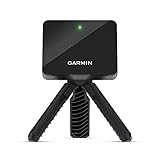
| Garmin Approach R10 | Radar | 3.5 oz / 3.5 x 2.8 x 1.0 in | Up to 10 hours | Ball speed, club speed, launch angle, spin (estimated indoors), smash factor | Yes (E6, Awesome Golf, Garmin Golf app) |
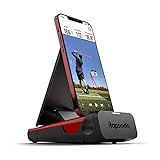
| Rapsodo MLM2PRO | Radar + Camera | 10.5 oz / 7.1 x 3.0 x 1.1 in | Up to 5 hours | Ball + club data, dual cameras for shot vision, requires RPT balls for spin indoors | Yes (E6, GSPro, Rapsodo app) |
| FlightScope Mevo+ | Radar | 10.2 oz / 6.9 x 2.4 x 1.1 in | Up to 2 hours (usable 1.5-2 hrs) | Full ball and club data including spin with Titleist RCT balls, 20+ parameters | Yes (E6, FS Golf, GSPro) |
| SkyTrak+ | Photometric | 3.5 lbs / 7.0 x 6.8 x 2.3 in | Up to 4 hours | Ball speed, launch angle, back/side spin, club head speed, path, face angle | Yes (E6, GSPro, SkyTrak app) |
| Bushnell Launch Pro / Foresight GC3 | Photometric (3 cameras) | 3.5 lbs / 11.5 x 4.3 x 1.5 in | Up to 6 hours | Precise ball + club data, no marked balls needed, 15+ parameters | Yes (FSX Play, FSX Pro, GSPro) |
| Uneekor EYE MINI / EYE XO2 | Photometric / Hybrid | EYE MINI: 4.4 lbs / 10.2 x 5.9 x 2.2 in; XO2: Ceiling mount 16 lbs | EYE MINI: Up to 4 hours; XO2: AC powered | Full ball and club data, overhead ball and club imaging | Yes (Uneekor View, GSPro, E6) |
| Foresight GCQuad / TrackMan 4 / TrackMan iO | Photometric / Radar / Hybrid | GCQuad: 7.5 lbs; TrackMan 4: 6.4 lbs | GCQuad: Up to 6 hours; TrackMan 4: Up to 5 hours | Tour-level club and ball data, putting analysis | Yes (FSX, TrackMan Performance Studio, simulator integration) |
Best Picks by Budget and Situation
Under $600: Portable Practice
Garmin Approach R10 and Swing Caddie SC4 dominate this tier. The R10 is the best value for outdoor range sessions and basic indoor net practice. It estimates spin indoors without RCT balls, so numbers are less precise for wedge and driver spin work, but carry distance and ball speed are reliable. The Swing Caddie SC4 adds a built-in display and remote for solo practice without a phone. Expect phone/tablet-based display and limited simulator features in this range.
$600 – $1,200: Serious Home Simulator Entry
Rapsodo MLM2PRO and FlightScope Mevo+ are the decision point. Choose MLM2PRO if you want dual-camera video replay and more accurate spin indoors with Rapsodo RPT Chrome balls, plus a lower annual subscription than most competitors. Choose Mevo+ if you need more complete data outdoors (it captures full trajectory radar without camera limits) and have at least 16 feet of depth. Both need marked balls for true spin indoors. Mevo+ requires the Pro Package upgrade (often bundled in 2026) to unlock full club path and face data.
$1,200 – $3,000: Accurate Indoor Simulator Core
SkyTrak+ and Bushnell Launch Pro (GC3 hardware) are the most accurate in compact indoor spaces. SkyTrak+ improved significantly over the original SkyTrak with better rangefinder and more accurate off-center shot detection and no special balls. Bushnell Launch Pro is identical hardware to Foresight GC3 but sold with a subscription choice; the Gold subscription unlocks all club data, while the base subscription limits you to ball data. If you have a 10 x 10 foot hitting bay and want to play simulator golf year-round, this tier is the sweet spot.
$3,000+: Premium and Professional
Uneekor EYE XO2, Foresight GCQuad, and TrackMan iO / TrackMan 4. These are for coaches, fitters, and dedicated simulator builds. GCQuad adds a fourth camera for putting and extremely precise club measurement without any stickers. TrackMan 4 remains the outdoor standard for tour-level accuracy in all conditions, while TrackMan iO is designed for indoor simulator bays where floor space is limited. Investment is higher, but accuracy is within fractions of a percent and no annual fee is required for core Foresight data.
Decision Matrix: Match Your Situation to the Right Type
| Your Situation | Best Match | Why |
|---|---|---|
| Small room (10-12 ft depth), mainly indoor simulator | SkyTrak+, GC3 / Bushnell Launch Pro, EYE MINI | Photometric needs less depth, no radar behind ball |
| Garage or outdoor net with 15+ ft depth, split indoor/outdoor | FlightScope Mevo+, Garmin R10, Rapsodo MLM2PRO | Radar excels outdoors and compensates for depth indoors |
| Want club path / face angle for lessons | SkyTrak+, GC3/GCQuad, Uneekor EYE XO2 | Direct camera measurement, not estimated |
| Need maximum portability for range + travel | Garmin R10, Rapsodo MLM2PRO, Mevo+ | Under 11 oz, battery powered, phone display |
| Want lowest ongoing cost | Garmin R10, SkyTrak+ (basic plan), Foresight GC3 with one-time unlock | No or low subscription for core data |
| Permanent dedicated simulator room, ceiling height 10 ft+ | Uneekor EYE XO2, TrackMan iO | Overhead mount frees floor space, protects device from shanks |
Cost Per Use: A Worked Calculation
Subscription and accessory costs change the value over time. Use this formula before you buy:
Total 3-Year Cost = Hardware + (Annual Subscription x 3) + Accessories (RCT/RPT balls, net, mat if needed)
Example for a mid-range indoor setup used 3 times per week (about 450 sessions in 3 years):
- Option A: Garmin Approach R10 ($450 general market range) + no subscription + 0 extra = $450 total. Cost per session = $1.00
- Option B: Rapsodo MLM2PRO ($700 range) + $200/yr subscription x 3 = $1,300 total. Cost per session = $2.89. Add $40 per dozen for RPT balls replaced every 6 months.
- Option C: Bushnell Launch Pro ($2,000 base hardware) + Gold subscription $500/yr x 3 = $3,500 total. Cost per session = $7.78, but with tour-level indoor accuracy and no need for marked balls.
If you practice less than once a week, a low-subscription radar unit keeps cost per use low. If you practice daily indoors and need reliable spin and club data, the higher upfront cost of a photometric unit often costs less per accurate data point over two years.
Setup, Durability and Ownership Realities
What wears first is not the monitor, but the environment around it. Net and mat quality affect data more than most owners expect. A worn hitting mat that allows the club to bounce will skew launch angle and spin, making even a premium monitor report bad data.
- Alignment is critical: Radar units must be level and aligned 8-10 feet directly behind the ball on the target line. Being 6 inches offline adds 2-3 degrees of error to start direction. Photometric units must be level with the hitting surface; shimming with a small level takes 30 seconds and prevents systematic left/right bias.
- Lighting: Photometric units need consistent, diffused lighting. Direct overhead spotlights or sunlight flicker causes misreads. Radar units are unaffected by light but can be affected by metal objects, heaters, or fans behind the unit.
- Balls matter: Use the ball you play on course for radar units outdoors. Indoors, radar spin is estimated unless you use Titleist RCT (Mevo+) or Rapsodo RPT balls. Photometric units read any premium urethane ball. Range balls reduce spin by 500-1,000 RPM and understate carry by 5-8%.
- Cleaning and care: Camera lenses and radar apertures collect dust and ball fuzz. Wipe lenses with a microfiber cloth before each session. Store in a case; even a small shank can crack a floor unit. Ceiling-mounted units avoid this risk entirely but need professional installation and calibration.
- Common mistake: Placing a radar unit on an unstable surface or hitting mat that vibrates. The vibration creates noise in Doppler data. Place radar monitors on a firm floor, not on the hitting mat itself.
- Battery habit: Lithium batteries degrade if stored fully charged for months. If you use the monitor seasonally, store at 50-60% charge and top up before use to preserve long-term battery life.
Final Recommendation by Use Case
- For outdoor range gapping on a budget: Garmin Approach R10. Lightweight, no subscription, good enough for distances and ball speed.
- For indoor net practice with video feedback: Rapsodo MLM2PRO. Best camera integration under $800 range, strong app for coaching.
- For indoor simulator in a compact room: SkyTrak+ or Bosch? Actually Bushnell Launch Pro. Both give accurate ball and club data in 12 feet of depth without special balls.
- For coaching or low-handicap swing work: Foresight GC3/GCQuad or Uneekor EYE XO2. You pay for direct measurement of club path, face angle, and spin axis that cheaper units only estimate.
Choose space first, data needs second, and subscription tolerance third. A $500 monitor that fits your room and gets used three times a week will improve your game more than a $4,000 unit that doesn’t fit your space or requires a subscription you won’t renew.