What's inside
As an Amazon Associate I earn from qualifying purchases. This post may contain affiliate links at no extra cost to you.
Sections
Our Top Picks
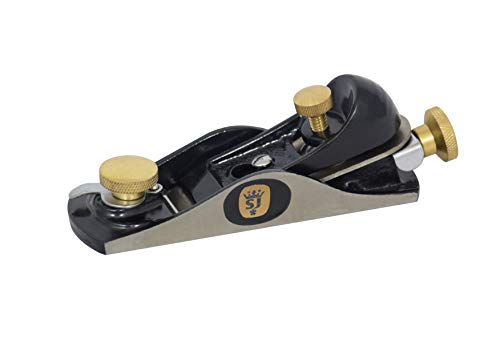 Spear & Jackson CBP95 9 1/2 Carpenters Block9 1/2 In6.89 x 1.77 x 2.76 Inches1.98 poundsCheck on Amazon
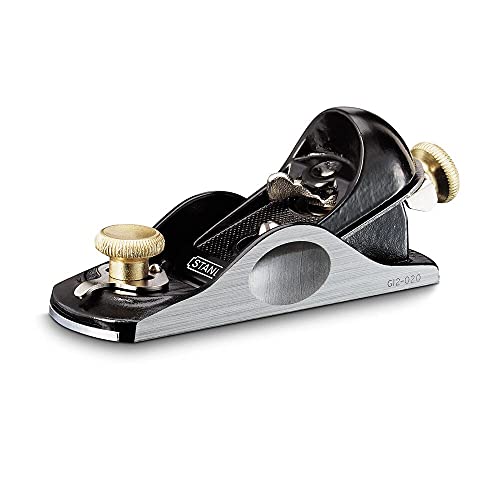


What makes a hand plane suitable for a mobile kit?
A plane earns a place in a mobile carpentry kit when it can do useful work without adding unnecessary weight, bulk, or setup time. The best compact planes are not miniature versions of a full-size jointer plane. They are specialist tools for trimming doors, fitting drawers, easing sharp edges, cleaning end grain, and making small corrections that are awkward with a saw or chisel.
For most site carpenters, a compact kit needs two things: a low-angle block plane for general trimming and a small shoulder, rabbet, or bullnose plane for work that requires access into a corner. If you regularly fit doors or work with rough boards, a compact smoothing plane can also make sense, but it is less versatile than a block plane and usually takes more space.
As an Amazon Associate we earn from qualifying purchases at no extra cost to you.


Before buying, check the plane’s actual length and weight. A tool around 6 to 7 inches long and roughly 1 to 1.5 kg is easy to carry in a tool bag. A plane with a 1 5/8- to 2-inch iron is generally fast enough for site adjustments. Smaller planes are lighter, but their short soles can follow dips instead of correcting them.
The most useful compact plane types
| Plane type | Best use | Main advantage | Important limitation |
|---|---|---|---|
| Low-angle block plane | End grain, trimming, edge easing | Small, quick to adjust, versatile | Short sole will not flatten long edges |
| Standard-angle block plane | General edge and face trimming | Better resistance to tear-out in some hardwoods | Less effective on difficult end grain |
| Small smoothing plane | Local surface cleanup and final fitting | More control than a block plane | Heavier and slower to set up |
| Shoulder or rabbet plane | Tenon shoulders, rebates, grooves | Reaches tight corners accurately | Specialist tool with limited general use |
| Bullnose plane | Very short shoulders and stopped rebates | Blade reaches the front of the sole | Can leave uneven cuts if the work is not supported |
Best all-round choice: a low-angle block plane
A low-angle block plane is the strongest first purchase for a mobile carpentry kit. Its blade typically beds at about 12 degrees, with the bevel facing up. With a blade bevel around 25 degrees, the effective cutting angle is roughly 37 degrees. That low angle lets it cut end grain cleanly, which is valuable when trimming door edges, worktop ends, small shelves, and protruding dowels.
Look for a plane with a solid cast body, a reliable depth adjuster, and a mouth that can be closed to about 1 mm or less for fine shavings. A movable toe or adjustable mouth is useful, but it adds cost and another part that can collect dust. For rough site work, a fixed-mouth plane is often the better value.
A good blade matters more than polished finishes. The iron should be thick enough not to chatter and should hold an edge through several fitting jobs. If buying new, compare low-angle block planes by blade adjustment, sole flatness, and replacement iron availability rather than appearance.
The cheap option is fine when the plane will only ease edges or remove the last millimeter from a door. Expect to spend time flattening the sole or tuning the blade, though. A poorly ground iron can take longer to prepare than the tool is worth.
When a small smoothing plane is worth carrying
A compact smoothing plane has a longer sole and a more substantial body than a block plane. It gives better control when cleaning a local patch of a board or fitting a face frame, but it is not a substitute for a jointer plane. A sole around 8 to 10 inches long can bridge small hollows, while anything shorter mainly follows the existing surface.
Choose one if your mobile work includes visible solid-wood surfaces, furniture repairs, or fitting parts where a clean, controlled shaving is preferable to sanding. Use a fine mouth opening and a shaving depth of about 0.05 to 0.1 mm for finishing. For fast stock removal, a compact plane is the wrong tool; a saw, router, or full-size fore plane will be faster.
Compact smoothing planes also expose poor technique. A dull blade, excessive projection, or uneven pressure at the start and end of a stroke can produce dips and snipe. Keep the front of the sole flat on entry, transfer pressure evenly, and reduce pressure near the end of the cut.
Specialist planes for joints and rebates
A shoulder plane is useful when fitting tenons, especially where the shoulder must be corrected right up to the cheek. The blade spans the full width of the body and can remove thin, controlled shavings from a joint. It is one of the few compact planes that can do a job a chisel handles less consistently.
For rebates, a rabbet plane is more efficient than a block plane because its blade reaches the edge of the sole. A bullnose version is especially useful for stopped rebates and short tenon shoulders. However, these planes are poor general-purpose choices. If your work is mostly door fitting and trim installation, carry a block plane and use a sharp chisel for occasional rebates instead of buying every specialist plane.
When choosing one, search for small shoulder planes or small rabbet planes, then check the cutting width and whether the blade is adjustable. Some inexpensive examples have rough soles or blades that sit slightly skewed. That may be acceptable for rough carpentry, but it is frustrating on tight joinery.
Packing and maintaining planes on site
Protect the sole and iron from nails, screws, and grit. A simple canvas sleeve or a dedicated compartment in the tool bag is enough. Do not drop a plane loose into a bag with a cordless drill; a damaged sole can make the tool unusable for accurate fitting.
Carry a small honing guide only if the plane sees heavy use. Otherwise, a 1,000- to 6,000-grit combination stone or diamond plate is enough for routine maintenance. Hone a small secondary bevel at about 30 degrees, remove the burr, and test the edge on scrap before touching finished work.
Keep the iron projection conservative. If the plane leaves torn fibers, first reduce the cut and skew the plane slightly across the grain. On reversing grain, a low-angle plane may still tear out; use a narrower mouth, a sharper iron, or take shorter diagonal cuts. For a mobile kit, that combination of a tuned compact hand plane, a sharp chisel, and accurate marking tools covers more real carpentry jobs than a heavy collection of rarely used planes.