What's inside
As an Amazon Associate I earn from qualifying purchases. This post may contain affiliate links at no extra cost to you.
Sections
Our Top Picks
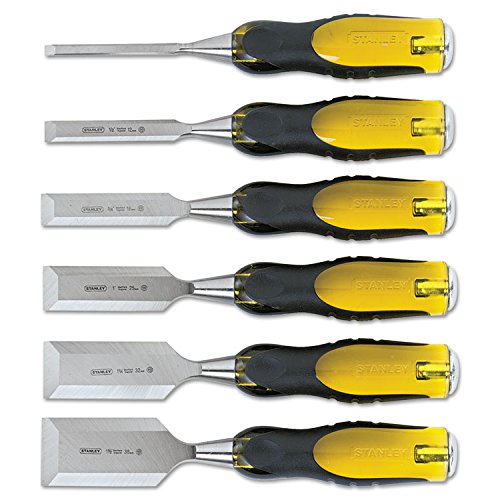
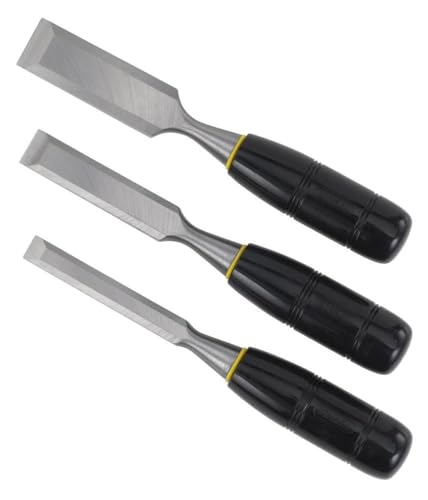


What a shallow shelf dado asks of a chisel
A shallow dado is a groove across a board’s grain that locates a shelf. For a typical ¾-inch-thick shelf, a groove around ¼ inch deep is enough to provide a useful mechanical seat without removing more material than necessary. The chisel’s job is to pare the bottom flat, clean the shoulders, and remove waste left between saw cuts—not to excavate the whole groove by brute force.
For this work, a sharp bevel-edge bench chisel in the ¾- to 1-inch range is usually the best first purchase. A narrower chisel can clear waste more easily, but it takes more passes to flatten a wide dado. A very wide chisel is efficient on broad grooves but harder to control at the corners. If you are buying a set, look for a useful spread of widths rather than a large number of nearly identical sizes.
As an Amazon Associate we earn from qualifying purchases at no extra cost to you.


Chisel options compared
| Type | Best use in a dado | Trade-off |
|---|---|---|
| Bevel-edge bench chisel, ¾ to 1 inch | Flattening the bottom and trimming shoulders | A sensible single-chisel choice; too wide for tight corners |
| Bevel-edge bench chisel, ¼ to ½ inch | Removing narrow strips and cleaning corners | More passes and more chances to leave a wavy bottom |
| Mortise chisel | Levering out waste in deeper mortises | Usually too thick and clumsy for a shallow shelf groove |
| Paring chisel | Fine hand-guided trimming with light pressure | Long, delicate, and less suitable for striking to remove waste |
A dedicated mortise chisel is rarely a good purchase just for shelving dadoes. Its thick blade is designed to take heavy levering loads, while a shallow groove benefits from a slimmer blade that can reach the corners. A paring chisel can produce a clean finish, but it is not necessary for ordinary cabinet work if a standard bench chisel is sharp and well controlled.
What to buy
If you already own a decent bench chisel, sharpen it before buying another. For a first tool, a ¾-inch bevel-edge bench chisel is a practical choice for common shelf stock. Check that the handle is comfortable to strike, the blade is straight, and the edge can be sharpened without excessive work. A bargain chisel can be perfectly serviceable, but some arrive with a rounded bevel, a poor back, or an edge that will not hold up to repeated work.
If you want one chisel to handle both the bottom and tighter areas, consider a small bevel-edge bench chisel set with widths such as ¼, ½, ¾, and 1 inch. A four-piece set is more useful than a large assortment of widths you will rarely reach for. For occasional home projects, inexpensive chisels are fine once sharpened. For regular site use, better steel and a durable handle matter because dulling or damaged edges interrupt the work.
Cut the dado cleanly
Mark both shoulders with a knife or sharp marking gauge, then saw to the depth line at each end. A shoulder plane or router plane can help refine the groove, but the chisel remains useful for waste removal and corners. Clamp the work securely; a board that shifts during a mallet strike can chip an edge or spoil the shoulder.
Start by chopping a series of cross-grain cuts inside the waste area, roughly ⅛ inch apart. Stop short of the final depth—around ⅛ inch above it is a reasonable starting point. Keep the bevel toward the waste when defining a shoulder, and take shallow bites rather than forcing the chisel down to full depth. Then pare away the ridges in thin layers, working from both ends toward the center to reduce the risk of breakout at the edges.
For the final surface, hold the chisel nearly flat with the bevel up and take light paring cuts. Check depth with a ruler or depth gauge at several points. A groove that varies by 1⁄32 inch may still fit, but a shelf that rocks or stands proud usually means the bottom has high spots. A straightedge across the dado makes those spots easier to find. Do not try to correct a low area by digging the rest of the groove deeper unless the shelf and surrounding layout allow it.
Sharpness, durability, and common mistakes
A keen edge matters more than a premium handle. A dull chisel needs extra force, tends to skate off a marked line, and leaves a rough bottom that takes longer to correct. A common bench-chisel setup uses a primary bevel around 25 degrees with a small secondary bevel near 30 degrees. The exact angles matter less than a flat back and a consistent, sharp edge. If you are starting from scratch, a basic sharpening setup is part of the cost of using chisels well.
Keep fingers behind the cutting edge and secure the board before striking. Use a wooden or plastic mallet for controlled waste removal; a steel hammer can split a wooden handle unless the chisel is made for that use. The main failure modes are cutting past the shoulder line, levering against a thin edge and breaking it out, and taking a full-depth bite that wedges the blade. Stop just shy of the layout line, pare the last fibers carefully, and test the shelf fit before assembly.
For a single bookcase or utility shelf, a sharp ¾-inch bench chisel and careful layout are usually enough. Buy a broader set only if you expect to make dados in several widths or want dedicated tools for rough waste removal and fine paring. A more expensive chisel can improve edge life and comfort, but it cannot compensate for a dull edge or an unsupported workpiece.