What's inside
- Quick comparison of 120 volt wood lathes
- Why most home lathes are 120 volt
- Best overall: Jet JWL-1221VS
- Best for bowl swing: Rikon 70-220VSR
- Best value for bowls: Delta 46-460
- Best starter: 10-by-18 inch mini lathes
- How to choose a 120 volt lathe
- Worked example: bowl blank safety speed
- Ownership realities
- Frequently Asked Questions
As an Amazon Associate I earn from qualifying purchases. This post may contain affiliate links at no extra cost to you.
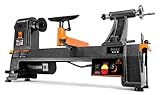
The best 120 volt wood lathe for most woodturners is the Jet JWL-1221VS, a 1 HP, 115 volt midi lathe with 12 inches of swing, about 20-1/2 inches between centers, and electronic variable speed from 60 to 3,600 RPM. The Delta 46-460 and the Rikon 70-220VSR are the main alternatives, and a mini lathe is the budget way to start. All of them plug into a standard outlet, which is the reason midi lathes dominate home shops.
As an Amazon Associate we earn from qualifying purchases at no extra cost to you.


Sections
- Quick comparison of 120 volt wood lathes
- Why most home lathes are 120 volt
- Best overall: Jet JWL-1221VS
- Best for bowl swing: Rikon 70-220VSR
- Best value for bowls: Delta 46-460
- Best starter: 10-by-18 inch mini lathes
- How to choose a 120 volt lathe
- Worked example: bowl blank safety speed
- Ownership realities
- Frequently Asked Questions
Our Top Picks
Quick comparison of 120 volt wood lathes
| Pick | Best for | Swing | Between centers | Motor | Speed range | Price range |
|---|---|---|---|---|---|---|
| Jet JWL-1221VS | Best overall midi | 12 in. | 20.5 in. | 1 HP, 115 V | 60 to 3,600 RPM | Mid-range to upper-mid |
| Rikon 70-220VSR | Best for bowl turners who want swing | 12-1/2 in. | 20 in. | 1 HP | 250 to 3,850 RPM | Mid-range |
| Delta 46-460 | Best for bowl swing on a budget | 12-1/2 in. | 16-1/2 in. | 1 HP, 120 V | 250 to 4,000 RPM (belt ranges) | Mid-range |
| 10-by-18 class mini lathe (Rikon 70-100 and similar) | Best starter | 10 in. | 18 in. | 1/2 HP class | Variable, about 500 to 3,900 RPM | Budget |
| Benchtop pen and spindle lathe | Best for pens and small items | 6 to 8 in. | 12 to 16 in. | 1/3 to 1/2 HP | Variable | Budget |
Specifications come from the manufacturers’ published information and published reviews. Listing weights vary: the Jet is reported anywhere from about 117 to 136 pounds depending on source and configuration, so confirm before you plan a bench.
Why most home lathes are 120 volt
A lathe’s power demand is modest. Turning a bowl blank puts more load on the motor than spindle work, but a 1 HP motor at 115 volts draws about 10 to 12 amps, and electronic speed control keeps torque available at low RPM. Larger machines, 16 to 24 inch swing with 2 to 5 HP, usually need 230 volt power. For furniture spindles, bowls up to about 12 inches, pens, and tool handles, 120 volt midi lathes cover nearly everything.
Best overall: Jet JWL-1221VS
The JWL-1221VS combines a 12-inch swing and about 20-1/2 inches between centers with a 1 HP motor and a speed range from 60 to 3,600 RPM, per Jet’s specifications. A spindle with 1-inch by 8 TPI threads and a number 2 Morse taper accepts the widest range of chucks and centers. The 24-position indexing head helps with fluting, drilling, and decorative work. The very low minimum speed is a safety benefit when starting an out-of-balance blank. Jet backs it with a 5-year warranty. The trade-offs are weight, which is a plus for stability but a pain to move, and the cost, which is higher than the Delta or Rikon.
Best for bowl swing: Rikon 70-220VSR
The Rikon 70-220VSR has a 12-1/2 inch swing, 20 inches between centers, a 1 HP motor, and a 24-position indexing head. It is heavier than a typical mini and offers a larger outboard turning option. Its low speed is 250 RPM rather than 60, so you must start more cautiously with large blanks. It is a good fit for bowl turners who want a solid machine at a lower cost than the Jet.
Best value for bowls: Delta 46-460
The Delta 46-460 has a 12-1/2 inch swing and 16-1/2 inches between centers. The 1 HP, 120 volt motor drives a belt with three speed ranges: roughly 250 to 700, 600 to 1,800, and 1,350 to 4,000 RPM. It weighs about 97 pounds. It lacks a digital readout, and changing speed ranges means moving belts, which is slower than electronic variable speed. A bed extension is needed for pieces longer than the 16-1/2 inch capacity. It is a capable lathe for the money, but it is best for people who focus on bowls.
Best starter: 10-by-18 inch mini lathes
Mini lathes in the 10-inch swing and 18-inch bed class, such as the Rikon 70-100, are the budget entry point. A 1/2 HP class motor and variable speed suit pens, small bowls, spindles, and handles. They fit on a workbench and weigh well under 100 pounds. The limit is capacity: a 10-inch swing does not leave room for large bowls, and a light bed vibrates with heavy blanks. Add weight to the stand with sandbags to reduce vibration.
How to choose a 120 volt lathe
Swing and bed length
Swing is the largest diameter you can turn over the bed, and the headstock allows. Between centers is the longest spindle. For table legs, 20 inches is limiting, while 36 inches is more common for furniture-scale spindles; add a bed extension where available. For bowls, aim for at least 12 inches of swing.
Speed control
Electronic variable speed is easier to use than belt changes, and a low minimum speed matters for safe roughing of large blanks. Reverse is useful for sanding.
Spindle thread and taper
1 inch by 8 TPI is the most common midi standard, and a Morse taper number 2 is standard for centers. Check the compatibility of your chuck before you buy.
Mass and stability
A heavier cast-iron bed absorbs vibration. Light mini lathes tend to walk on the bench. Many turners add shelving or sandbags below the lathe for more stability.
Accessories
Budget for a four-jaw chuck, a faceplate, a live center, a drive center, a tool rest set, and a basic set of gouges. These can cost as much as an entry lathe.
Worked example: bowl blank safety speed
A commonly used rule of thumb is to keep the rim speed of a bowl blank below roughly 3,000 surface feet per minute, which at a 10-inch diameter works out to about 1,100 RPM. Turn the formula around: RPM is about 3.8 times surface speed divided by diameter in inches. For a 12-inch blank, an RPM near 950 is a conservative upper limit for roughing. Start low, let the blank balance out, then increase. A lathe with a 60 RPM floor lets you start much safer than one with a 250 floor.
Ownership realities
- Bearings and belts are the maintenance items. The belt usually lasts years with routine care.
- Rust on the bed: wipe it and apply paste wax after use so the tool rest slides.
- Dust: lathes make shavings rather than dust until sanding; a face shield and respirator protect your lungs and eyes.
- Circuit: 120 volt lathes draw 10 to 12 amps at full load, so a dedicated 15-amp circuit avoids nuisance trips.
Frequently Asked Questions
Can a 120 volt lathe turn large bowls?
Up to about 12 inches over the bed, yes. For bigger bowls, many 120 volt midi lathes have a swiveling headstock or an outboard turning position, though large 16 to 24 inch bowls are better suited to a 230 volt machine.
What size lathe should a beginner buy?
A midi lathe with 12-inch swing is a flexible first purchase because it handles pens through medium bowls. A mini lathe is a lower-cost alternative if your projects are small.
Is variable speed worth it?
Yes. Electronic speed control lets you adjust speed without stopping, and a low minimum speed allows safe starts with unbalanced blanks.
How much power does a wood lathe need?
One horsepower is sufficient for most spindle and bowl turning at midi scale. Mini lathes with 1/2 HP work for small items.
Do I need a dust collector for a lathe?
For turning, a shop vacuum or air filtration helps during sanding. Exotic woods can be irritants, so wear a respirator and consult a professional if you notice any reaction.