What's inside
- Quick comparison of 120 volt planers
- Why 120 volt planers are the default
- Best overall: DeWalt DW735X
- Best value DeWalt: DW734
- Best for quiet operation: Makita 2012NB
- Best budget: WEN 6552T
- Best for figured wood: spiral-head benchtop planers
- Worked example: how many passes?
- How to choose a 120 volt planer
- Ownership realities
- Frequently Asked Questions
As an Amazon Associate I earn from qualifying purchases. This post may contain affiliate links at no extra cost to you.
The best 120 volt planer for most shops is the DeWalt DW735X, a 13-inch, 15-amp portable thickness planer with a 3-knife cutterhead and a two-speed gearbox; the Makita 2012NB is the quieter alternative, and a spiral-head benchtop planer is the best answer when tear-out in figured wood matters. Every machine in this guide runs on a standard household outlet, so none needs a special circuit, although most need a dedicated 15-amp or 20-amp line to avoid tripping the breaker.
As an Amazon Associate we earn from qualifying purchases at no extra cost to you.


Sections
- Quick comparison of 120 volt planers
- Why 120 volt planers are the default
- Best overall: DeWalt DW735X
- Best value DeWalt: DW734
- Best for quiet operation: Makita 2012NB
- Best budget: WEN 6552T
- Best for figured wood: spiral-head benchtop planers
- Worked example: how many passes?
- How to choose a 120 volt planer
- Ownership realities
- Frequently Asked Questions
Our Top Picks
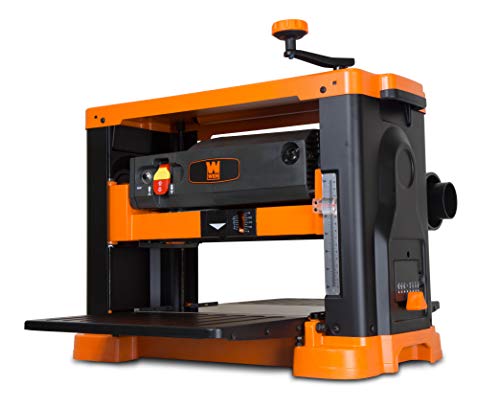 WEN PL1326 15-Amp 13-Inch Spiral Benchtop Thickness PlanerSpiral, 13-Inch, Single Speed81 poundsCheck on Amazon


Quick comparison of 120 volt planers
| Pick | Best for | Max width | Max depth per pass | Motor | Cutterhead | Price range |
|---|---|---|---|---|---|---|
| DeWalt DW735X | Best overall | 13 in. | 1/8 in. | 15 A, 10,000 RPM | 3 knives, two-speed feed | Mid-range to upper-mid |
| DeWalt DW734 | Best value DeWalt | 12-1/2 in. | 1/8 in. | 15 A | 3 knives | Mid-range |
| Makita 2012NB | Best for quiet operation | 12 in. | 3/32 in. | 15 A | 3 knives | Mid-range |
| WEN 6552T | Best budget | 13 in. | 3/32 in. | 15 A | 3 knives | Budget |
| Cutech spiral-head benchtop planer | Best for figured wood | 13 in. class | 1/8 in. class | 15 A | Spiral carbide inserts | Upper-mid |
Specifications are taken from the maker’s published sheets and common retailer listings. Planer weights vary between versions, so confirm the model before you plan bench or cart size.
Why 120 volt planers are the default
A planer’s job is simple: feed a board between a powered cutterhead and a flat bed to reduce thickness. A 15-amp motor spinning around 10,000 RPM is enough for a 13-inch benchtop machine to take a 1/16 to 1/8 inch pass in hardwood. The limits are dust and noise rather than power. At 95 decibels, according to commonly reported readings for portable planers, hearing protection is non-negotiable. 240 volt planers, usually 15-inch and larger stationary machines, only become necessary when you need wider boards or heavy production use.
Best overall: DeWalt DW735X
The DW735X remains the standard recommendation. It is a 13-inch portable thickness planer with a 15-amp motor, a 10,000 RPM three-knife cutterhead, a two-speed gearbox giving about 96 or 179 cuts per inch, a maximum 1/8 inch depth of cut, and a 6-inch maximum board thickness, based on DeWalt’s published specs. The DW735X version adds infeed and outfeed tables and extra knives over the base DW735. The slower speed produces a smoother finish for final passes, and the faster speed speeds up rough stock removal. It also has a fan-assisted chip ejection that works well with a shop vacuum or a dust collector.
The cons are known: it is heavy, loud, and can trip a 15-amp circuit if other tools share it. Reported weights vary between sources, from the low 90s to just over 100 pounds depending on the version. Budget for a dedicated 20-amp line if you can.
Best value DeWalt: DW734
The DW734 is a 12-1/2 inch planer that shares the three-knife head concept but omits the 735’s two-speed gearbox and automatic carriage lock. It is lighter and costs less. For a hobby shop planing boards up to 12 inches wide, the difference in capacity is minor, and the finish is acceptable with sharp knives.
Best for quiet operation: Makita 2012NB
The Makita 2012NB is a 12-inch benchtop planer with a 15-amp motor, a three-knife head, and a reputation for lower noise than most competitors. It is lighter than the DeWalt and is often chosen for garages with neighbors or small workshops where noise matters. Its maximum depth per pass is a little less than the DW735, so expect more passes in heavy stock removal.
Best budget: WEN 6552T
The WEN 6552T is a 13-inch, 15-amp benchtop planer with a three-knife head at a low price. It is a fair choice for occasional use and softwoods. Expect more snipe, a lighter build, and a need to check knife alignment out of the box. It is not the right machine for daily work in hardwood.
Best for figured wood: spiral-head benchtop planers
Cutech and other makers sell benchtop planers with spiral carbide-insert cutterheads in the 13-inch class. A spiral head shears the wood rather than chopping it, which gives a noticeably cleaner surface on curly maple, walnut, and quilted woods, and the inserts rotate individually when they dull. They cost more than three-knife machines but save time in sanding. They also run quieter and produce smaller chips that are easier to collect.
Worked example: how many passes?
Suppose you start with a 1-1/4 inch rough board and need a final thickness of 3/4 inch. That is 1/2 inch of material to remove. At a maximum depth of 1/8 inch, you would need four passes; at a safer 1/16 inch for hardwood, eight. The last two passes should be at 1/32 inch on the slower feed rate for the cleanest surface. Flip the board between passes to relieve internal stress and keep it flat.
How to choose a 120 volt planer
Capacity
Thirteen inches covers most tabletop boards and cabinet parts. Look at the maximum board thickness too: 6 inches is typical, and a 4-inch limit will stop you from planing thicker stock.
Cutterhead type
Straight knives are inexpensive and easy to replace, but they chip when they hit a knot or a stray staple. Spiral heads cost more and reward you with a better finish and easier maintenance.
Snipe control
Snipe is a slight dip at the board ends. Infeed and outfeed support tables, as on the DW735X, help. So does feeding boards end to end and using a sacrificial board.
Dust collection
Planers throw a stream of chips. Use a 4-inch hose to a dust collector rated for at least 400 CFM, or a large shop vacuum with a cyclone separator.
Portability
If you need to carry the planer to a job site, check the weight. Machines near 90 to 100 pounds need a cart or two people. A 65 to 80 pound planer is easier to move.
Ownership realities
- Knife life: three-knife heads need replacement or rotation when you see lines on the board. Disposable knives are inexpensive and can be flipped.
- Rollers: a coat of paste wax on the bed reduces drag. Keep the rollers clean of pitch.
- Circuit: when a planer is running at full depth, the motor surges. A shared circuit is the most common cause of tripped breakers.
- Noise: plan on hearing protection and, for sensitive neighbors, a quieter model.
Frequently Asked Questions
Is a 120 volt planer powerful enough for hardwood?
Yes. A 15-amp planer handles oak, maple, and walnut at light passes of 1/16 inch. Taking shallow cuts reduces strain on the motor and improves the finish.
Which is better, the DW735 or DW735X?
They share the same motor and cutterhead design. The X version adds infeed and outfeed tables and extra knives, which reduces snipe and saves a separate purchase.
Do planers need a dedicated circuit?
It is strongly recommended. A 15-amp planer can draw close to full breaker capacity when it is cutting, and any other tool on the circuit will trip it.
What is the difference between a planer and a jointer?
A jointer flattens one face and squares an edge. A planer makes the opposite face parallel and brings the board to thickness. You generally need both to turn rough lumber into square stock.
Are spiral-head planers worth the extra cost?
If you work figured hardwoods or want a lower noise level and easier knife maintenance, yes. For general softwood or utility work, three-knife machines are enough.