What's inside
As an Amazon Associate I earn from qualifying purchases. This post may contain affiliate links at no extra cost to you.
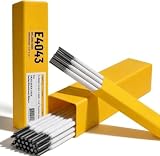
For most repairs on clean, thin-to-medium aluminum, E4043 is the practical first choice—but only if you can use the polarity and technique its package specifies; specialty aluminum electrodes may suit particular alloys or conditions, but they are not drop-in upgrades. Aluminum stick welding is less forgiving than steel stick welding: oxide, moisture, poor fit-up, and excess heat can defeat even a suitable rod. Check the electrode maker’s current data sheet before buying, especially for polarity, amperage, and preheat.
As an Amazon Associate we earn from qualifying purchases at no extra cost to you.


Sections
E4043 versus specialty aluminum electrodes
E4043 electrodes contain aluminum with silicon, a combination commonly used for general-purpose aluminum welding. Their appeal is availability and relatively manageable puddle behavior. Specialty aluminum rods may be formulated for different base alloys, higher strength, or particular service conditions. Those advantages depend on matching the filler to the base metal and application; the word “specialty” alone does not predict a stronger joint.
| Electrode type | Typical rod diameter | Polarity and current | Preheat guidance | What to expect |
|---|---|---|---|---|
| E4043 aluminum | Commonly about 3/32–1/8 in (2.4–3.2 mm) | Often DC electrode positive (DCEP); some products specify AC. Use the package range, commonly tens of amps for small rods. | Thin stock may need none; thicker or heat-sinking parts may benefit from controlled warming, often around 200–400°F (95–205°C), if the product and alloy permit. | A general-purpose option; arc stability and slag release vary significantly by brand and operator. |
| Specialty aluminum electrode | Often about 3/32–1/8 in (2.4–3.2 mm) | Polarity is product-specific: DCEP is common, but do not assume it. | Follow the maker’s instructions; some products call for preheat while others limit it. | Choose for a known alloy or requirement, not simply for a claimed strength advantage. |
| Stainless stick electrode (comparison only) | Commonly about 3/32–1/8 in (2.4–3.2 mm) | Depends on classification and package instructions. | Usually not preheated like thick aluminum; follow the applicable procedure. | For stainless steel, not aluminum. A stainless stick welding rod cannot substitute for an aluminum electrode. |
The ranges above are orientation, not a universal welding procedure. Aluminum electrode formulations and manufacturer instructions differ, and a machine’s open-circuit voltage and output characteristics also affect whether an electrode starts and stays lit. If a product does not clearly identify its compatible base metals, polarity, and current range, choose one with a usable technical sheet instead.
Which rod fits your job?
- General repair on known, weldable aluminum: Start by checking whether E4043 is compatible with the base alloy and service requirements. It is a sensible general-purpose candidate, not a universal filler.
- Structural or safety-critical parts: Don’t choose by electrode label alone. Identify the alloy and temper, consult a qualified welding procedure or professional, and consider whether stick welding is appropriate. A visually sound bead does not establish joint strength.
- Unknown alloy or mixed aluminum grades: Pause before welding. Filler selection, cracking risk, and strength depend on the specific combination. Identify the material or have the job assessed.
- New to aluminum stick welding: Buy a small quantity of a clearly specified electrode and practice on matching scrap. Aluminum’s fast heat transfer and oxide layer make it a difficult process to learn on a valuable part.
Arc stability, slag, and joint strength: what actually separates rods
Arc stability
Aluminum stick electrodes can be harder to start and keep running than common mild-steel electrodes. A rod that repeatedly sticks may indicate incorrect polarity, amperage outside the stated range, damp or damaged electrodes, poor work-clamp contact, or an unsuitable power source—not necessarily a defective batch. Use a short arc, maintain a clean electrical connection, and adjust current in small steps within the manufacturer’s range.
On thin stock, a larger rod or excessive current can burn through before you can control the puddle. On thicker stock, too little heat may leave poor fusion. Match rod diameter to material thickness and joint access rather than assuming a larger electrode is faster.
Slag removal
Aluminum stick electrodes produce slag, and how easily it releases depends on the rod formulation, bead shape, and technique. Let the weld cool enough to handle safely, then remove slag with a dedicated stainless-steel brush or suitable chipping tool. Brush again before adding another pass. Slag trapped between passes can become an inclusion; forcing a tool into a hot bead can also damage it or scatter hot material.
Joint strength
Strength comes from sound fusion, appropriate filler, clean base metal, and a suitable joint—not simply from choosing a specialty rod. Aluminum oxide melts at a much higher temperature than the underlying aluminum, so brushing away visible dirt alone is not enough. Degrease first, then use a clean brush reserved for aluminum. Avoid contaminated abrasives and remove oxide shortly before welding. Do not weld over paint, oil, or unknown coatings.
Polarity, preheat, and setup before striking an arc
- Read the electrode label and data sheet. Confirm base-metal compatibility, electrode-positive or electrode-negative connection, AC compatibility if relevant, amperage, storage, and preheat. For many E4043 stick products, DCEP is specified, but that is not a safe assumption for every product.
- Identify and prepare the aluminum. Remove oil and coatings, clean the joint, and use tools that have not been used on steel. Fit the pieces tightly and clamp them; gaps make burn-through and uneven fusion more likely.
- Preheat only when appropriate. A thick section can pull heat away from the weld, making fusion difficult; controlled preheating can help. Use the product instructions and alloy limits. Avoid overheating, which can damage heat-treated aluminum and may not be obvious by color. Measure temperature with a suitable temperature indicator rather than guessing.
- Set current within the stated range and practice. Begin on scrap of similar thickness. Use a short arc and move steadily; aluminum’s heat spreads quickly, so the puddle can change suddenly. Stop if the rod is sticking, the base metal is melting away, or the bead is sitting on top without fusion.
- Clean between passes and inspect. Remove slag and brush the bead before another pass. Check for cracks, porosity, incomplete fusion, and trapped slag. For a critical joint, visual inspection alone is not enough.
Reading a stick welding rod chart without mixing up materials
A useful stick welding rod chart should distinguish electrode classification, compatible base metal, position, current type, and polarity. A generic chart of stick welding rod types is not enough to select an aluminum electrode: steel classifications such as E6011 or E7018 are not aluminum fillers. Likewise, a stainless stick welding rod is intended for stainless steel, not aluminum.
For stick welding rod sizes, start with the electrode maker’s diameter and amperage table, then account for the workpiece thickness and joint. Small-diameter rods are generally easier to control on thinner stock, while larger rods require more heat and may be impractical for light sections. A chart is a starting point, not a substitute for a test bead on representative scrap.
Buying checklist and ownership realities
- Choose a rod with a clearly stated aluminum classification or alloy, intended base metals, polarity, and current range.
- Buy only enough for the job and practice pieces until you know the electrode works with your machine. Aluminum stick rods can be less forgiving than their listings suggest.
- Store electrodes exactly as directed. Moisture or damaged coating can impair starts and weld quality; do not improvise baking or drying unless the manufacturer permits it.
- Keep a dedicated brush and clean storage for aluminum work. Contamination is an avoidable source of poor welds.
- Consider whether another aluminum welding process is a better fit. If you need repeatable, high-quality joints, a qualified process and procedure may matter more than trying another stick electrode.
Bottom line: E4043 is a reasonable first electrode for compatible, noncritical aluminum repairs when its instructions match your machine and workpiece. Buy a specialty aluminum rod only when its documented alloy match or application solves a specific problem. Confirm polarity and preheat from the exact product data, practice on scrap, and treat critical joints as an engineering and inspection question—not a product-selection shortcut.