
Our Short List of 3
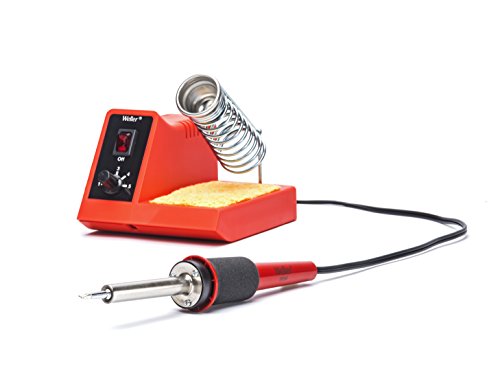
- Best for: A first bench station from a trusted brand.
- 40 W analog soldering station, 5–40 W variable power dial
- Heats up to 900°F
- ST3 iron-plated copper tip, 1/8-inch screwdriver shape
- Lightweight pencil iron with cushioned foam grip

- Best for: A complete low-cost kit for beginners.
- 60 W iron, 110 V, adjustable temperature 200–450°C (392–896°F)
- 5 soldering tips for different joints
- Desoldering pump, iron stand, anti-static tweezers, solder tube
- Iron length 7.0 inches, cord length 59.0 inches
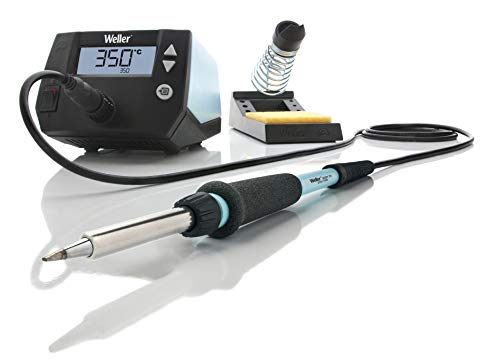
- Best for: Daily bench work with digital control.
- 70 W digital soldering station, WEP70 iron
- Temperature range 100–450°C (200–850°F)
- Heats to 350°C in about 28 seconds
- Temperature stability ±6°C (±10°F)
All 5 Picks at a Glance
| Product | Specs | Action |
|---|---|---|
| Weller WLC100 |
| Check price on Amazon |
| Vastar 60W Soldering Iron Kit |
| Check price on Amazon |
| Weller WE1010NA |
| Check price on Amazon |
 Hakko FX-888DX |
| Check price on Amazon |
 X-Tronic 3020-XTS |
| Check price on Amazon |
Key takeaways
- Compare five soldering irons that heat fast for workshop repairs, with adjustable temperature, steady tips and comfortable grips for wiring jobs.
What's inside
As an Amazon Associate I earn from qualifying purchases. This post may contain affiliate links at no extra cost to you.
A good soldering iron turns fiddly wiring jobs into calm, tidy work on the bench. The right iron heats fast, holds its temperature while you work a joint, and sits comfortably in your hand through a long repair session. The wrong one cools the moment it touches a ground plane, leaves dull joints behind, and makes every repair feel like a fight.
This guide compares five irons and stations that suit workshop repairs, from a simple analog station to digital benches with closed-loop control. Every pick below has a confirmed Amazon listing with a real ASIN, and the specs come from the product pages themselves. Use the guide to match wattage, control, and tip choice to the work you actually do. A short checklist at the end helps you avoid the usual buying mistakes.
Sections
Quick Picks
As an Amazon Associate we earn from qualifying purchases
| Product | Best for | Key spec |
|---|---|---|
| Weller WLC100 | A first bench station from a trusted brand | 40 W analog station, 5–40 W dial |
| Vastar 60W Kit | A complete low-cost kit for beginners | 60 W iron, 200–450°C dial, 5 tips |
| Weller WE1010NA | Daily bench work with digital control | 70 W digital station, 100–450°C |
| Hakko FX-888DX | All-round control with fast recovery | 65 W iron, rotary encoder, 120–899°F |
| X-Tronic 3020-XTS | A complete kit with helping hands | 75 W PID station, 200–480°C |
How to Choose
Wattage and Heat Recovery
Wattage sets how fast an iron heats and how well it holds temperature when the tip meets a joint. A 40 W iron suits light electronics work, while a 60 to 70 W iron handles thicker wire, ground planes, and larger connectors without cooling off mid-joint. Look past the headline number, though. A station with closed-loop control feeds extra power the moment the tip cools, so it recovers faster than a simple dial iron of the same wattage. For workshop repairs that mix small boards and heavier wiring, an iron in the 60 to 70 W range with steady recovery covers the most ground.
Temperature Control
Temperature control decides whether a joint flows cleanly or cooks a component. An analog dial sets power, not temperature, so the tip runs hotter at idle and cooler under load. A digital station reads the tip and holds the set temperature within a few degrees, which matters for heat-sensitive parts and lead-free solder. Presets help when you switch between small signal joints and heavier power connections. A lock or setback mode adds safety on a shared bench. Match the control to your work: a dial suits simple repairs, while digital control earns its keep on boards with mixed joint sizes.
Tips and Compatibility
The tip does the actual work, so tip choice matters as much as the station. A chisel tip in the 1.6 mm range covers most through-hole joints and wire splices, while a fine conical tip suits small pads and tight spaces. Check that the iron takes a tip family with a wide catalogue and fair cost, because a station with scarce tips becomes a burden over time. Ceramic heaters and quick-change designs make swaps painless. Keep two or three tip shapes on hand rather than one do-everything tip, and your joints will look cleaner with less effort.
Comfort, Safety, and Bench Setup
An iron you hold for an hour should feel light and balanced, with a grip that stays cool and a cord that does not fight you. A stable stand with a sponge or brass wool keeps the hot tip parked safely between joints. ESD-safe construction protects sensitive parts on modern boards, and a sleep or setback mode saves tips when you pause mid-job. Give the station a clear spot on the bench with room for solder, flux, and a tip cleaner. A tidy setup keeps the iron ready and your work area free of burns and clutter.
The 5 Best Options
Weller WLC100
- Best for: A first bench station from a trusted brand.
- 40 W analog soldering station, 5–40 W variable power dial
- Heats up to 900°F
- ST3 iron-plated copper tip, 1/8-inch screwdriver shape
- Lightweight pencil iron with cushioned foam grip
A first bench station from a trusted brand.
No digital temperature readout, so you judge heat by solder flow; the analog dial runs hotter at idle than under load.
The Weller WLC100 is the classic first station, and it earns that place with honest simplicity. A dial on the base sets power from 5 to 40 W, and the lightweight SPG40 pencil with its ST3 tip feels natural through long sessions. There is no digital readout, so you learn to judge heat by how solder flows, which builds good habits. The built-in stand and sponge keep the bench tidy. For wiring repairs, guitar electronics, and learning the craft on a trusted brand, this analog station remains a sensible buy.
Vastar 60W Soldering Iron Kit
- Best for: A complete low-cost kit for beginners.
- 60 W iron, 110 V, adjustable temperature 200–450°C (392–896°F)
- 5 soldering tips for different joints
- Desoldering pump, iron stand, anti-static tweezers, solder tube
- Iron length 7.0 inches, cord length 59.0 inches
A complete low-cost kit for beginners.
The stand feels light and the cord runs short, so park it on a clear, stable spot.
The Vastar 60W kit packs everything a beginner needs into one low-cost box. The iron heats fast and the dial on the handle sets temperature from 200 to 450°C, so you can move from fine board work to heavier wire without swapping tools. Five tips, a desoldering pump, a stand, tweezers, and a solder tube come in the box, which means no extra trips to the shop before your first repair. The stand feels light and the cord runs short, so give it a clear spot on the bench. For a first kit on a tight budget, it covers the basics well.
Weller WE1010NA
- Best for: Daily bench work with digital control.
- 70 W digital soldering station, WEP70 iron
- Temperature range 100–450°C (200–850°F)
- Heats to 350°C in about 28 seconds
- Temperature stability ±6°C (±10°F)
Daily bench work with digital control.
ET tips cost more than generic tips, and the station sits at the higher end of the range for casual use.
The Weller WE1010NA is the station you buy when soldering becomes a daily habit. Its 70 W WEP70 pencil heats to 350°C in about 28 seconds and holds temperature within a few degrees while you work, thanks to closed-loop control. Tips change by hand with no tools, and standby with auto setback protects the tip when you pause. The digital display reads clearly across the bench, and the whole chain from station to iron to silicone cable is ESD safe. It costs more than a dial station, and ET tips run higher than generic tips, but for steady daily bench work it earns its keep.
Hakko FX-888DX
- Best for: All-round digital control with fast recovery.
- 100 W station, 65 W FX-8801 handpiece, 120 V
- Temperature range 120–899°F (50–480°C)
- Temperature stability ±1.8°F (±1.0°C)
- Rotary encoder with parameter lock, digital LCD display
All-round digital control with fast recovery.
120 V only, so it will not run on 240 V systems; the digital menu takes a little learning.
The Hakko FX-888DX is the current version of the bench standard, and it improves the classic with a rotary encoder that makes setting temperature quick and sure. Turn the knob to adjust, press it to set, and a parameter lock stops accidental changes while you work. The 65 W FX-8801 iron with its ceramic heater recovers heat fast, moving from fine pads to thick ground pours without a pause. T18 tips are cheap and plentiful, and the compact station leaves bench space for the job itself. For makers who want one station to buy once and keep, this is the safe pick.
X-Tronic 3020-XTS
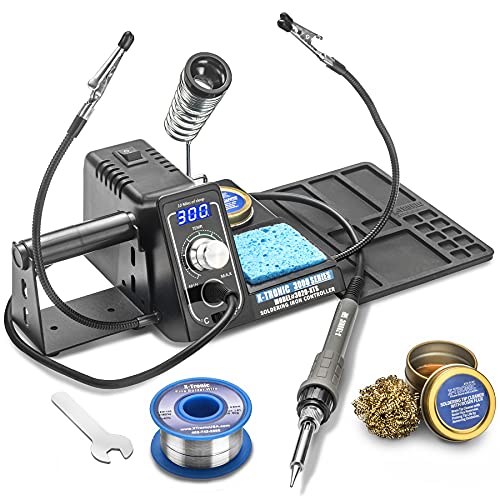
- Best for: A complete kit with helping hands.
- 75 W station, 60 W at the iron, 110 V
- Temperature range 200–480°C (392–896°F), PID stability ±2°C (±3.6°F)
- Blue LED readout, C/F toggle, 10-minute sleep timer
- 2 helping hands, solder roll holder, brass sponge tip cleaner with flux, wet sponge
A complete kit with helping hands.
Build quality trails the big-name stations, and the iron runs on 110 V only.
The X-Tronic 3020-XTS is the easiest way to set up a complete bench for around the cost of a single premium iron. A 75 W PID station holds the tip within a couple of degrees, and the blue LED readout shows the setting at a glance. The box adds two helping hands, a silicone work mat, a brass-wool tip cleaner with flux, and a roll of solder, so you can open it and get to work. A 10-minute sleep timer cools the iron if you forget it in the holder. Build quality trails the big names, but as a value kit for beginners it is hard to beat.
Which One Fits Your Situation
Learning the craft for the first time
A first iron should forgive mistakes and teach good habits. The Weller WLC100 or the Vastar kit both suit this stage: one gives you a trusted brand and a simple dial, the other gives you a full box of accessories for little money. Either way, keep a chisel tip fitted, practise on scrap wire before touching a real board, and clean the tip often. A cheap iron that heats steadily beats a fancy station you do not yet understand.
A bench that sees daily use
When you solder every day, recovery speed and tip life matter more than the headline wattage. The Weller WE1010NA and the Hakko FX-888DX both hold temperature under load and change tips without tools, so you lose no time between joints. Digital control with presets lets you jump between fine pads and heavy wire. Spend the extra here and your bench will feel calm rather than rushed, even on a long repair list.
Occasional repairs around the house
For the odd repair — a loose guitar jack, a frayed lamp cord, a battery contact — you want an iron that works the moment you plug it in. The Vastar kit or the X-Tronic station both cover this ground, with a stand and the basics in the box. Keep the tip clean and tinned between jobs and it stays ready. No need for a digital bench when a simple iron does the job.
A compact kit for a small workspace
Small benches need tools that earn their footprint. The X-Tronic bundle folds a station, helping hands, and a solder roll into one tidy unit, while the Vastar kit packs its accessories into a carry bag you can shelve between jobs. Pick a station with a built-in stand and a small tip cleaner, and keep only the tips you use. A tidy bench means the iron is always within reach and never in the way.
Common Mistakes
- Skipping tip cleaning — a dirty tip cannot transfer heat, so wipe it on brass wool or a damp sponge before every joint.
- Running the iron too hot for the job — excess heat lifts pads and cooks components, so use the lowest temperature that flows solder cleanly.
- Pressing hard instead of letting heat do the work — pressure bends tips and cracks joints; hold the iron steady and let the solder flow.
- Leaving the iron on and untinned — an idle iron oxidises fast, so tin the tip before you park it and use sleep or setback mode when you pause.
- Buying tips that do not fit — check the tip family before ordering spares, because a bargain tip for the wrong iron is money wasted.
Frequently Asked Questions
How much wattage do I need for general repairs?
For most workshop repairs, 40 to 70 W covers the range. A 40 W iron suits light electronics and small joints, while 60 to 70 W handles thicker wire, connectors, and ground planes without cooling off. More wattage helps only when the iron also recovers heat quickly, so look at temperature control and tip design alongside the headline number.
Are digital stations worth the extra cost over analog dials?
Digital stations hold a set temperature within a few degrees and recover faster after each joint, which protects heat-sensitive parts and gives cleaner results on mixed boards. Analog dials set power rather than temperature, so they suit simple repairs where exact heat matters less. If you solder often or work on modern boards, digital control earns its keep; for occasional jobs, a good analog station does fine.
What tips should a beginner keep on hand?
A 1.6 mm chisel tip covers most through-hole joints and wire splices, so fit one first. Add a fine conical tip for small pads and tight spaces, plus a wider chisel for heavier wire and ground planes. Keep the set small: three shapes handle nearly every workshop repair, and each one lasts longer when you clean and tin it after every session.
How do I keep a tip in good shape?
Clean the tip on brass wool or a damp sponge before and after each joint, then coat it with a thin layer of fresh solder before you park the iron. Never file or sand a plated tip, and never leave the iron hot and dry for long stretches. A tinned tip resists oxidation, transfers heat better, and lasts far longer than a neglected one.
Related guides
More from Amazon
Programs that pair well with the guide above. Offers and eligibility are set by Amazon and may change.
A free business account with business pricing and bulk-buying tools for work, shop or home office.
Create a business accountFree shipping on eligible items, Prime Video and more. Eligible new members can start with a free trial.
Start a Prime free trialAudiobooks and podcasts to listen to on the go. Eligible new members can start with a free trial.
Try Audible freeAd-free music streaming. Eligible new subscribers can start with a free trial.
Try Music Unlimited freeAs an Amazon Associate we earn from qualifying purchases.


Write Your Review
No reviews yet. Be the first to share your experience!