
Our Short List of 3

- Thread size: fine machine thread, small diameter for light-duty jigs
- Length: short length, easy to cut and store
- Material: steel with a zinc-plated finish
- Thread coverage: fully threaded along the whole length
- Thread size: quarter-inch coarse thread
- Length: twelve inches
- Material: steel with a zinc-plated finish
- Thread coverage: fully threaded along the whole length
- Thread size: three-quarter-inch coarse thread
- Length: twelve inches
- Material: steel with a zinc-plated finish
- Thread coverage: fully threaded along the whole length
All 5 Picks at a Glance
| Product | Specs | Action |
|---|---|---|
| 1. Hillman Zinc-Plated Threaded Rod, Fine Thread, Short Length |
| Check price on Amazon |
| 2. National Hardware Zinc-Plated Steel Threaded Rod, Quarter-Inch, Twelve Inches |
| Check price on Amazon |
| 3. National Hardware Zinc-Plated Steel Threaded Rod, Three-Quarter-Inch, Twelve Inches |
| Check price on Amazon |
 4. Small Parts Zinc-Plated Steel Threaded Rod, One-Inch, Thirty-Six Inches |
| Check price on Amazon |
 5. uxcell Fully Threaded Rod, Metric Ten, Stainless Steel, Pack of Four |
| Check price on Amazon |
Key takeaways
- Find the best threaded rods for woodworking jigs, workbench vises and joinery. Compare zinc-plated and stainless steel rods by size, length and thread.
What's inside
As an Amazon Associate I earn from qualifying purchases. This post may contain affiliate links at no extra cost to you.
A threaded rod is a long steel bar with a continuous thread along its whole length, and it is one of the most useful pieces of hardware in a woodworking shop. It can be cut to any size, paired with nuts and washers, and used wherever a bolt is too short. Woodworkers reach for it when they build workbench vises, clamping jigs, hold-downs, leveling feet, and shop furniture that comes apart and goes back together again.
Choosing the right rod matters. A thin rod bends under clamping load, a short rod cannot span a wide bench, and a bare steel rod rusts in a damp garage. Diameter sets the strength, length sets the reach, thread pitch sets how fast a nut travels, and the finish sets how well the rod survives humidity. This guide compares five threaded rods that cover the sizes woodworkers actually use, from fine hardware for small jigs to heavy rod for bench vises.
As an Amazon Associate, we earn from qualifying purchases.
Sections
Quick Answer
For most woodworking jigs and shop furniture, the quarter-inch zinc-plated rod is the best all-round choice because it balances strength, easy cutting, and common nut sizes. Choose the three-quarter-inch rod for heavy vise screws and the stainless metric rod for damp shops or outdoor benches.
Table of Contents
- Best Threaded Rods
- Quick Answer
- How to Choose
- Who Should Skip
- Frequently Asked Questions
- Final Verdict
- Product and ASIN Reference
1. Hillman Zinc-Plated Threaded Rod, Fine Thread, Short Length
- Thread size: fine machine thread, small diameter for light-duty jigs
- Length: short length, easy to cut and store
- Material: steel with a zinc-plated finish
- Thread coverage: fully threaded along the whole length
The Hillman zinc-plated threaded rod is the small-scale pick in this roundup, solving problems the bigger rods cannot touch. Its fine thread suits small jigs and delicate fixtures where a coarse thread would move too far with each turn of the nut. The short length is easy to store and cut with a hacksaw, and the zinc plating gives some protection against rust in a normal indoor shop.
Woodworkers often use fine threaded rod as a drawbar inside a jig, pulling two faces together with a nut and washer at each end. The fine thread gives precise control over tension, so a small turn of the nut makes a small change in pressure. To cut it, saw with a fine-tooth blade, file the burr, and run a nut over the cut end to straighten the thread.
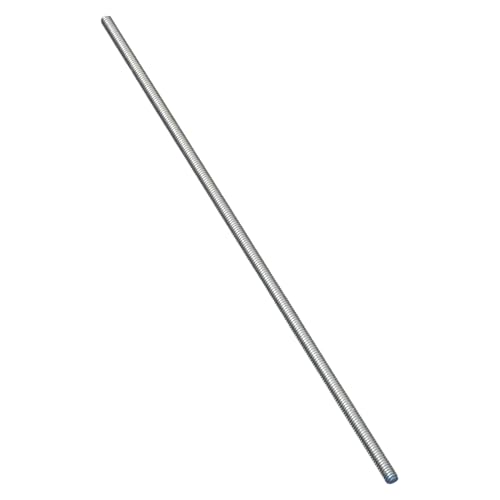
2. National Hardware Zinc-Plated Steel Threaded Rod, Quarter-Inch, Twelve Inches
- Thread size: quarter-inch coarse thread
- Length: twelve inches
- Material: steel with a zinc-plated finish
- Thread coverage: fully threaded along the whole length
The National Hardware quarter-inch rod is the workhorse of this roundup. Quarter-inch thread is the size most woodworkers reach for first, because it pairs with the nuts, washers, and threaded inserts already in most shop drawers. At twelve inches long, the rod can span a small bench vise, a clamping jig, or a shop stool stretcher, yet it is short enough to cut down without much waste.
This rod shines in everyday shop furniture. Use it as a stretcher rod between the legs of a workbench or a stool, with a nut and washer on each side of each leg to pull the frame tight. Use it as the screw in a simple shop-made vise, where the coarse thread balances clamping speed and holding power. Use it for adjustable leveling feet on a bench with an uneven floor, pairing the rod with a threaded insert in the leg and a pad foot at the bottom.
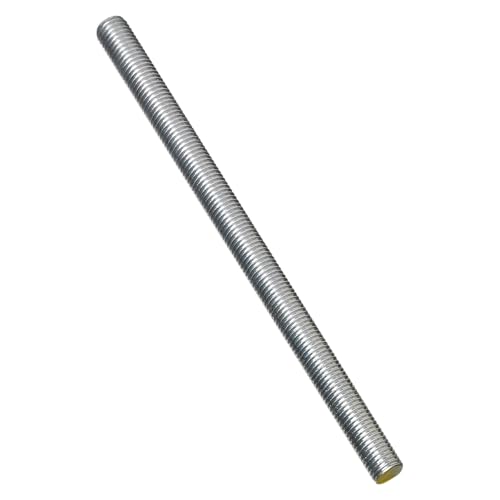
3. National Hardware Zinc-Plated Steel Threaded Rod, Three-Quarter-Inch, Twelve Inches
- Thread size: three-quarter-inch coarse thread
- Length: twelve inches
- Material: steel with a zinc-plated finish
- Thread coverage: fully threaded along the whole length
When a job needs real muscle, the three-quarter-inch rod from National Hardware is the pick. This is a heavy rod for heavy work: leg vises, large bench frames, and shop furniture that takes serious load. The coarse thread is sized for big nuts and washers, and the thick cross-section resists bending far better than the smaller rods in this guide.
Large rods like this one are also useful as through-bolts in thick assemblies. A workbench with a heavy top or a large clamping caul can be drawn together with a rod that passes all the way through, with a nut and a large washer on each end. Cutting takes a cutoff wheel or a bandsaw with a metal-cutting blade; after cutting, file the end round and run a nut over the cut to make sure it spins freely.
4. Small Parts Zinc-Plated Steel Threaded Rod, One-Inch, Thirty-Six Inches
- Thread size: one-inch coarse thread
- Length: thirty-six inches
- Material: alloy steel with a zinc-plated finish
- Thread coverage: fully threaded along the whole length
The Small Parts one-inch rod is the longest and heaviest pick in this roundup, and it is the one to choose when a project needs a full-length tension member. At thirty-six inches, a single rod can span a wide workbench or a large assembly table, and it can be cut into several shorter pieces for a set of matching jigs.
This rod is a strong choice for shop furniture that must stay rigid. A wide bench benefits from a long rod running between the legs on each side, pulling the frame together and keeping it from racking. A large gluing jig or a panel clamp can use the same rod as its main screw. Because the rod is fully threaded, nuts can sit anywhere along its length, so one rod can carry several clamping points at once. Cut it with a cutoff wheel or a bandsaw, then file the end and run a nut over the cut to clean the thread.
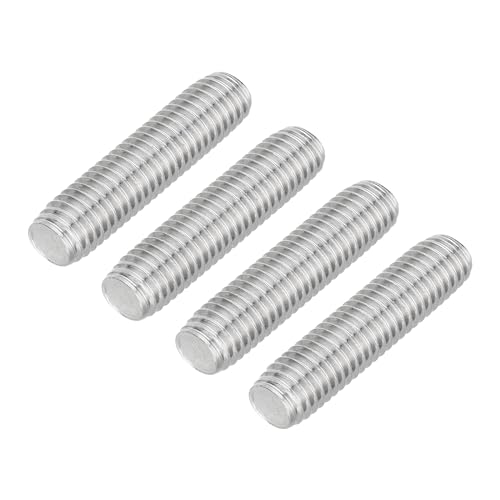
5. uxcell Fully Threaded Rod, Metric Ten, Stainless Steel, Pack of Four
- Thread size: metric ten, fine pitch
- Length: forty millimetres per rod
- Material: 304 stainless steel
- Thread coverage: fully threaded along the whole length
The uxcell metric rod brings stainless steel into this roundup, and that changes where the rod can be used. Stainless steel resists rust far better than zinc-plated steel, so this rod suits damp shops, unheated garages, and outdoor benches where moisture is a constant problem. The metric ten thread is a common size for imported jigs and fixtures built around metric fasteners.
Short stainless rods are ideal for small fixtures that live near water or in humid air. Use them as studs in a sharpening station, as tension rods in a small press, or as fasteners in a jig that gets wiped down often. The stainless surface stays clean and smooth, so nuts turn freely even after the rod has sat unused for months. Cut with a fresh hacksaw blade or a cutoff wheel, and file the end clean.
How to Choose
Start with diameter, because diameter sets strength. A thin rod is fine for light jigs, but it bends under clamping load. A quarter-inch rod handles most bench and jig work, a three-quarter-inch rod suits vise screws and heavy frames, and a one-inch rod is for long spans and high loads. When in doubt, go one size larger, because a rod that is too thin is hard to fix after the jig is built.
Next, match the length to the job. Measure the span the rod must cover, add room for a nut and washer at each end, and add a little extra for adjustment. A rod that is too short cannot be stretched, while a rod that is too long can always be cut down.
Then choose the thread. Coarse threads move nuts quickly and are forgiving of sawdust and grime, which makes them right for jigs that open and close often. Fine threads move slowly and give precise control over tension, which suits delicate fixtures and small clamps. Metric threads are the right call when the rest of the hardware is metric. Finally, pick the finish: zinc-plated steel for a dry indoor shop, stainless steel for damp shops and outdoor benches.
Who Should Skip
Threaded rod is not the right fastener for every job. If a joint needs to come apart and go back together many times a day, a quick-release clamp or a cam lever will be faster than spinning nuts along a rod. If a project needs a clean, finished look with no visible hardware, a hidden dowel joint or a pocket screw will look better than a rod end with a nut and washer showing. If the load is a sideways shear load rather than a pulling load, a dowel or a bolt through a snug hole will resist it better, since a threaded rod is strongest in tension.
Beginners who have never cut metal should also pause before buying a heavy rod. Cutting a one-inch steel rod takes the right blade and a firm setup, and a bad cut can damage the thread so a nut will not start. Start with a quarter-inch rod and a hacksaw, and move up to thicker rod once the technique is comfortable.
Frequently Asked Questions
What is a threaded rod used for in woodworking?
A threaded rod is used as a long adjustable fastener in jigs, workbench vises, shop furniture, and clamping fixtures. It acts like a bolt of any length, because it can be cut to size and paired with nuts and washers anywhere along its thread.
How do I cut a threaded rod without damaging the thread?
Thread a nut onto the rod past the cut line before sawing, then cut with a hacksaw or a cutoff wheel. After cutting, file the end smooth and back the nut off over the cut to straighten the thread.
Should I choose zinc-plated steel or stainless steel threaded rod?
Choose zinc-plated steel for a dry indoor shop, where it gives good protection and is easy to cut. Choose stainless steel for damp shops, unheated garages, and outdoor benches, where rust resistance matters more than easy cutting.
What size threaded rod is best for a workbench vise?
A three-quarter-inch rod is a strong choice for a leg vise or a heavy shop-made vise, because its thick cross-section resists bending under clamping load. A quarter-inch rod suits small vises and light jigs, while a one-inch rod suits wide benches and long spans.
Final Verdict
Threaded rod is simple hardware, and that simplicity is its strength. A single bar, cut to length and paired with nuts and washers, can become a vise screw, a bench stretcher, a jig drawbar, or a leveling foot. The five rods in this guide cover the range a woodworking shop needs, from the fine Hillman rod for small fixtures to the heavy one-inch Small Parts rod for wide benches. For most shops, the quarter-inch National Hardware rod is the best starting point, because it matches the nuts and inserts already in the drawer and handles the widest range of jobs. Add the three-quarter-inch rod when a vise needs muscle, and keep the stainless metric rods on hand for damp corners of the shop.
Product and ASIN Reference
| Product | ASIN |
|---|---|
| Hillman Zinc-Plated Threaded Rod, Fine Thread, Short Length | B00JDU88XO |
| National Hardware Zinc-Plated Steel Threaded Rod, Quarter-Inch, Twelve Inches | B0029T1XHY |
| National Hardware Zinc-Plated Steel Threaded Rod, Three-Quarter-Inch, Twelve Inches | B002CU7EIC |
| Small Parts Zinc-Plated Steel Threaded Rod, One-Inch, Thirty-Six Inches | B00HS803YU |
| uxcell Fully Threaded Rod, Metric Ten, Stainless Steel, Pack of Four | B0D3TJW47C |
Related guides
More from Amazon
Programs that pair well with the guide above. Offers and eligibility are set by Amazon and may change.
A free business account with business pricing and bulk-buying tools for work, shop or home office.
Create a business accountFree shipping on eligible items, Prime Video and more. Eligible new members can start with a free trial.
Start a Prime free trialAudiobooks and podcasts to listen to on the go. Eligible new members can start with a free trial.
Try Audible freeAd-free music streaming. Eligible new subscribers can start with a free trial.
Try Music Unlimited freeAs an Amazon Associate we earn from qualifying purchases.
Write Your Review
No reviews yet. Be the first to share your experience!