What's inside
As an Amazon Associate I earn from qualifying purchases. This post may contain affiliate links at no extra cost to you.
The moment a child outgrows a forward-facing harnessed seat, parents face a deceptively simple question: what is a booster seat, and does my kid actually need one? A booster elevates a child so the vehicle lap and shoulder belts sit correctly across the hips and collarbone instead of creeping up toward the neck and stomach. Skip it, and you risk a poorly fitted belt that turns a minor collision into a serious injury. Get it right, and your child stays protected until they are tall enough for the belt alone.
Not every booster is equal. The cheapest options sometimes use thin foam that compresses after months of use, while premium seats add belt guides, wider bases for stability, and machine-washable covers. Owner feedback consistently highlights three pain points: installation fussiness, comfort on long drives, and whether the seat will last through a second or third child. This roundup compares eight models on published specs, listed prices, and recurring themes from real buyer reviews to help you narrow the field quickly.
As an Amazon Associate we earn from qualifying purchases at no extra cost to you. Product prices and availability are accurate as of the date shown and are subject to change.



Quick Picks
| Product | Best for | Price |
|---|---|---|
| Graco TurboBooster 2.0 Backless, Denton | Lowest-cost transition seat | $34.99 |
| Graco TurboBooster 2.0 Highback, Declan | Smaller cars without high seatbacks | $69.99 |
| Graco TurboBooster 2.0 Backless, Trisha | Extended height range travel use | $34.99 |
| Graco TurboBooster LX Backless, Rio | Easy installation with Latch connectors | $49.99 |
| Chicco GoFit ClearTex Plus | Higher weight ceiling | $64.99 |
| Cosco Kids Topside, Pack of 2 | Two kids on one budget | $39.98 |
| Evenflo GoTime LX Booster | Comfort-focused daily commuting | $55.99 |
| Ingenuity SmartClean Toddler Booster | Tableside use for toddlers | $29.99 |
How We Picked
We filtered these eight models by three criteria that dominate owner complaints and praise: proper belt positioning design (integrated guides, contoured backs, or raised armrests that keep the shoulder belt off the neck), installation simplicity (Latch systems or no-belt-fuss bases that snap into place in seconds), and durability signals such as reinforced seams, non-slip bases, and covers that survive repeated machine washes. Price-to-value was the fourth lens, because a $30 seat that fails in a year costs more than a $70 seat that holds its shape through three siblings.
The 8 Best What Is A Booster Seat in 2026
Graco TurboBooster 2.0 Backless, Denton
This is the entry point for families who already have a supportive vehicle seatback and need nothing more than a raised cushion. Owners praise its remarkably low price and lightweight body that slides between cars without a fight. The molded armrests position the lap belt correctly, and the smooth plastic base wipes clean easily.
- Pro: Lowest sticker price in the lineup makes it a realistic spare for grandparents or carpool drivers.
- Pro: Light enough for a five-year-old to carry to and from the car independently.
- Con: No head support, so it becomes uncomfortable or unsafe in vehicles with low seatbacks.
Skip this if your car’s bench seat is shallow or your child falls asleep on drives and needs a headrest.
Graco TurboBooster 2.0 Highback, Declan
For smaller cars, trucks with thin bench seats, or parents who want one seat that handles every vehicle in the family rotation, the highback version adds an adjustable headrest and side-impact wings. Reviewers note it converts to a backless unit later, effectively giving you two seats in one price.
- Pro: Removable headrest extends height compatibility for older or taller kids.
- Pro: Side wings add a layer of lateral head protection that backless models simply lack.
- Con: At $69.99 it costs double the backless twin, and the bulkier frame takes up more rear-seat real estate.
Skip this if you only need a quick transfer seat for occasional carpool use and already have tall vehicle headrests.
Graco TurboBooster 2.0 Backless, Trisha
Spec-wise, Trisha is identical to Denton: backless, $34.99, rated for 40 to 100 pounds and heights up to 57 inches. Owners gravitate toward this listing because the extended 57-inch ceiling means it covers a genuinely wide age band from roughly four through ten. The fabric-wrapped surface feels softer than the hard plastic variants and resists the cracking some long-term users report on cheaper seats.
- Pro: Height range up to 57 inches keeps a tall ten-year-old legally and safely elevated.
- Pro: Soft-touch fabric cover looks less worn after months of backpacks and muddy knees.
- Con: Fabric absorbs spills more readily than the plastic-base siblings, and the cover is not always listed as machine-washable.
Skip this if your priority is wipe-and-go cleanup after toddler snack disasters.
Graco TurboBooster LX Backless, Rio
The LX series adds integrated Latch connectors that clip directly onto the vehicle’s lower anchors, eliminating the need to thread the lap belt through the booster itself. Parents who juggle two or three cars mention this as the single biggest daily-time-saver. The Affix system keeps the seat stable during loading without requiring a separate belt route.
- Pro: Latch installation takes seconds and leaves the vehicle belt free for the child.
- Pro: Stable base reduces the wobble that causes younger kids to squirm and reposition mid-drive.
- Con: The $49.99 price sits in an awkward middle: nearly $15 more than the plain TurboBooster for what is still a backless seat.
Skip this if you have only one vehicle and never move the booster; the cheaper models install just as safely with the belt route.
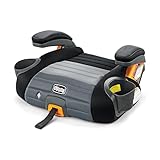
Chicco GoFit ClearTex Plus
Chicco’s entry targets families whose kids are heavier or growing faster than average. The 110-pound upper limit is the highest in this group, and the ClearTex fabric treatment resists stains without a chemical-heavy coating. Owners describe the cupholder area as wider and less likely to tip with a tall travel mug.
- Pro: Weight rating to 110 pounds extends usable life well past most competitors.
- Pro: ClearTex fabric wipes clean with a damp cloth and resists grape-juice and marker stains.
- Con: At $64.99 it is the second-most-expensive backless option, and the cushion profile is slightly thinner, which some kids notice on longer trips.
Skip this if your child is already at the upper end of the height band and you would be better served by a highback or convertible seat instead.
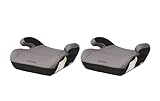
Cosco Kids Topside, Pack of 2
Two seats for $39.98 works out to under twenty dollars each, making this the most economical way to equip a shared carpool, a second vehicle, or two same-age siblings. The belt guide is a simple molded channel, and the lightweight shell means you can stack both in a trunk without losing cargo space.
- Pro: Per-unit cost is roughly half of any other seat on this list.
- Pro: Easy-clean cover and slim profile fit three-across in wide benches.
- Con: Single-seater reviews mention minimal padding and a hard plastic contact surface that gets uncomfortable after about an hour.
Skip this if you need long-road-trip comfort for a single child; the thin padding is the trade-off for the aggressive price.
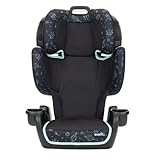
Evenflo GoTime LX Booster
Evenflo leans into everyday comfort with a contoured seat pad and padded armrests that reviewers call noticeably softer than the Graco and Cosco equivalents. The Latch connectors work like the Rio’s, and the Astro Blue colorway hides dust and crumbs better than lighter options. It is a strong choice for the parent who drives twenty minutes to school each morning and evening.
- Pro: Padded armrests and seat contour reduce the pressure-point discomfort kids mention on plastic boosters.
- Pro: Latch installation keeps the setup identical to the Rio without the Graco brand premium.
- Con: The padded surfaces take longer to dry after a wash, and the cover is listed as spot-clean only in some retailer descriptions.
Skip this if you live in a humid climate and need a cover that air-dries overnight between spills.
Ingenuity SmartClean Toddler Booster
This is not a car seat. It is a dining-table booster for toddlers, and it rounds out the list because parents searching what is a booster seat often land here by mistake or by design, needing both products. The 3-point harness keeps a squirmy two-year-old upright at the kitchen table, and the lightweight body clips onto most standard chairs. The SmartClean surface is its standout feature: a single wipe removes most food residue.
- Pro: 3-point harness prevents the leaning and sliding that plague lap-only table boosters.
- Pro: At $29.99 it is the cheapest item in the list and solves a completely different daily problem than the other seven.
- Con: Not a vehicle safety seat under any circumstance; do not confuse it with the car boosters above.
Skip this entirely if you are shopping for road travel; look at the Graco or Chicco models instead.
Buying Guide
Backless vs. Highback: Which Does Your Vehicle Actually Need?
A backless booster only protects correctly when the vehicle seatback is tall enough to support the child’s head. If your car’s rear bench ends mid-shoulder, or you drive a pickup with a shallow cab, the highback variant is non-negotiable. Measure from the seat cushion to the top of the headrest opening; anything under 24 inches usually means go highback.
Latch vs. Belt Route: Installation That Survives Real Life
Integrated Latch connectors anchor the booster to the car so it does not slide forward when a child buckles up alone. Without Latch, the vehicle lap belt must thread through the booster’s own guides, which adds two or three seconds per use and creates a common failure point if the child skips the routing step. For a seat that will be moved between vehicles weekly, Latch is worth the modest price bump.
Weight and Height Limits: How Long Will It Last?
Most backless boosters top out around 100 pounds and 57 inches. The Chicco GoFit extends that ceiling to 110 pounds, buying a heavier or older child several extra months of compliance. Check your child’s current measurements against the upper limit; if they are within five pounds of the ceiling, consider whether a convertible seat with a higher harness rating might serve better than a booster you will replace within a year.
Our Verdict
Top pick: Graco TurboBooster LX Backless, Rio. The Latch connectors solve the single most common daily friction point, the belt-routing simplicity means fewer installation errors, and the $49.99 price sits just above the base models without the highback bulk. For one seat that works in every car and survives years of use, it is the easiest recommendation.
Budget pick: Cosco Kids Topside, Pack of 2. Under twenty dollars per seat makes it realistic to keep one in every family vehicle. Accept the thinner padding and treat it as a functional spare rather than a primary daily ride.
Situational winner: If your child frequently rides in vehicles with low seatbacks, the Graco TurboBooster 2.0 Highback, Declan, is the only model here that guarantees head support regardless of the car you borrow.
FAQ
At what age or weight should my child switch to a booster seat?
Most pediatric safety guidelines recommend switching once a child exceeds the harness height or weight limit of their forward-facing seat, typically around four years old and 40 pounds. Your specific seat’s manual has the authoritative number; treat the manufacturer limit, not a birthday, as the trigger.
How do I know if the seat belt fits correctly in a booster?
The lap belt should lie flat across the upper thighs, not the soft stomach. The shoulder belt should cross the middle of the chest and shoulder, not touch the neck or ear. If either belt drifts off those zones, the child is too small or the booster is not elevating them enough.
Can I use a booster seat in the front row?
Children under thirteen should ride in the back seat whenever possible. If your vehicle has no rear seats or they are all occupied, a booster in the front is preferable to no restraint at all, but deactivate the passenger airbag if the child sits close to the dashboard.
Do booster seats expire?
Yes. Most manufacturers stamp a service life of six to ten years from the production date. Plastic becomes brittle with UV exposure and temperature cycling, and safety standards may have changed since the seat was certified. Check the label on the bottom or back of the seat and replace it once the printed expiration date passes, regardless of visible condition.