What's inside
As an Amazon Associate I earn from qualifying purchases. This post may contain affiliate links at no extra cost to you.
Sections
Best Buzz Box Welders for Reliable Stick Welding
The best buzz box welder for most occasional shop and farm repairs is a 225-amp, 230-volt AC transformer with enough output for common 1/8-inch electrodes; choose a smaller 140–180-amp machine for lighter work and easier storage, or a heavier AC/DC model if you need more electrode options and smoother low-current control.
Shortlist by situation
- Best for general-purpose AC welding: Lincoln Electric AC-225. A long-established 225-amp transformer design for users with 230-volt power, space for a substantial machine, and jobs that suit AC stick electrodes.
- Best when DC output matters: Lincoln Electric AC/DC 225/125. Adds DC capability to the familiar transformer format, giving you access to a broader selection of electrodes and polarity choices. It is still a heavy, corded shop machine—not a portable inverter.
- Best for basic, lower-volume work: a 140–180-amp AC transformer. Consider this class if your jobs are mostly mild-steel repairs with 3/32-inch rods and you have a compatible 230-volt circuit. Check the exact model’s output and duty cycle before buying; not every compact-looking unit can sustain the same work.
- Best for frequent field work: reconsider the buzz box format. A traditional transformer can be exceptionally durable, but its weight and need for substantial input power make it awkward to move. A suitable engine-driven welder or inverter may fit that job better.
How the main choices compare
Specifications vary by production version and market. Treat the figures below as model-class guidance, then verify the nameplate and manual for the exact unit—especially input current, duty cycle, and included accessories.
As an Amazon Associate we earn from qualifying purchases at no extra cost to you.

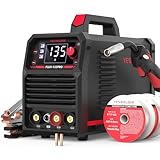

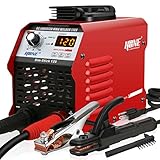
| Welder or class | Output range | Output | Input | Practical fit |
|---|---|---|---|---|
| Lincoln Electric AC-225 | 40–225 A | AC | 230 V, single phase | General shop and farm repairs; common 1/8-inch AC rods, subject to rod and material requirements |
| Lincoln Electric AC/DC 225/125 | AC: 40–225 A; DC: 30–125 A | AC and DC | 230 V, single phase | Users who want DC electrode options and AC capacity in one stationary transformer |
| Smaller AC transformer class | Typically about 40–140 or 40–180 A | AC | Often 230 V; confirm the model | Occasional, lighter work with smaller electrodes and fewer long weld runs |
Choose by the work you actually do
Mostly light repairs and short welds
A smaller AC transformer can be a sensible purchase if you weld infrequently, work mainly on mild steel, and can use 3/32-inch electrodes. Its lower maximum output is less important than whether it runs the rods you need at a useful amperage. For thin material, more amperage is not automatically an advantage: fit-up, joint design, rod choice, and careful heat control matter more than owning a 225-amp machine.
Farm equipment, brackets, and heavier stock
A 225-amp AC machine gives more headroom for larger electrodes and thicker material, provided the work is appropriate for stick welding and the welder’s duty cycle. Common 1/8-inch rods often fall within the working range of this class, but the correct setting depends on electrode type, position, joint, and manufacturer guidance. A high maximum output does not mean you can weld continuously at that setting; transformer machines need cooling time.
Different rods or a smoother DC arc
Choose an AC/DC transformer if you expect to use electrodes that specify DC, want to select electrode polarity, or find AC arc starts and operation frustrating. DC output can make some rods easier to run, but it does not make every weld problem disappear. Rod condition, clean base metal, correct polarity, cable connections, and a steady arc length still matter. Check the DC model’s maximum current separately: the AC and DC limits may be quite different.
Check electrodes before buying
Electrode compatibility is a practical buying filter, not a minor feature. A basic AC-only buzz box works with many common AC-rated mild-steel electrodes, including suitable E6011 and E6013 products, when used within their specified current range. Some electrodes are intended for DC only, and others run on AC or DC. Read the rod manufacturer’s label rather than assuming that a familiar classification works on every machine.
Also match the rod diameter to the machine, material thickness, and available amperage. Larger rods need more current and are less forgiving on a small transformer. A 225-amp rating is useful only if the welder can deliver the required current at an acceptable duty cycle and your circuit can supply its input demand.
Input power, space, and portability
Most full-size buzz boxes require 230-volt single-phase power. Before purchase, check the welder’s nameplate and manual for its input current and recommended circuit. Do not assume a common household receptacle, breaker, extension cord, or generator is adequate. A qualified electrician can confirm whether the existing circuit and wiring suit the machine; undersized wiring and long, light-gauge leads can cause voltage drop and poor performance.
Transformer welders trade convenience for a simple, durable design. The Lincoln Electric AC-225, for example, weighs roughly 100 pounds, so plan for a fixed shop location, a sturdy cart, and a safe way to move it. Model versions differ, so confirm weight and dimensions before arranging delivery or storage. If you need to carry a welder to a fence line or jobsite, its mass and dependence on 230-volt power may outweigh the appeal of a rugged transformer.
Durability and ownership costs
A conventional transformer has fewer electronic controls than an inverter, which can be an advantage in a stationary shop. It is not maintenance-free: dust can obstruct cooling, damaged cables create heat and voltage loss, and worn electrode holders or work clamps can make a sound machine seem unreliable. Inspect the leads, connections, insulation, and ventilation openings periodically; disconnect power before cleaning or servicing, and follow the manual’s instructions.
The common wear items are usually external: electrode holders, work clamps, cable ends, and leads damaged by abrasion or heat. Replace worn parts with correctly rated components rather than continuing to weld through a loose or overheating connection. Keep electrodes dry according to their storage requirements—moisture can contribute to porosity, unstable operation, or hydrogen-related cracking in susceptible applications. Don’t bake rods unless the manufacturer specifies the process and temperature.
Budget for more than the machine. You may need a suitable 230-volt circuit, welding leads or replacement cables, a helmet, gloves, protective clothing, a chipping hammer, a wire brush, and electrodes. If you weld only a few times a year, an inexpensive machine that needs electrical upgrades and a dedicated storage spot may cost more in effort than expected.
Quick decision matrix
| Your situation | Better fit | Reason |
|---|---|---|
| Occasional repairs, mostly 3/32-inch rods, limited floor space | Smaller AC transformer | Enough capacity for lighter jobs without paying for output you rarely use |
| Regular shop repairs and common 1/8-inch AC rods | 225-amp AC transformer | Useful current headroom, if the 230-volt circuit and duty cycle suit the work |
| Need AC and DC electrodes or polarity options | AC/DC transformer | Broader electrode compatibility, with a lower DC maximum on some models |
| Frequent welding away from a powered shop | Portable inverter or engine-driven welder | A traditional transformer’s weight and input requirements can be limiting |
Bottom line
For a permanent shop with 230-volt power, the Lincoln Electric AC-225 is a strong choice when your work fits AC stick welding and you want a straightforward 225-amp transformer. Pick the AC/DC 225/125 when DC capability is worth the added cost and the lower DC output meets your needs. For light, infrequent repairs, compare smaller AC transformers by their actual rod range, duty cycle, input requirements, and support—not just their maximum amperage. The right buzz box is the one that matches your electrodes, circuit, and workload without forcing you to haul a heavy machine where it cannot be powered.