What's inside
As an Amazon Associate I earn from qualifying purchases. This post may contain affiliate links at no extra cost to you.
The best makita reciprocating saw for most homeowners and remodelers in 2026 is the 18V LXT Brushless XRJ06Z for its balance of cutting speed, low vibration, and broad battery compatibility, while heavy demolition crews should step up to the 40V XGT GRJ01Z and budget corded users should consider the JR3070CT AVT.
As an Amazon Associate we earn from qualifying purchases at no extra cost to you.


Sections
How Makita Reciprocating Saws Compare on What Matters
Cutting speed, balance, vibration, and battery platform determine whether a saw feels controlled on a ladder pruning branches or powerful enough to cut nail-embedded framing. Makita splits its lineup between corded orbital models and cordless brushless models on two battery systems, and each choice favors a different use case.
| Model | Power Source | No-Load Speed (SPM) | Stroke Length | Tool Weight (without battery) | Vibration Control | Best For |
|---|---|---|---|---|---|---|
| JR3050T | Corded 11 Amp | 0 – 2,800 | 1-1/8″ (28mm) | 7.3 lbs | Standard counterbalance | Light remodeling, occasional pruning |
| JR3070CT AVT | Corded 15 Amp | 0 – 2,800 (with AVT) | 1-1/4″ (32mm) | 9.7 lbs | AVT + Dynamic vibration absorber | Full demolition, cast iron, heavy wood |
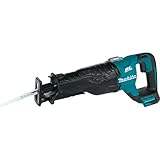
| XRJ06Z (18V LXT Brushless) | 18V LXT (2x18V compatible with adapter) | 0 – 3,000 | 1-1/4″ (32mm) | 8.1 lbs | Brushless + vertical crank | All-around cordless for remodeling |
| GRJ01Z (40V max XGT Brushless) | 40V max XGT | 0 – 3,000 | 1-1/4″ (32mm) | 9.3 lbs | Brushless + AVT-style damping | High-demand demolition, long pruning sessions |
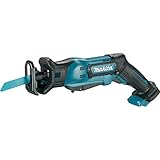
| DJR188Z (18V LXT Compact) | 18V LXT | 0 – 3,000 | 13/16″ (20mm) | 3.8 lbs | Compact counterbalance | Tight spaces, overhead pruning, one-hand cuts |
Cutting Speed Is Not Just SPM
All full-size Makita reciprocating saws now list 2,800 to 3,000 strokes per minute, but actual cutting speed depends on stroke length, orbital action, and whether the motor maintains speed under load. The corded JR3070CT and cordless XRJ06Z/GRJ01Z use a 1-1/4 inch stroke, which clears chips faster in 2x lumber and nail-embedded studs than the 1-1/8 inch stroke on the JR3050T and the 13/16 inch stroke on the compact DJR188Z. Only the corded JR3070CT offers true orbital cutting, which aggressively lifts the blade on the return stroke for faster wood demolition but should be switched off for metal and precise pruning cuts where it causes blade wander.
The brushless cordless models hold speed better than older brushed motors. In practice, the GRJ01Z on a 40V 4.0Ah XGT battery sustains near-peak SPM through a stack of double 2x8s, while the XRJ06Z on a single 18V 5.0Ah LXT battery will briefly slow on the same cut before the electronics recover. For clean pruning with a 9-inch pruning blade, that difference is negligible. For continuous teardown of plaster and lath, it matters.
Balance and Control
Balance is weight distribution, not just total weight. The XRJ06Z and GRJ01Z place the motor low and the battery rearward, so the shoe stays flat on the work with less wrist effort during horizontal cuts. At 8.1 pounds bare, the XRJ06Z is the easiest full-size saw to hold overhead for rafter cutting and branch work. The JR3070CT is heaviest at 9.7 pounds but its longer body and rubberized front grip reduce tipping when the shoe is braced against framing.
The compact DJR188Z is a different tool class at 3.8 pounds and 17-1/4 inches long. Its short stroke and inline handle make it ideal for cutting between studs, under sinks, and on ladders where a full-size saw is unwieldy. It will not replace a full-size saw for demolition because the short stroke requires more pushes to clear thick material and it lacks the shoe leverage for plunge cuts.
Vibration Changes Fatigue More Than Power Does
Makita’s Anti-Vibration Technology (AVT) on the JR3070CT uses a counterweight and dynamic absorber to cancel reciprocating forces. That system cuts vibration by roughly half compared to the JR3050T, which is noticeable after 15 minutes of continuous cutting. For remodeling and demolition where you make 50 to 100 cuts per day, AVT protects hands and improves line accuracy.
The cordless XRJ06Z and GRJ01Z do not use the full AVT counterbalancer but rely on brushless motor control and an optimized crank to keep vibration moderate. They vibrate more than the JR3070CT but significantly less than older brushed cordless models. If you are sensitive to hand-arm vibration or plan extended demo days without corded power, the JR3070CT remains the comfort leader. For intermittent use, any brushless LXT or XGT model is acceptable, and adding a vibration-damping blade with anti-vibration slots further reduces chatter.
Which Battery Platform Should Decide Your Saw
Makita currently runs two cordless systems that do not interchange. 18V LXT is the established platform with over 250 tools, lower battery cost, and wide availability of 2.0Ah to 6.0Ah packs. 40V max XGT is the newer high-output system designed for sustained heavy load and faster charging, but batteries and chargers cost more and are not backward compatible with LXT tools.
If you already own LXT tools, the XRJ06Z or DJR188Z keeps you on one charger and lets you share 5.0Ah or 6.0Ah batteries you already have. If you are buying into Makita fresh and expect to run a circular saw, rotary hammer, or chainsaw alongside the recip saw, XGT offers more headroom under load and longer continuous runtime per amp-hour. You can run the XRJ06Z on two LXT batteries with the optional ADP adapter for 36V power, but that adds weight and cost and is rarely needed for remodeling – a single 5.0Ah or 6.0Ah LXT battery is sufficient for most jobs.
Worked Runtime Calculation
Runtime estimates help you plan battery coverage for pruning or demo. Use this field-tested approximation: A Makita 18V 5.0Ah (90Wh) battery powering the XRJ06Z averages about 45 to 60 seconds of trigger time per amp-hour in nail-embedded 2×4, or roughly 4 to 5 minutes per 5.0Ah pack of continuous cutting.
Example: A small deck demolition requires 80 cuts through doubled 2×6 pine with nails. Each cut takes about 8 seconds of trigger time. Total trigger time = 80 x 8 = 640 seconds (10.7 minutes). At 5 minutes per 5.0Ah pack, you need 3 packs to finish without stopping to recharge, or 2 packs if you have a rapid charger cycling one while you cut with the other. For pruning 3-inch green branches, the same pack yields 90 to 120 cuts because softwood without fasteners draws less current. XGT 40V 4.0Ah (144Wh) extends continuous trigger time to about 7 to 9 minutes under the same demo load, roughly 1.6x more work per charge than a single 18V 5.0Ah despite the higher draw.
Picks by Situation
Best All-Around Cordless for Remodeling: XRJ06Z 18V LXT Brushless
This is the default recommendation for homeowners, landlords, and remodelers who already own LXT batteries. The 1-1/4 inch stroke and 3,000 SPM give near-corded speed in wood, the tool-free blade change and adjustable shoe let you extend blade life by rotating wear points, and the variable-speed trigger plus lock-off is easy to feather for controlled cuts around pipes. Pair it with a 5.0Ah or 6.0Ah LXT battery for demolition days and a compact 3.0Ah for ladder work to save weight.
Best for Heavy Demolition: JR3070CT AVT Corded or GRJ01Z 40V XGT
Choose the corded JR3070CT AVT if you work near power and value lowest vibration and unlimited runtime. Its 15-amp motor with AVT and orbital action rips through nail-embedded beams, plaster, and cast iron pipe faster than any 18V model and stays comfortable for hours. Choose the GRJ01Z XGT if you need cordless freedom on job sites without generators or for exterior teardown where cords are a hazard. It matches corded stroke length and speed while delivering about 35 percent more sustained power than 18V LXT under continuous load.
Best for Pruning and Tight Spaces: DJR188Z 18V LXT Compact
At under 4 pounds, this one-hand design with a pivoting shoe excels at pruning up to 4 inches, cutting PVC in crawlspaces, and trimming drywall where a full-size saw blocks your view. The short 13/16 inch stroke limits demolition speed, so treat it as a complement to a full-size saw rather than a replacement.
Best Value Corded: JR3050T
The 11-amp JR3050T delivers the same 2,800 SPM as larger corded models without AVT or orbital action, in a lighter and lower-cost package. It handles weekend remodeling, pallet breakdown, and storm cleanup well. If you only use a recip saw a few times a year and own no batteries, this avoids battery investment entirely.
Decision Matrix
| Your Situation | Recommended Choice | Why |
|---|---|---|
| Already own Makita 18V LXT batteries, mixed remodeling and pruning | XRJ06Z | Shares batteries, full stroke, best weight-to-power for general use |
| Starting fresh, plan to buy other heavy cordless tools | GRJ01Z XGT | Future-proof power, longest runtime under load |
| Full-home gut or daily demo near outlets | JR3070CT AVT | Unlimited runtime, lowest vibration, orbital speed |
| Tight quarters, overhead, or ladder pruning | DJR188Z Compact | Short body and light weight improve control |
| Infrequent use, tight budget, no batteries | JR3050T | Lowest upfront cost, no battery system needed |
| Need both cordless reach and corded endurance | XRJ06Z + JR3070CT | Use cordless for quick cuts, corded for continuous demo |
Durability and Ownership Realities
What wears first on a makita reciprocating saw is not the motor but the shoe, blade clamp, and brushes on corded models. The adjustable shoe scuffs and loosens after repeated bracing against concrete and brick – keep it clean, periodically tighten the shoe bolt, and extend blade life by repositioning the shoe to use unused teeth. The tool-free clamp collects sawdust and pitch, especially during pruning; blow it out with compressed air after each session and cycle the lever a few times with no blade to prevent sticking.
Brushes on the JR3050T and JR3070CT are user-replaceable and typically last 150 to 250 hours of trigger time. AVT models add a service interval for the vibration absorber – if vibration noticeably increases, have the counterweight inspected. Brushless cordless models eliminate brushes but still need vent cleaning; do not tape over the side vents to reduce dust intake, as overheating will shorten controller life.
Consumables dominate cost. A bi-metal demolition blade cutting nail-embedded wood lasts 15 to 40 cuts before teeth dull, while a carbide-tipped blade lasts 5x longer in abrasive plaster but costs three times more. For pruning, use dedicated 5 to 6 TPI pruning blades with deep gullets; standard demolition blades clog and overheat in green wood. Common mistakes that shorten saw life include forcing the blade and bending it sideways to steer, running orbital mode on metal, and using an undersized extension cord on corded models – use a 12 AWG cord under 50 feet for 15-amp saws to avoid voltage drop and motor overheating.
Storage matters. Remove batteries before storing cordless saws, and store blades lightly oiled to prevent rust transfer to the clamp. If the saw will sit months between uses, cycle cordless batteries to 50 percent charge every three months to preserve capacity.
Setup for Clean, Fast Cuts
- Match tooth count to material: 6 TPI for fast wood demo, 10 to 14 TPI for wood with nails, 18 to 24 TPI for metal, 5 TPI for pruning.
- Set the shoe firmly against the work before pulling the trigger; let the shoe absorb vibration instead of your wrist.
- Start slow. Begin at low speed to establish a kerf, then increase to full speed once the blade is engaged to prevent blade jump.
- Use longer blades than the material thickness by at least 2 inches, but avoid excessive overhang that causes whipping on thin metal.
- For pruning, support the branch on the shoe side and cut from below on the final stroke to prevent bark tearing.
Frequently Asked Questions
Can I use LXT batteries on an XGT saw, or XGT batteries on an LXT saw?
No. The physical interface and electronics differ. Adapters do not exist to cross the platforms directly. The only cross-voltage option is using two 18V LXT batteries in the 36V adapter for select X2 LXT tools, which does not include the XGT GRJ01Z.
Do I need AVT if I only cut a few times per month?
For occasional use under 10 minutes of continuous trigger time, standard vibration control on the XRJ06Z, JR3050T, or DJR188Z is adequate. Choose AVT on the JR3070CT or the damping on the GRJ01Z if you regularly cut for 30 minutes or more without breaks or have prior hand fatigue issues.
What blade length covers most jobs?
A 9-inch demolition blade handles 2x framing and moderate pruning, while a 12-inch blade is better for doubled beams and large branches but flexes more. Keep both on hand and use the shortest blade that safely clears the material.