What's inside
As an Amazon Associate I earn from qualifying purchases. This post may contain affiliate links at no extra cost to you.
Sections
Best DeWalt Reciprocating Saws: Top Picks for Different Jobs
The best DeWalt reciprocating saw for most demolition work is the 20V MAX XR DCS382: it combines a 1-1/8-inch stroke with a four-position blade clamp, while the compact 20V MAX DCS369 is easier to control in tight spaces and the 60V MAX DCS389 offers more power for demanding cuts. Choose by the material and working position—not by voltage alone.
For a practical shortlist: pick the DCS382 for general remodeling, the DCS369 for overhead or confined work, the DCS389 for heavy demolition, and the corded DWE305 for frequent shop use when an outlet is close. The comparison below focuses on published specifications and the trade-offs those figures suggest; actual cutting speed and runtime vary with blade, material, battery, and technique.
As an Amazon Associate we earn from qualifying purchases at no extra cost to you.


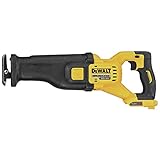
DeWalt reciprocating saws compared
| Model | Power | Stroke length | Strokes per minute | Tool weight | Best fit |
|---|---|---|---|---|---|
| DCS369 | 20V MAX | 5/8 in. | 0–2,800 | 3.13 lb | Detail cuts, overhead work, tight spaces |
| DCS382 | 20V MAX | 1-1/8 in. | 0–3,000 | 5.0 lb | General remodeling and demolition |
| DCS389 | 60V MAX | 1-1/8 in. | 0–3,000 | 6.25 lb | Heavy-duty cutting where cordless power matters |
| DWE305 | 12 amp corded | 1-1/8 in. | 0–2,900 | 7.0 lb | Long sessions near a power outlet |
Weights are tool-only figures; a battery adds weight to cordless models. Verify the current specification and included accessories for the exact package you’re considering, since kits and regional listings can differ.
Ranked picks by job
1. Best overall for remodeling: DeWalt DCS382
The DCS382 is the most versatile choice for a homeowner or contractor who wants one cordless saw for cutting framing lumber, removing pipe, and breaking down material during renovation. Its 1-1/8-inch stroke moves the blade farther per cycle than the compact DCS369, which can help it work through larger stock more efficiently. The variable-speed trigger gives you room to start a cut gently rather than letting the blade jump across a surface.
The four-position blade clamp is useful when a cut is awkward: it lets you orient the blade to reach from different angles. At five pounds before the battery, however, it is not the lightest choice for extended overhead work. For most mixed jobs, that is a reasonable trade: more stroke and reach than the compact model without stepping up to the heavier 60V saw.
2. Best for detail and overhead work: DeWalt DCS369
At 3.13 pounds tool-only, the DCS369 is the easiest pick when control and low fatigue matter more than raw cutting pace. Its compact body can fit between studs, under sinks, or into other restricted areas where a full-size saw is difficult to position. The shorter 5/8-inch stroke is the compromise: expect slower progress in thick material, especially if you use a blade intended for fast demolition.
Choose it for pruning, small pipe, trim removal, and occasional cuts where a large saw feels cumbersome. It is also a sensible second saw for a crew that already has a full-size reciprocating saw. Use a sharp, appropriately sized blade and let the saw work; pushing hard to compensate for the shorter stroke can reduce control and wear blades faster.
3. Best for demanding cordless demolition: DeWalt DCS389
The DCS389 runs on DeWalt’s 60V MAX battery platform and pairs a full 1-1/8-inch stroke with a no-load speed up to 3,000 strokes per minute. It is the choice for cutting heavy lumber, thick metal stock, or a succession of demolition materials when a cord would be inconvenient. It does not have a higher published maximum stroke rate than the DCS382, so don’t treat the number alone as proof it will cut every material faster. The advantage is the higher-voltage platform for demanding work, with battery choice and blade selection still playing major roles.
The 6.25-pound tool-only weight makes it less appealing for long overhead sessions. If your work is mostly occasional household repairs, the larger battery platform may add cost and weight you rarely use. It makes more sense when you already own compatible 60V MAX batteries or regularly cut demanding material away from an outlet.
4. Best for sustained work near an outlet: DeWalt DWE305
The 12-amp DWE305 avoids battery changes and charging, which can be an advantage for a fixed shop, garage, or renovation site with reliable power. It has a 1-1/8-inch stroke and reaches 2,900 strokes per minute. A cord is the main limitation: it restricts movement and requires care around water, sharp edges, and the blade path. Choose it when uninterrupted operation matters more than portability; otherwise, a cordless model is easier to move from cut to cut.
How to choose for speed, vibration, weight, and runtime
- Cutting speed: Stroke length and blade choice matter alongside strokes per minute. A full-size 1-1/8-inch saw is generally the better starting point for demolition; the DCS369’s shorter stroke favors access and control.
- Vibration and control: Published specifications do not provide a directly comparable vibration figure for these models. In practice, a shorter, lighter saw is easier to hold steady, but blade sharpness, material support, and how firmly the shoe rests against the work all affect vibration at your hands.
- Weight: The DCS369 is the clear pick for overhead and cramped cuts. Remember to add the battery weight when comparing cordless setups; a larger battery can shift the balance and tire your arms sooner.
- Runtime: DeWalt does not provide one universal runtime figure for these saws because it changes with the battery, blade, material, and cutting pressure. Dense material and dull blades draw more power. If you need sustained cordless work, budget for a spare compatible battery rather than assuming a higher-voltage tool guarantees a full-day charge.
Match the saw to your situation
| Your situation | Recommended model | Why |
|---|---|---|
| First cordless saw for mixed home projects | DCS382 | Full-size stroke suits a broad range of renovation cuts |
| Frequent overhead cuts or restricted access | DCS369 | Lowest listed tool weight and compact form |
| Heavy cordless demolition and existing 60V batteries | DCS389 | Full-size cutting action on the 60V MAX platform |
| Repeated cuts in a stationary workspace | DWE305 | Corded power removes battery changes from the workflow |
| Rare, small cuts and a tight budget | DCS369 or a corded model | Spend according to access needs and existing batteries, not maximum power |
Ownership details that affect performance
Blades are the recurring cost, and the wrong blade can make a capable saw seem slow. Use a wood blade for clean lumber, a metal-cutting blade for pipe or sheet metal, and a demolition blade designed for mixed material when hidden fasteners are likely. Match blade length to the cut: too little reach can leave you unable to finish, while an unnecessarily long blade can flex and wander.
Keep the blade clamp clear of dust and debris, and check that the blade is locked before cutting. Let the shoe rest against the work where possible; it steadies the saw and helps reduce uncontrolled bouncing. Don’t force a dull blade through a cut—replace it. For cordless tools, remove the battery before changing blades or clearing the tool, and store batteries according to DeWalt’s guidance. These habits protect the clamp and improve control, but they cannot eliminate the normal wear of blades and other consumables.
Bottom line
For one saw to cover the widest range of jobs, choose the DCS382. Pick the DCS369 when low weight and access matter more than fast progress through thick stock, the DCS389 for demanding cordless demolition, and the DWE305 for sustained work where a cord is practical. Before buying, compare the bare-tool price with the battery-and-charger kit price: if you already own compatible batteries, that can change which DeWalt reciprocating saw offers the best value.