What's inside
As an Amazon Associate I earn from qualifying purchases. This post may contain affiliate links at no extra cost to you.
A try square and a framing square can both help you check a door frame, but they suit different parts of the job. A try square is handy for checking one corner at a time and marking short lines. A framing square reaches farther across the opening, which makes it more useful for checking the relationship between jambs and head. Neither tool can tell you everything about a rough opening or a twisted frame on its own.
As an Amazon Associate we earn from qualifying purchases at no extra cost to you.



Sections
Our Top Picks
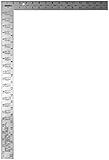
 Johnson Level & Tool CS9 Steel Framing Square16" x 24"24 x 19 x 0.06 inches1.4 poundsCheck on Amazon


What you are checking
A door frame needs to be plumb at both sides, level across the head, and reasonably square at the corners. The two jambs also need to be in the same plane: if one is twisted relative to the other, the door can bind even when each jamb reads plumb by itself.
Square means a 90-degree relationship between two members. It does not mean the opening is level, plumb, or the right width. Check those separately with a level and tape measure. For many interior doors, the rough opening is about 2 inches wider and 2 to 2½ inches taller than the door slab, but follow the door and jamb manufacturer’s instructions; prehung units and installation details vary.
What a try square does well
A try square has a short blade set at 90 degrees to a stock. Common blades are around 6 to 12 inches long. Its compact size makes it easy to handle at a jamb corner, and the stock can register against one face while the blade checks the adjacent face.
Use it to check the head-to-jamb corner after the frame is assembled, or to mark a short reference line when adjusting a joint. It is also convenient in a cramped opening where a long tool is awkward. A decent 12-inch square gives more reach than a 6-inch version, but still cannot span most door openings.
The main limitation is reach. A try square can show that a particular corner is out of square, but it will not readily compare the two diagonals of a full doorway. It can also give a false sense of accuracy if the stock is sitting on paint, a proud fastener, or a rough edge rather than the face you intend to check.
What a framing square adds
A framing square has a long blade and a shorter tongue, commonly about 24 by 16 inches. The longer blade makes it easier to check a larger corner and to lay out or compare longer lines. It is the more useful of these two tools for checking whether the head and jamb meet squarely over a substantial part of the joint.
It still cannot span a typical doorway diagonally. A 24-inch blade is much shorter than the diagonal of an opening roughly 30 to 36 inches wide and around 80 inches tall. For a full-frame diagonal check, measure from matching points at opposite corners with a tape. If the two diagonal measurements differ, the frame is racked; a difference of even ⅛ inch can matter on a tight-fitting door, though the acceptable result depends on the door and installation.
A framing square is also bulkier in a narrow room, and its long blade can rock if it bears on a bowed jamb. For general carpentry layout and bigger assemblies, it earns its space in a tool kit. For occasional door work, the extra size may not justify buying one solely to check a corner.
Which square suits the check?
| Task | Try square | Framing square |
|---|---|---|
| Check one head-to-jamb corner | Good for a short, accessible corner | Good, with more reach |
| Mark a short 90-degree line | Easy to control | Works, but can be cumbersome |
| Compare the whole frame diagonally | Too short | Too short; use a tape measure |
| Work in a tight doorway | Usually easier to handle | Can be awkward |
| General framing and layout | Limited reach | More versatile for larger work |
A practical checking sequence
First, check the jambs for plumb and the head for level with a level long enough to bridge a useful section. A 24-inch level is a practical minimum for many interior installations; longer levels show more of a bow but can be harder to fit. Then place a square at each upper corner. Keep the stock and blade firmly against clean, flat faces, and check both corners rather than assuming one is a mirror image of the other.
Next, measure the opening diagonally from the same defined points: top left to bottom right, then top right to bottom left. Keep the tape taut and use consistent points on the frame. Matching measurements indicate the frame is not noticeably racked, but they do not rule out a twist. To spot twist, stretch a string across opposite jamb corners or use a long straightedge across the frame faces. A gap at one corner suggests the jambs are not in the same plane.
Before correcting anything, check for debris, loose shims, bowed stock, or a jamb fastened too tightly. A square reading can change when a screw is loosened or a shim is moved. Recheck plumb, level, diagonals, and the door’s fit after adjustment. A frame can be square but too narrow, or have matching diagonals while one jamb is bowed.
What to buy
If you mostly install doors and do small joinery, a reliable 12-inch try square is the easier tool to store and handle. It is enough for checking the corners, and a tape measure does the full diagonal comparison. A cheaper square is fine if it is actually accurate and undamaged; check it by drawing a line, flipping the tool over against the same edge, and seeing whether the second line aligns. A visible gap means it is not trustworthy for layout.
Choose a framing square if you also lay out studs, stairs, or larger panels and want the longer blade. Check that its blade is straight and the inside corner is clean, since a dent can throw off readings. If neither tool is already in your kit, do not buy a framing square just to measure a door frame’s diagonals: a tape is the right tool for that check, and a small square is sufficient for the individual corners.