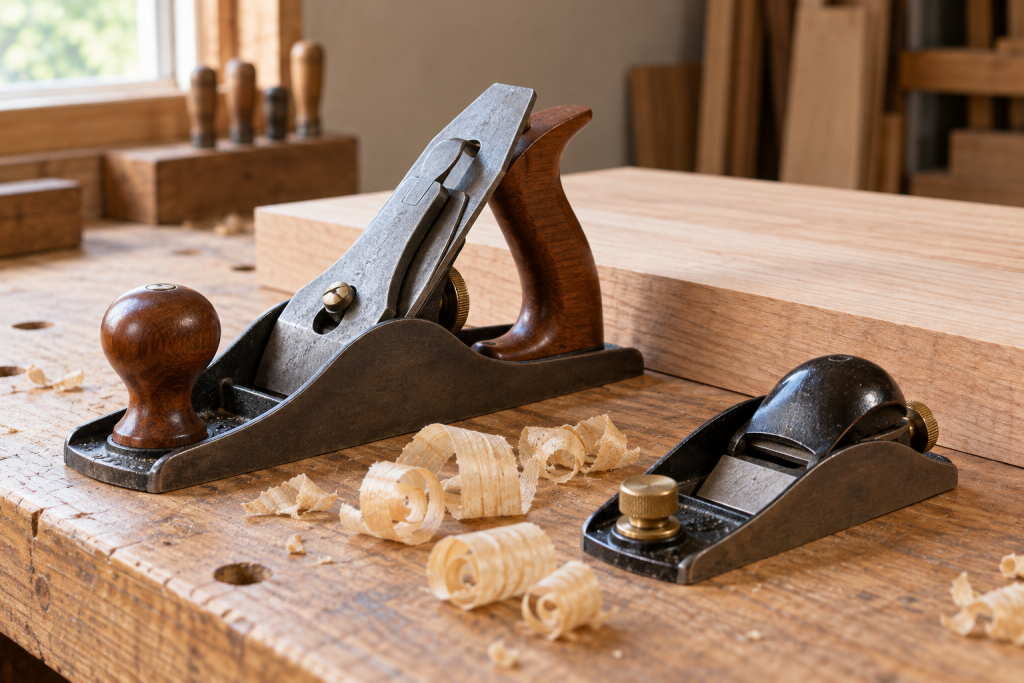
Standard Block Planes vs Low-Angle Block Planes for Softwood
The short answer For most softwood work, a standard-angle block plane is the better first buy. Its blade sits at […]
The short answer For most softwood work, a standard-angle block plane is the better first buy. Its blade sits at […]
What “rapid stock removal” means For flattening a twisted door edge, reducing a chunky board, or taking down a high
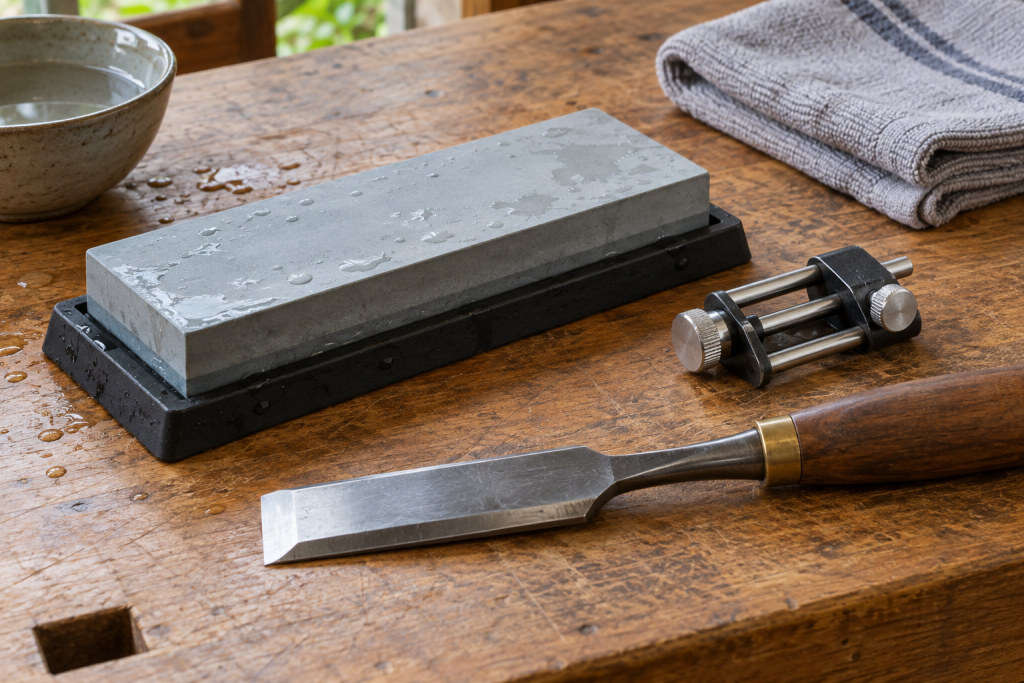
What a portable kit needs A hand plane does not need a mirror-polished iron to cut cleanly. It needs a
A replacement iron can make a serviceable bench plane cut well again, but it will not fix a cracked frog,
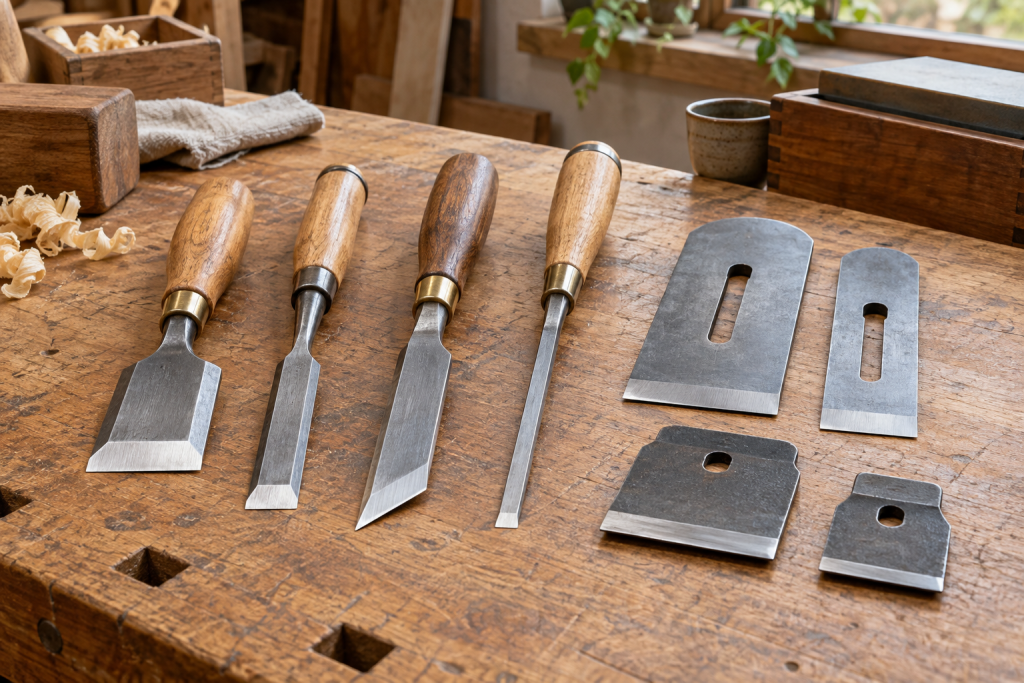
What a cap iron does—and what it doesn’t A plane cap iron, also called a chipbreaker, clamps to the back
Choosing a plane for panel edges Beveling a timber panel edge is a small job with an easy-to-see result. The
What a window-frame adjustment calls for A sticking window does not automatically need planing. First find where it binds: look
Why a hand plane helps on an uneven wall A shelf cut square to its front edge can leave a
Small framing components—cripples, trimmer studs, short braces, blocking, and repair pieces—rarely need a full-size jointer plane. They need a plane
Short boards are awkward to flatten by hand. They offer little room to guide a long plane, can rock on