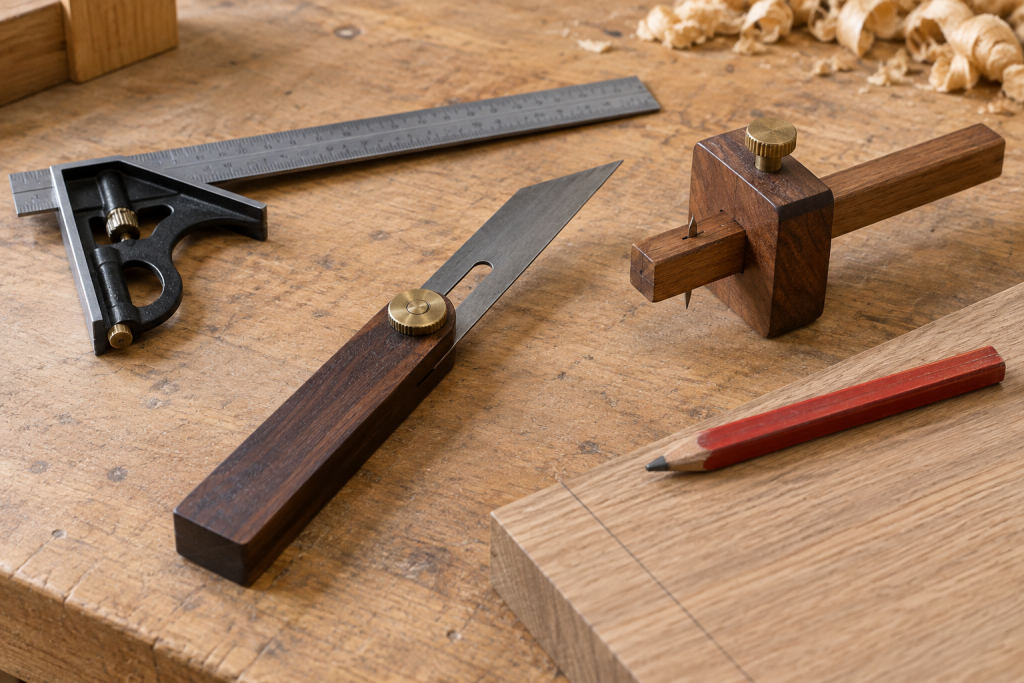
How to Use a Carpenter’s Pencil for Broad and Fine Layout Marks
A carpenter’s pencil is useful because its broad, flat lead can leave a mark that stays visible on rough lumber. […]
A carpenter’s pencil is useful because its broad, flat lead can leave a mark that stays visible on rough lumber. […]
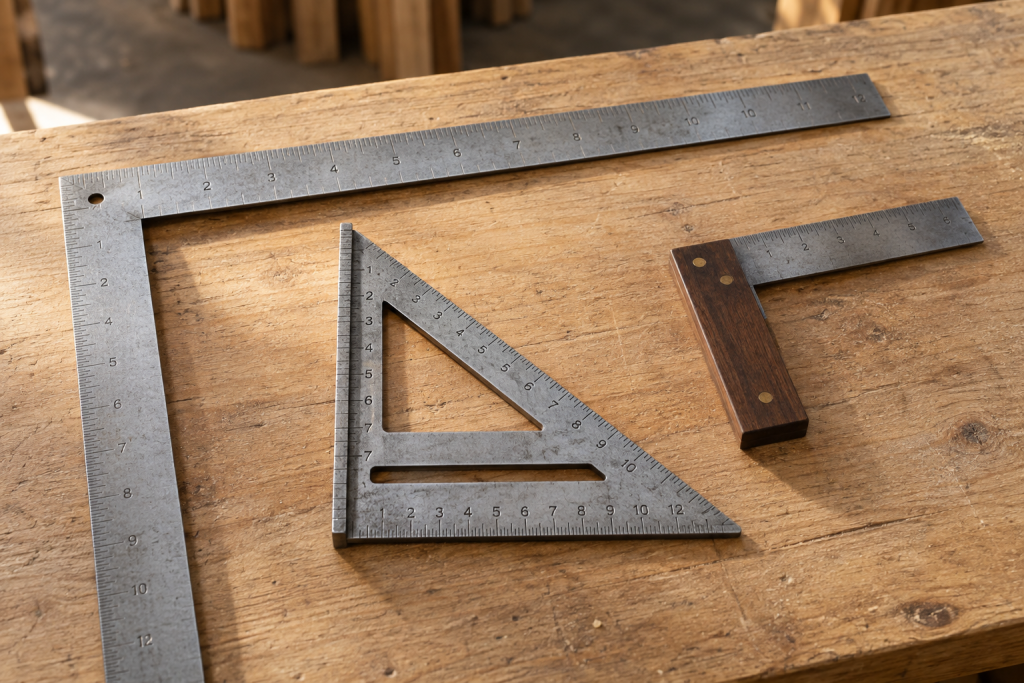
A birdsmouth is the notch at the end of a rafter that lets it sit on a wall plate. It
What the joint needs A half-lap joins two pieces of timber by removing half the thickness from each where they
What a Combination Square Can Measure A combination square can check the depth of a groove, dado, mortise, shoulder, or
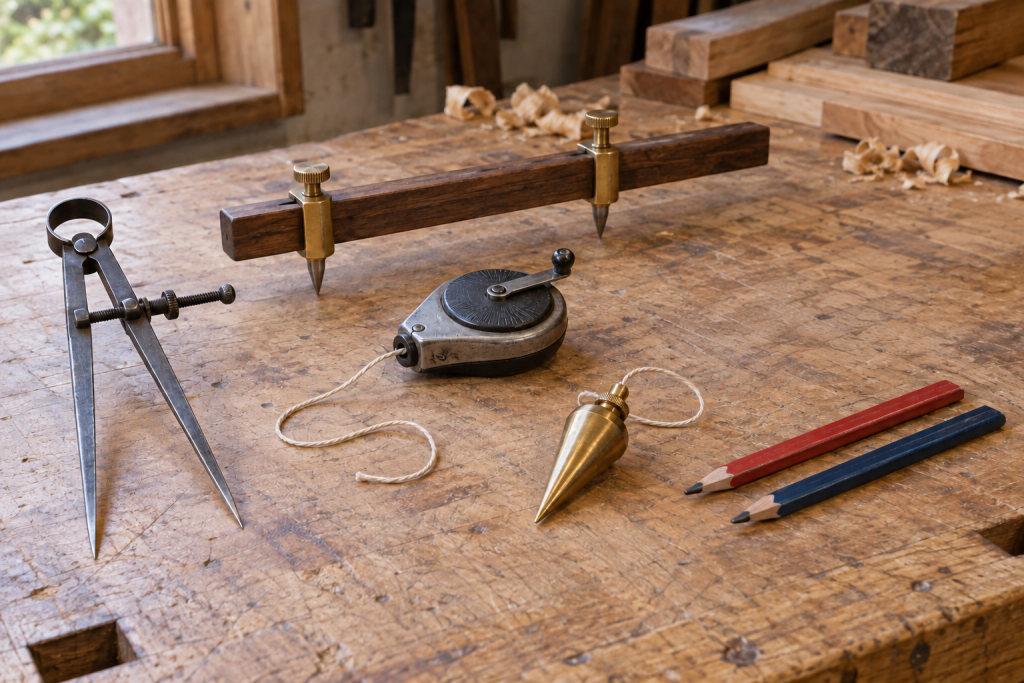
Dividers transfer a distance from one place to another without making you read a scale. Set the points to a
A sliding bevel copies an angle; it does not tell you the roof pitch in degrees or guarantee that every
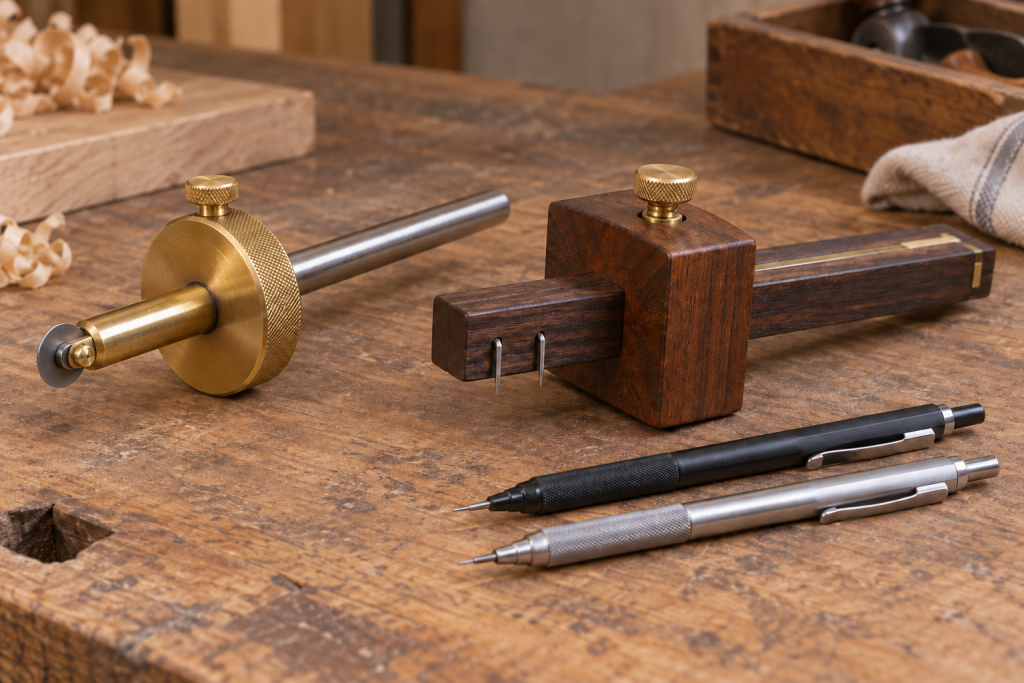
What a mortise gauge does A mortise gauge marks two parallel lines for a mortise. Its two pins can also
A framing square can look straight and still throw off a layout. A small error at the heel or blade
A marking gauge earns its keep on tenons because it can carry the same shoulder line around all four faces
Why wet marking is different Rain and damp timber expose the weak points of a carpenter’s pencil quickly. A soft