What's inside
As an Amazon Associate I earn from qualifying purchases. This post may contain affiliate links at no extra cost to you.
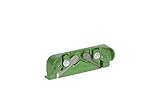
A side-rebate plane is a specialist tool for trimming the wall of a narrow rebate or groove. Unlike a standard rabbet plane, its cutter reaches right to one side of the body, so you can work into a corner without the wooden sole blocking the cut. It is useful for cleaning stopped or through grooves, fitting drawer bottoms, and tuning the sides of housings before assembly.
The important distinction is that a side-rebate plane is not a general-purpose groove cutter. It removes a small amount from an existing cut. If you need to make a groove from solid timber, a plough plane or router plane is usually the better first tool. For correcting a groove that is already close to size, however, a side-rebate plane gives better control and less tear-out than forcing a chisel into the wall.
As an Amazon Associate we earn from qualifying purchases at no extra cost to you.

![KAKURI Rabbet & Side Rabbet Plane for Woodworking [Left & Right] - Blue Steel #1 (Aogami) Blade, Japanese Block Plane Tool - Made in Japan](https://m.media-amazon.com/images/I/41QrXjTbHRL._SL160_.jpg)
Sections
Our Top Picks


What to look for in a side-rebate plane
Start with the width of the work. Most side-rebate planes are designed for relatively narrow rebates, commonly around 6 to 12 mm wide. Some are narrower, while larger versions are intended for cabinet rebates rather than small joinery. Choose a plane whose body can sit securely on the reference surface without rocking. A plane that is too wide for the job is awkward; one that is too narrow can tip into the groove.
Check whether the plane is handed. Many side-rebate planes are made for cutting on one side only. A right-hand version cuts the right wall when viewed from the end, while a left-hand version cuts the opposite wall. If you regularly work on both sides of a groove, buy a matched pair or choose a reversible design. Trying to use the wrong hand can make the fence or body foul the work and push the cutter away from the wall.
The iron should be easy to remove and sharpen. A narrow cutter dulls quickly when it encounters glue, end grain, or a hidden nail. Look for a blade with enough steel behind the edge to resist vibration, but not so thick that sharpening becomes tedious. A cutting angle around 40 to 50 degrees is a practical range for general hardwood work. A higher angle can reduce tear-out, but it also increases pushing effort.
The best types for different jobs
| Plane type | Best use | Main advantage | Main drawback |
|---|---|---|---|
| Fixed side-rebate plane | Cleaning one wall of a consistent groove | Simple, direct, and usually rigid | Often handed and limited to one width |
| Adjustable side-rebate plane | Occasional work across several groove widths | One tool covers more jobs | More adjustment and more chance of movement |
| Shoulder plane | Trimming the end or shoulder of a rebate | Accurate on end grain and shoulders | Not as convenient for a long, narrow groove wall |
| Router plane | Bringing a groove bottom to a controlled depth | Excellent depth control | Cannot directly clean a vertical side |
| Plough plane | Making a new groove | Cuts the groove and sets its position | Unnecessary if the groove already exists |
For most owners, a fixed plane is the safest buy. Its lack of adjustment is a benefit: fewer parts can shift, and the sole-to-iron relationship stays predictable. An adjustable side-rebate plane makes sense if you repair varied furniture or work with several groove widths, but inspect the fence and adjustment screw carefully. Any play can turn a straight wall into a tapered one.
Buying advice and sensible alternatives
Vintage planes can be excellent, but condition matters more than age. Avoid a body with a twisted sole, a cracked casting or wood worn away beside the mouth. A replacement iron is manageable; a distorted body is usually not. On a used wooden plane, check that the wedge holds the blade firmly and that the sole is not badly cupped.
A dedicated side-rebate plane is worth buying when you have repeated work such as drawer grooves, frame rebates, or housed shelves. For one small repair, a small shoulder plane may be the cheaper and more versatile option. It can trim an accessible wall, particularly at the end of a rebate, though its wider body may not enter a very narrow groove.
Do not overlook a sharp chisel. For a groove only 3 or 4 mm wide, a properly sharpened chisel can pare the wall accurately, especially if the cut is short. The cheaper option is fine when the job is occasional and the timber is soft. A side-rebate plane becomes worthwhile when you need a long, straight wall or must remove only a few tenths of a millimetre without digging below the layout line.
How to use one without widening the groove
Mark the wall you intend to remove and test the plane on scrap from the same stock. Set the iron for a shaving of roughly 0.05 to 0.1 mm. A heavy cut is the quickest way to tip the plane, bruise the opposite wall, or tear out the arris. Keep the plane’s side or fence firmly against the reference face and use both hands: one to push, the other to keep the body aligned.
For a through groove, begin with short strokes at the near end, then lengthen them as the cut becomes established. For a stopped groove, stop at least 10 mm before the end and finish with a chisel or shoulder plane. A side-rebate plane has no reliable way to turn around inside a blind end, and forcing it can crush the stop.
Take several light passes rather than one deep pass. Measure with the mating part after every two or three strokes. If the groove must finish at 10 mm, stop at about 9.8 mm and sneak up on the final fit. Wood fibres can compress during planing, and a nominally perfect measurement can still produce a loose joint once the parts are handled.
Common failures and maintenance
Tear-out usually means the cut is too deep, the blade is dull, or the grain is running against the plane. Reduce the projection, hone the edge, and reverse direction if the layout allows. If the plane chatters, check that the wedge or blade clamp is tight and that the sole is bearing on a flat surface. A narrow plane magnifies small defects.
Keep the iron just proud of the side that does the cutting; any projection on the opposite side can score the reference wall. Hone the back flat near the edge and use a small, consistent bevel. After use, remove resin and glue, wipe the metal with a lightly oiled rag, and store the plane so its edge cannot contact the bench. That routine matters more than buying the most expensive example.