
Our Top Picks
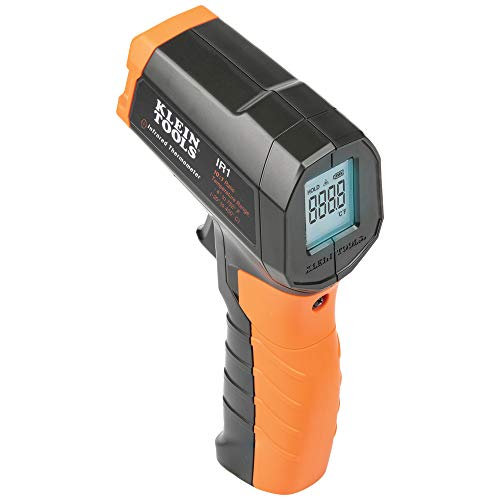 Klein Tools IR1 Infrared Thermometer with Targeting Laser10:1 IR Thermometer6.01 x 4.14 x 1.73 inches0.2 poundsCheck on Amazon
 Etekcity Infrared Thermometer Laser Temperature GunStandard6.1 x 3.1 x 1.57 inches0.4 poundsCheck on Amazon

What's inside
As an Amazon Associate I earn from qualifying purchases. This post may contain affiliate links at no extra cost to you.
A board fresh off the planer can look dry while the core still holds moisture, and a glue joint made too soon will fail weeks later. An infrared thermometer reads the surface in half a second without touching the work, so you can check lumber, a saw blade, a motor housing, or a glue pot before you commit. The decision is not about the fanciest display. It is about range, accuracy at the distances you actually work from, and a laser guide you can read in a dim shop.
We chose five handheld models from the names and specifications on their Amazon listings, covering a compact shop gun, a trade-brand tool with a wide range, a high-ceiling model for hot metal, and two budget guns that still read fast. Each one suits a different corner of the shop, from checking a board before milling to finding a hot bearing before it seizes.
Sections
Quick Picks
As an Amazon Associate we earn from qualifying purchases
| Product | Best for | Key spec from title |
|---|---|---|
| Etekcity Lasergrip 774 | Everyday shop checks | -58 to 842 degrees F range |
| Klein Tools IR1 | Trade work and tight spots | -4 to 752 degrees F range |
| Etekcity Lasergrip 1080 | Hotter surfaces and ovens | -58 to 1130 degrees F range |
| DEASOMIYE T600 | Fast reads on a budget | -58 to 1112 degrees F range |
| VEVOR IR05 | Extreme heat and metal work | -40 to 2732 degrees F range |
How to Choose
Temperature Range That Covers Your Work
A thermometer that tops out at 700 degrees will not read a forge, a kiln shelf, or a welding bead, while a gun built for 2700 degrees may read coarse at room temperature. Match the ceiling to the hottest surface you check on a regular basis, then look at the floor for cold work like checking a board brought in from an unheated shed. Lumber checks, glue pots, and motor housings sit in the middle of most ranges, so a gun that reads from below freezing to past 1000 degrees covers nearly every shop job without forcing you to pay for an industrial ceiling you will never use.
Distance-to-Spot Ratio and Working Distance
The ratio tells you how wide the circle the gun reads gets as you step back. A 12 to 1 ratio reads a one-inch circle from twelve inches away, which suits bench work, while a 50 to 1 ratio reads the same circle from fifty inches, which suits a ceiling duct or a tall rack of lumber. Step too far back with a narrow ratio and the gun averages the board with the wall behind it, giving you a number that belongs to neither. Stand close for small parts like a bearing or a glue joint, and use the laser guide to keep the circle on the surface you mean to measure.
Emissivity and Surface Types
Shiny metal reflects heat and fools a gun set for dull wood, which is why adjustable emissivity matters in a shop full of mixed materials. Bare steel, aluminum, and cast iron read low unless you lower the setting or mark the spot with tape and read the tape instead. Rough lumber, painted surfaces, and dark plastic read close to true at the default setting, so most woodwork needs little adjustment. A gun with a simple emissivity control saves more time than a wider range ever will, because the wrong setting quietly turns every reading into a guess.
Display, Laser Guide, and Handling
A backlit display you can read at arm’s length in a dim corner beats a large screen you must squint at, and a color display helps when the gun flags a hot spot with a change of color. A single laser dot suits close bench work, while a dual laser that brackets the measured circle helps you judge the spot from farther away. Weight matters too, because a gun that lives in a pocket gets used, while a heavy one stays in a drawer. Check the battery type and the auto-off behavior, since a gun that drains its cells between jobs will be dead when you need it.
The 5 Best Options
Etekcity Lasergrip 774

The Lasergrip 774 is the compact gun most shops reach for first, and its range covers lumber checks, glue pots, and motor housings without fuss. The trigger is light, the display is easy to read at arm’s length, and the 12 to 1 ratio suits bench distances where most shop readings happen. It runs on two AAA cells, so a spare set in a drawer keeps it ready, and the adjustable emissivity lets you move from rough boards to painted surfaces without a second tool. For everyday temperature checks around the bench, it does the job with the least friction.
Specs
- Temperature range: -58 to 842 degrees F (-50 to 450 degrees C)
- Distance-to-spot ratio: 12 to 1
- Emissivity: adjustable from 0.1 to 1.0
- Response time: 0.5 seconds
- Power: 2 AAA batteries
- Size: 6.14 x 3.15 x 1.57 inches
- Not for human use
Best for: Everyday bench checks on lumber, glue, and motors.
Watch out for: Confirm the current listing is in stock before ordering, since one crawl showed no featured offers alongside strong recent sales.
Klein Tools IR1
The IR1 brings a trade-brand build to the bench, with a targeting laser and an auto-hold display that freezes the reading when you release the trigger. Its range runs from below freezing to 752 degrees, which covers cold lumber, warm glue, and hot bearings in one tool. The 10 to 1 ratio suits close work on small parts, and the grip is shaped for a full day in a tool belt rather than a drawer. It is the gun to pick when you want a tool that survives jobsite handling and still reads true.
Specs
- Temperature range: -4 to 752 degrees F (-20 to 400 degrees C)
- Distance-to-spot ratio: 10 to 1
- Targeting laser
- Auto-hold display
- Non-contact digital laser gun
Best for: Trade work, jobsite checks, and small parts at close range.
Watch out for: The range tops out lower than the wide-range models, so it will not read a forge or kiln shelf.
Etekcity Lasergrip 1080
The Lasergrip 1080 stretches the ceiling past 1100 degrees, which makes it the pick for pizza ovens, hot plates, and engine parts that the 774 cannot reach. It keeps the same trigger shape and adjustable emissivity as its smaller sibling, so the step up costs nothing in learning time. The kit includes two AAA batteries and a user manual in the box, and the display holds the maximum reading for a quick glance after the trigger is released. For a shop that also cooks, bakes, or works on engines, the wider range earns its keep.
Specs
- Temperature range: -58 to 1130 degrees F (-50 to 610 degrees C)
- Emissivity: adjustable from 0.1 to 1.0
- Includes: 1 Lasergrip 1080, 2 AAA batteries, 1 user manual
- Not for human use
Best for: Hot surfaces, ovens, and engine work beyond the 774 range.
Watch out for: Check the listing color and model before ordering, since the 1080 ships in several colors under the same model name.
DEASOMIYE T600
The T600 is a low-cost gun that still reads fast, with a half-second response and a range that runs from below freezing to 1112 degrees. The color display is easy to read in a dim shop, and the adjustable emissivity plus minimum and maximum tracking give it more control than most budget guns. It is not built for human body temperature, which suits a workshop tool, and the trigger shape fits a hand that already holds a drill or a sander all day. For a second gun at a bench or a spare in a truck, it covers a lot of ground.
Specs
- Temperature range: -58 to 1112 degrees F (-50 to 600 degrees C)
- Response time: 0.5 seconds
- Emissivity: adjustable
- Color LCD display with minimum and maximum measure
- Not for human body temperature
Best for: A budget second gun for bench and truck use.
Watch out for: Confirm the model number T600 on the listing, since the same brand sells several similar-looking guns.
VEVOR IR05

The IR05 is the gun for the hottest work in the shop, reading up to 2732 degrees with a dual laser that brackets the measured circle. The 50 to 1 ratio lets you read a furnace wall, a smelting pot, or a ceiling duct from across the room, and the quarter-second response keeps up with fast checks. Adjustable emissivity handles bare metal that would fool a fixed gun, and the wide range also covers ordinary lumber and glue checks, so it does not sit idle between hot jobs. For metalwork and high-heat tasks, nothing else in this set reaches as far.
Specs
- Temperature range: -40 to 2732 degrees F (-40 to 1500 degrees C)
- Distance-to-spot ratio: 50 to 1
- Dual laser guide
- Emissivity: adjustable from 0.10 to 1.00
- Response time: 0.25 seconds
- Not for human use
Best for: Metal smelting, furnaces, and extreme-heat checks.
Watch out for: Confirm the listing is in stock before ordering, since one older crawl showed no featured offers.
Which One Fits Your Situation
Checking Lumber Before Milling
You bring boards in from an unheated shed and need to know whether the surface is ready for the planer. A mid-range gun with adjustable emissivity reads rough lumber well, and a 12 to 1 ratio keeps the circle on the board at bench distance. The Etekcity 774 covers this job, and the Klein IR1 adds a tougher build if the gun rides in a tool belt between the rack and the bench.
Finding Hot Bearings and Motors
A motor that runs hotter than its mates is heading for failure, and a quick scan finds it before the smell does. Stand close, keep the laser dot on the bearing housing, and compare both ends of the same motor. The Klein IR1 suits this work, since its 10 to 1 ratio reads a small housing cleanly, and the auto-hold display lets you read the number after you pull the gun away from a tight corner.
Working With Hot Metal and Kilns
Smelting, welding, and kiln work push past the ceiling of an ordinary gun, so range comes first and everything else follows. A 50 to 1 ratio reads a furnace wall from across the room, and a dual laser shows the circle you are actually measuring. The VEVOR IR05 is built for this corner of the shop, and its adjustable emissivity handles bare metal that would read low on a fixed gun.
A Spare Gun for the Truck or Second Bench
A second gun lives where the first one is not, and a low-cost model with a fast response covers most of the same checks. Keep one in the truck for site visits, or one at the assembly bench while the main gun stays at the saw. The DEASOMIYE T600 fits this role, with a wide range, a color display, and a half-second response that keeps up with quick rounds of checks.
Common Mistakes
- Reading a shiny metal surface without adjusting emissivity, which makes the number read low.
- Standing too far back with a narrow ratio, so the gun averages the board with the wall behind it.
- Pointing the gun at a moving blade or a spinning part instead of checking it at rest.
- Forgetting that the laser dot only marks the center, not the full circle the gun reads.
- Leaving the gun in a cold truck overnight and expecting a steady reading on the first pull.
Frequently Asked Questions
Can an infrared thermometer read through glass or a window?
No. Glass blocks infrared energy, so the gun reads the temperature of the glass itself, not the surface behind it. Open the door, lift the lid, or move to a clear line of sight before you pull the trigger. The same rule applies to clear plastic covers and sealed sight glasses on a kiln or an oven.
Why does the same board give two different readings?
Surface finish changes the reading more than the board does. Rough lumber, paint, and dark plastic give off heat freely, while bare metal reflects it and reads low. A board in direct sun also reads warmer on the lit face than on the shaded side. Adjust the emissivity for the material, mark shiny spots with tape, and read the tape for a truer number.
What distance should I stand from the surface?
Follow the distance-to-spot ratio. A 12 to 1 gun reads a one-inch circle from twelve inches away, so standing closer reads a smaller circle and standing farther reads a wider one. For small parts like a bearing, stand close enough that the circle stays on the part. For a wall or a duct, step back and use the laser to keep the circle on the surface you mean to check.
Are these thermometers safe to use around a running saw?
Yes, as long as you keep your hands clear and never point the laser toward anyone’s eyes. The gun itself reads from a distance, so you can check a blade or a motor without touching a hot or moving part. Wait for the blade to stop before you lean in close, and treat the laser dot with the same care you give any laser tool in the shop.
Related guides
More from Amazon
Programs that pair well with the guide above. Offers and eligibility are set by Amazon and may change.
A free business account with business pricing and bulk-buying tools for work, shop or home office.
Create a business accountFree shipping on eligible items, Prime Video and more. Eligible new members can start with a free trial.
Start a Prime free trialAudiobooks and podcasts to listen to on the go. Eligible new members can start with a free trial.
Try Audible freeAd-free music streaming. Eligible new subscribers can start with a free trial.
Try Music Unlimited freeAs an Amazon Associate we earn from qualifying purchases.



Write Your Review
No reviews yet. Be the first to share your experience!