What's inside
As an Amazon Associate I earn from qualifying purchases. This post may contain affiliate links at no extra cost to you.
Choosing the right candyland board game for a young child sounds simple until you stare at a shelf full of nearly identical boxes. Parents and gift-givers face a concrete problem: finding a preschool game that holds a toddler’s attention without frustrating them, while still offering enough charm to keep adults from checking their phones. The market is crowded with themed spin-offs, anniversary reprints, and adjacent classics that share the same no-reading-required DNA. Sorting through published specifications, current retail prices, and aggregated owner feedback reveals that not every colorful box delivers the same play value.
What separates a good candyland board game from a disappointing one comes down to component durability, thematic execution, and player count flexibility. A flimsy board warps after a few sessions, and poorly punched tokens frustrate small fingers. We compared these eight products by examining manufacturer specs, listed prices, and consistent patterns in buyer reviews to identify which versions actually deliver on their promises. Whether you need a quick birthday gift or a reliable classroom staple, this breakdown highlights exactly where each option shines and where it falls short.
As an Amazon Associate we earn from qualifying purchases at no extra cost to you. Product prices and availability are accurate as of the date shown and are subject to change.




Quick Picks
| Product | Best for | Price |
|---|---|---|
| Candy Land Kingdom of Sweet Adventures | Overall classic experience | $14.07 |
| Chutes and Ladders | Budget alternative gameplay | $12.99 |
| Candy Land Bluey Edition | Bluey fans and larger groups | $19.99 |
| Candy Land Disney Princess Edition | Disney enthusiasts | $19.99 |
| Candy Land 65th Anniversary Game | Collectors and nostalgia seekers | $17.99 |
| Candy Land Unicorn Edition | Fantasy-loving preschoolers | $15.06 |
| Chutes and Ladders Spider-Man Edition | Marvel fans | $14.99 |
| Trouble Board Game | Slightly older kids seeking tactile play | $9.84 |
How We Picked
Evaluating a candyland board game requires focusing on criteria that directly impact the preschool experience. First, reading requirements matter; games relying entirely on color matching ensure toddlers can participate independently. Second, we looked at player capacity, because families with multiple children or classroom settings need boards that accommodate varying group sizes without extending playtime to a crawl. Third, component quality—specifically board thickness and token size—dictates how long the product survives daily use. Finally, price-to-value ratio helps determine whether a premium theme justifies its higher cost over the standard edition.
The 8 Best Candyland Board Game in 2026
Candy Land Kingdom of Sweet Adventures
This Amazon Exclusive edition serves as the definitive entry point for anyone buying their first candyland board game. Designed for kids ages three and up, it retains the classic color-matching mechanics that require zero reading skills. It makes an excellent gift for boys and girls who are just learning to take turns and follow a linear path.
- Pro: Retains the familiar, proven gameplay loop that generations have enjoyed.
- Pro: Highly affordable price point makes it a low-risk purchase for gifts.
- Con: The traditional mechanics offer no strategic depth for older siblings.
Skip this if your household already owns a well-preserved vintage copy or if you specifically want a licensed character theme.
Chutes and Ladders
While technically a different property, this Amazon Exclusive shares the exact same target demographic and no-reading requirement as a candyland board game. Supporting two to four players, it introduces basic counting and consequence recognition through its chute and ladder mechanics. It is ideal for preschool classrooms where educators want to teach number sequencing alongside turn-taking.
- Pro: Introduces foundational math concepts subtly through numbered spaces.
- Pro: The lowest price among the Hasbro options listed here.
- Con: Spinner-based movement can feel less intuitive than drawing cards for some toddlers.
Skip this if you strictly want the sweet-themed aesthetic or if your child struggles with the emotional swings of sudden chutes.
Candy Land Bluey Edition
This Amazon Exclusive merges the beloved animated series with the classic candyland board game formula. Accommodating two to six players, it offers the widest player range in this lineup. Kids choose to play as Dad, Mum, Bluey, Bingo, Muffin, or Socks, making it highly appealing for dedicated fans of the show who are ages three and up.
- Pro: Supports up to six players, reducing wait times during family game nights.
- Pro: Character-specific tokens increase engagement for fans of the series.
- Con: Commands the highest price point in this entire roundup.
Skip this if the recipient has no interest in the Bluey television show, as the premium price relies heavily on that specific fandom.
Candy Land Disney Princess Edition
Designed for two to three players, this Amazon Exclusive narrows the player count but elevates the visual appeal for Disney enthusiasts. It functions as a wonderful Easter gift or family game for kids ages three and up. By integrating recognizable princess artwork into the traditional candyland board game path, it captures the attention of children who gravitate toward those specific characters.
- Pro: High-quality thematic artwork appeals strongly to Disney fans.
- Pro: Smaller player count keeps individual game sessions relatively brief.
- Con: Restricting the game to a maximum of three players limits larger family participation.
Skip this if you frequently host playdates with more than three children, as the limited player capacity will leave kids waiting.
Candy Land 65th Anniversary Game
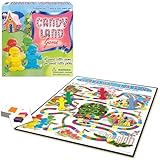
Produced by Winning Moves Games rather than Hasbro, this multicolor edition (model 1189) caters to collectors and nostalgia-driven buyers. Supporting two to four players, it celebrates the legacy of the candyland board game with retro-inspired aesthetics. It appeals to parents who want to share the exact visual style they remember from their own childhoods with a new generation.
- Pro: Retro packaging and art style deliver strong nostalgic value.
- Pro: Manufactured by Winning Moves, known for faithful classic reproductions.
- Con: Priced higher than the standard modern Hasbro edition without adding new mechanics.
Skip this if you prioritize modern, vibrant graphics over historical accuracy, or if you simply want the cheapest functional version available.
Candy Land Unicorn Edition
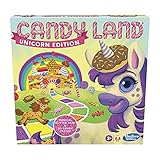
This Amazon Exclusive swaps the traditional gingerbread characters for fantasy creatures, targeting preschoolers who love unicorns. Aimed at ages three and up, it serves well as a back-to-school gift or classroom toy. It maintains the core candyland board game mechanics while refreshing the visual journey, keeping the experience novel for kids who might have outgrown the original theme.
- Pro: Fresh unicorn theme revitalizes the classic path for fantasy lovers.
- Pro: Positioned at a mid-range price that balances novelty with affordability.
- Con: The thematic shift may alienate purists who prefer the traditional sweets motif.
Skip this if your child is deeply attached to the classic Candy Land characters like King Kandy or Lord Licorice.
Chutes and Ladders Marvel Spider-Man Edition
Another adjacent classic, this Amazon Exclusive applies a Marvel skin to the Chutes and Ladders framework. Built for two to four players ages three and up, it functions similarly to a candyland board game by requiring no reading. It is tailored for young superhero fans who respond better to action-oriented artwork than pastel landscapes, making it a solid Easter gift.
- Pro: Superhero theme engages children who typically resist traditional preschool games.
- Pro: Retains the educational counting benefits of the base Chutes and Ladders game.
- Con: Relies on the Chutes and Ladders spinner mechanic rather than card draws.
Skip this if you are strictly shopping for the Candy Land brand name or if the child prefers cooperative play over competitive racing.
Trouble Board Game
Targeted at a slightly older demographic of ages five and up, Trouble accommodates two to four players. While distinct from a candyland board game, it shares the accessible, luck-based racing format suitable for early gamers. The iconic Pop-O-Matic die roller provides satisfying tactile feedback that younger children adore, though the age recommendation suggests waiting until fine motor skills develop further.
- Pro: The Pop-O-Matic bubble prevents lost dice and adds physical fun.
- Pro: The most affordable option in this entire comparison.
- Con: Requires basic counting and bumping mechanics that may frustrate younger preschoolers.
Skip this if you are buying for a three-year-old, as the recommended starting age is noticeably higher than the other entries.
Buying Guide
Player Count and Session Length
The number of supported players drastically changes how a preschool board game feels. Versions accommodating two to six players, like the Bluey Edition, prevent children from waiting too long between turns, which is crucial for maintaining toddler attention spans. Conversely, editions capped at two to three players move faster per turn but exclude larger groups. Always match the box’s player count to your typical household or classroom size before purchasing.
Thematic Execution vs. Classic Mechanics
Every candyland board game relies on the same fundamental mechanic: draw a color card and move to the corresponding space. Because the underlying rules never change, the theme carries the entire entertainment weight. If a child is obsessed with a specific franchise, paying a premium for a licensed edition yields higher engagement. However, if the goal is purely mechanical practice for turn-taking, the standard edition offers identical gameplay at a lower cost.
Component Durability for Preschoolers
Children under five are notoriously hard on cardboard. When comparing specifications, look for mentions of thick game boards and sturdy pawns. Owner feedback frequently highlights warped boards or easily bent cards as primary failure points in budget games. Tokens should be large enough to prevent choking hazards while remaining easy for developing fine motor skills to grasp and place accurately on small colored squares.
Our Verdict
The Hasbro Gaming Candy Land Kingdom of Sweet Adventures remains our top pick overall. At $14.07, it delivers the quintessential experience with broad age appeal, reliable mechanics, and widespread availability, making it the safest choice for any buyer. For those watching their spending closely, the Hasbro Gaming Trouble Board Game at $9.84 serves as our budget pick, provided the recipient is closer to age five and ready for slightly more complex rules. However, if you regularly host large family gatherings or playdates, the Candy Land Bluey Edition wins outright; its unique support for up to six players solves the biggest logistical headache of preschool gaming, justifying its $19.99 price tag for busy households.
FAQ
Do kids need to know how to read to play these games?
No. Every candyland board game variant listed here relies on color recognition or basic counting rather than reading comprehension. This design choice is intentional, allowing children as young as three to participate fully without adult assistance on every turn.
Why are some editions more expensive than others?
Price differences generally reflect licensing agreements and component variations. Editions featuring popular intellectual properties like Bluey or Disney Princesses carry licensing premiums. Additionally, versions supporting higher player counts include more tokens and sometimes larger boards, which increases manufacturing costs.
Can I mix pieces from different Candy Land editions?
Physically, yes, but it is not recommended. Different editions sometimes feature slightly altered board layouts or specific shortcut rules tied to their unique themes. Mixing components can confuse the rules and disrupt the intended balance of the game path.
Are these games suitable for a classroom environment?
Absolutely. Teachers frequently use these games to teach turn-taking, color matching, and basic rule-following. Editions with simpler setups and durable components, particularly those marketed as classroom toys, withstand the heavy rotation typical of preschool and kindergarten environments.