What's inside
As an Amazon Associate I earn from qualifying purchases. This post may contain affiliate links at no extra cost to you.
The surge in demand for refurbished hard drives reflects a simple economic reality: enterprise-grade spinning storage remains the most cost-effective way to house large datasets, media archives, and backup arrays. When new consumer drives cap out at modest capacities and premium SSDs still carry a steep per-gigabyte premium, renewed enterprise platters from established datacenter platforms offer a compelling middle ground. The question for any buyer is not whether refurbished works, but which specific model earns the price difference.
What separates a worthwhile refurbished drive from a liability is a combination of original engineering quality, remaining rated workload, and the credibility of the renewal process. A drive pulled from a lightly loaded NAS farm at the end of a standard depreciation cycle behaves very differently from one that burned through its rated hours in a high-temperature RAID array. This roundup compares eight renewed models across the capacity spectrum, weighing published enterprise specifications against aggregate owner feedback to identify the picks that deliver the most value per dollar.
As an Amazon Associate we earn from qualifying purchases at no extra cost to you. Product prices and availability are accurate as of the date shown and are subject to change.




Quick Picks
| Product | Best for | Price |
|---|---|---|
| Toshiba 10TB MG06 | Balanced NAS and server builds | $249 |
| Toshiba 14TB MG07 | High-capacity value per terabyte | $319 |
| Seagate Exos 26TB | Massive single-drive archive | $697 |
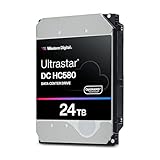
| WD Ultrastar DC HC580 24TB | Dense datacenter replacement | $689 |
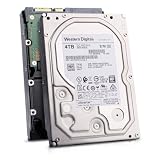
| Hitachi HGST 4TB | Small NAS or backup volume | $159.99 |
| Seagate Exos 7E8 6TB | Mid-range server pool | $189.99 |
| HGST He6 6TB | Low-power quiet storage | $169.99 |
| WD HC320 4TB | Budget single-drive backup | $159.99 |
How We Picked
We evaluated these drives on four criteria: original enterprise workload rating (annualized TB/year and MTBF hours), cost per terabyte at the listed renewal price, cache size and interface throughput as practical performance indicators, and the reliability track record of each platform family as reported by owners in NAS and server environments. Drives with helium-sealed platforms and higher original MTBF ratings earned preference when price parity made the choice relevant.
The 8 Best Refurbished Hard Drives in 2026
Toshiba 10TB MG06 (Renewed)
The Toshiba 10TB MG06ACA10TE suits NAS users and small-server operators who need meaningful capacity without crossing into the premium pricing tier. The 512e sector format ensures compatibility with modern arrays, while the 7200 RPM spindle keeps sequential throughput competitive with newer generations at a fraction of the cost.
- Pro: Toshiba enterprise platforms consistently report low annualized failure rates in community reliability data.
- Pro: At $249 the price-per-terabyte lands well below most consumer-grade alternatives of similar capacity.
- Con: No helium fill means slightly higher idle power draw than sealed rivals.
Skip this if your chassis is severely power- or thermally constrained and you have the budget for the larger MG07.
Toshiba 14TB MG07 (Renewed)
For buyers assembling a multi-drive NAS where per-bay cost matters, the Toshiba 14TB MG07ACA14TE delivers the best capacity dollar in the mid-tier. The 256 MB cache helps with random-read bursts common in mixed-transaction workloads, and the 6.0 Gb/s SATA interface keeps the drive usable in virtually any backplane.
- Pro: 14 TB per drive reduces total bay count needed, cutting enclosure and controller expenses.
- Pro: The 256 MB buffer outperforms smaller-cache peers on sustained mixed-read/write patterns.
- Con: CMR density at this generation introduces slightly longer seek times than lower-capacity siblings.
Not ideal for single-drive external enclosures where the extra $70 over the 10 TB model is hard to justify.
Seagate Exos 26TB ST26000NM000C (Renewed)
The Seagate Exos 26 TB is the top recommendation for anyone who needs maximum raw capacity in a single 3.5-inch slot. Its 512 MB cache and rated 2.5 million-hour MTBF target the heaviest sequential-archive workloads, making it attractive for cold-storage pools, video render farms, or large backup targets.
- Pro: Largest capacity per bay in this roundup, minimizing physical footprint for a given TB total.
- Pro: 512 MB cache is the biggest here, smoothing out sustained write bursts.
- Con: Premium pricing at $697 makes it hard to justify for capacities under roughly 80 TB total.
Avoid if you need drives to populate a budget 4-bay NAS; a pair of 14 TB MG07 units delivers more usable TB for less money.
WD Ultrastar DC HC580 24TB WUH722424ALE604 (Renewed)
Western Digital’s DC HC580 24 TB targets operators replacing existing datacenter platters or building high-density arrays where platform familiarity and long-term firmware support matter. The 512e format and 6 Gb/s SATA interface match legacy backplanes, and the Ultrastar lineage carries a well-documented enterprise reliability history.
- Pro: Backed by the most extensive enterprise deployment base in the industry, with deep firmware tooling.
- Pro: $10 cheaper than the 26 TB Exos while offering 92 percent of its capacity.
- Con: Slightly lower original MTBF class than the Exos platform.
Skip if your primary goal is absolute lowest cost per terabyte; the Toshiba 14 TB MG07 undercuts both on that metric.
Hitachi HGST WD Ultrastar 4TB HUS726T4TALE6L4 (Renewed)
The Hitachi-branded 4 TB HGST Ultrastar serves users with small NAS units, single-drive backup targets, or legacy server bays that cannot address larger capacities. At under $160 it is one of the most affordable entry points into genuine enterprise-grade SATA.
- Pro: Proven 726T platform with a long field-reliability history reported across storage forums.
- Pro: Compact 4 TB size fits legacy firmware controllers that reject drives above a threshold.
- Con: 64 MB cache limits burst-read performance against modern 256 MB or larger buffers.
Do not buy this if your controller supports larger volumes; the per-terabyte cost is poor next to the 6 TB or 10 TB options here.
Seagate Exos 7E8 6TB ST6000NM0115 (Renewed)
The Exos 7E8 6 TB is a practical pick for populating a four- or six-bay NAS on a moderate budget. The 256 MB cache gives it a real advantage over same-era competitors, and the 7E8 platform’s workload rating of 550 TB per year signals genuine enterprise duty-cycle capability.
- Pro: 256 MB cache at $189.99 is the best buffer-per-dollar in this group.
- Pro: Proven in mixed read/write server roles with low reported SMART failure flags.
- Con: Air-filled design runs warmer than helium-sealed peers at sustained load.
Consider the HGST He6 instead if your environment demands the quietest and coolest operation possible.
HGST He6 6TB HUS726060ALA640 (Renewed)
The helium-sealed HGST He6 remains a cult favorite among homelab and quiet-NAS builders. Helium reduces internal turbulence, cutting idle power draw and acoustic output noticeably below air-filled equivalents of the same era. The three-year warranty on this renewed listing adds peace of mind uncommon in the refurbished market.
- Pro: Three-year warranty is the longest explicit coverage in this roundup.
- Pro: Helium platform delivers measurably lower idle wattage and acoustic noise.
- Con: 64 MB cache is the smallest here, penalizing random-read-heavy workloads.
Pass on this if your workload is write-intensive or sequential-large-file; the buffer size will limit throughput.
WD Ultrastar DC HC320 4TB HUS726T4TALE6L4 (Renewed)
Western Digital’s HC320 4 TB rounds out this list as the most straightforward budget option for single-drive backup or filling a remaining empty bay. Its 64 MB cache and SATA 6 Gb/s interface are adequate for cold-storage roles where sustained streaming is not the primary demand.
- Pro: Lowest absolute price at $159.99, making it a low-risk addition to existing arrays.
- Pro: WD’s enterprise drive family enjoys broad vendor compatibility with NAS operating systems.
- Con: Smallest capacity means worst per-terabyte cost; only justified for small volumes.
Skip this if you have more than one bay to fill; consolidating into the 6 TB HGST or Seagate options saves overall money.
Buying Guide
Workload Rating and Duty Cycle
Enterprise drives carry an annualized workload rating, typically between 300 and 550 TB per year. This number tells you how much data the manufacturer expects to be written over a 24/7 year. If your backup rotation or media server exceeds that figure, the drive will wear out faster than its MTBF suggests. When buying refurbished hard drives, pull the original spec sheet for the exact model to confirm this rating before adding it to a write-heavy pool.
Cost Per Terabyte and Capacity Planning
Divide the listing price by capacity to see which drive delivers the best value at your target volume. In this 2026 lineup the Toshiba 14 TB MG07 leads on that metric, while the 4 TB models carry a per-terabyte premium that only makes sense when you need fewer total terabytes or face controller capacity limits. Plan for the array size you actually need rather than overpaying for unused headroom.
Warranty and Seller Reputation
Renewed drives do not come with manufacturer warranties by default, so any included coverage from the seller is a direct value signal. The HGST He6 listing explicitly states three years of warranty, which is generous for the category. Beyond warranty length, look for sellers who document the number of power-on hours remaining and provide fresh SMART reports, because those disclosures reduce the risk of receiving a drive near the end of its usable life.
Our Verdict
The top overall pick is the Seagate Exos 26 TB for buyers whose priority is maximum capacity in the fewest bays; its 512 MB cache and class-leading MTBF make it the most future-proof single drive here. The best budget pick is the Toshiba 14 TB MG07, which offers the lowest cost per terabyte among the mid-range options while keeping a generous 256 MB buffer. The exception: if noise and idle power dominate your requirements in a small homelab, the helium-sealed HGST He6 6 TB wins despite its smaller cache, thanks to its three-year warranty and demonstrably quieter operation.
FAQ
Are refurbished hard drives reliable for long-term storage?
Refurbished enterprise drives are generally reliable because they were engineered for continuous operation with higher workload ratings than consumer models. The key risk is unknown power-on hours, so always request a SMART report showing remaining life before accepting a unit.
What is the difference between renewed and refurbished hard drives?
The terms are largely interchangeable in retail listings, though some sellers reserve “renewed” for drives inspected and cleaned to a minimum operational standard, while “refurbished” may imply component-level repair. In practice, both describe pre-owned drives sold through a secondary channel with some form of seller-backed warranty.
Can I mix different capacity drives in the same NAS array?
Most NAS operating systems will size the array to the smallest drive unless you use a volume manager that supports uneven allocation. For a RAID or pool, matching capacities avoids wasted space and keeps rebuild times predictable.
Do I need a specific firmware mode for SATA enterprise drives?
Enterprise SATA drives often ship with Time-Limited Error Recovery (TLER) or ERC enabled to prevent the controller from dropping them during read-retry operations. If your motherboard or HBA does not support TLER, the drive may still work in JBOD or single-volume mode without issue.