What's inside
As an Amazon Associate I earn from qualifying purchases. This post may contain affiliate links at no extra cost to you.
A small office that shares one reliable printer saves hundreds of dollars a year compared to teams that keep replacing cheap machines or paying per-page fees that climb without warning. The challenge with office printers and scanners is not finding an option at a given price — it is finding one whose duty cycle, paper path, and software ecosystem actually match how your team works day to day.
A good office printer handles duplex printing without manual re-feeding, feeds multi-page documents through an automatic document feeder at a steady pace, and does not require you to troubleshoot network connections every time a new laptop joins the Wi-Fi. A bad one locks features behind proprietary ink subscriptions you did not choose, jams on card stock, or simply cannot scan to a shared folder. The eight machines below cover the full range of those trade-offs, from under $60 to just over $200, and the differences between them are more meaningful than most spec sheets suggest.
As an Amazon Associate we earn from qualifying purchases at no extra cost to you. Product prices and availability are accurate as of the date shown and are subject to change.





Quick Picks
| Product | Best for | Price |
|---|---|---|
| Brother DCP-L2640DW | Monochrome-heavy offices that need reliability | $209.99 |
| HP OfficeJet Pro 8125 | Home offices wanting color on a budget | $119.99 |
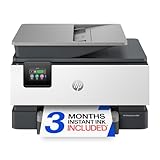
| HP OfficeJet Pro 9125 | Busier offices that also need fax and duplex scanning | $199.99 |
| Canon PIXMA TR7120 | Compact setups prioritizing photo-quality output | $99 |
| Epson EcoTank ET-4800 | High-volume print shops avoiding cartridge costs | $199.99 |
| Brother MFC-J1360DW | Small teams wanting color and duplex scanning affordably | $99.98 |
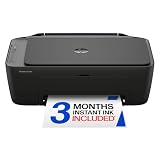
| HP DeskJet 2955 | Light home use and occasional document scanning | $59.99 |
| HP LaserJet Pro MFP 3101sdw | Small teams needing laser speed and security | $229 |
How We Picked
We compared published specifications, listed prices, and recurring themes from long-term owner reviews. Four criteria drove our selection: whether the machine includes duplex printing natively (a cost and time factor at scale), whether it carries an automatic document feeder rather than a flatbed-only design, whether the network stack supports mobile and shared-folder printing without vendor lock-in, and whether the total cost of consumables over a year stays reasonable for the intended workload.
The 8 Best Office Printers And Scanners in 2026
Brother DCP-L2640DW
This monochrome laser multifunction suits offices that print primarily text documents and need a machine that does not clog, fade, or demand calibration between jobs. It is the quiet choice for accounting firms, legal practices, and any environment where color output is rare.
- Pro: Duplex printing and wireless mobile printing come standard, covering the two features most small offices actually need daily.
- Pro: Laser engines tolerate months of inactivity without dried printheads, so the per-page cost stays low even on irregular print schedules.
- Con: No color output at all, so any marketing collateral or photo print requires a separate device.
Skip it if your team regularly produces color materials or if you need a fax modem built into the same unit.
HP OfficeJet Pro 8125
For home offices that need color documents, occasional scans to cloud storage, and automatic duplexing without spending over $130, the 8125 represents a practical middle ground. It is the printer a freelance designer or remote worker picks when a basic DeskJet feels limiting.
- Pro: Includes an automatic document feeder and duplex printing at a sub-$120 price, undercutting most competing all-in-ones.
- Pro: AI-capable labeling signals HP’s push toward automated document routing and smart tray management features rolling out in 2026 firmware.
- Con: Inkjet consumables cost more per page than laser equivalents over high-volume periods, and the Instant Ink trial creates a renewal decision point many owners forget.
Skip it if your monthly page count exceeds a few hundred, where laser economics overtake inkjet.
HP OfficeJet Pro 9125
The 9125 steps up from the 8125 with fax capability and, critically, duplex scanning — meaning two-sided documents pass through the ADF once rather than requiring manual flipping. Offices that archive contracts or scan multi-page proposals benefit from this workflow difference immediately.
- Pro: True duplex print-and-scan eliminates the single largest time sink in document digitization workflows.
- Pro: The built-in fax modem removes the need for a separate line or online fax service for the few clients who still request one.
- Con: The price approaches entry-level laser territory, so the value proposition depends heavily on needing color output specifically.
Skip it if you print exclusively in black and white; a laser will serve you faster and cheaper at that point.
Canon PIXMA TR7120
Canon’s TR7120 targets compact workspaces where desk real estate is scarce and the occasional photo or creative print matters. Its white finish and smaller footprint make it the least obtrusive option on this list, ideal for boutique studios or shared co-working desks.
- Pro: Genuinely compact chassis with an intuitive front-panel layout, so new users figure out scan-to-USB without reading a manual.
- Pro: Canon’s PIXMA ink formulations historically deliver color fidelity that rivals dedicated photo printers at this price tier.
- Con: Lacks a network Ethernet port, limiting it to Wi-Fi and direct mobile connections, which can be a reliability risk in congested office environments.
Skip it if you need wired networking or fax, or if your print volume pushes past casual office use.
Epson EcoTank ET-4800
The EcoTank system replaces cartridges with refillable ink reservoirs, dropping the per-page cost dramatically for anyone printing over a hundred pages monthly. Paired with an Ethernet port, ADF, fax, and duplex, it covers the full feature list most small offices require in one machine.
- Pro: Cartridge-free supertank design means you buy ink in bulk at a fraction of traditional cartridge pricing, and the initial fill is included.
- Pro: Ethernet connectivity provides a stable, dedicated network path that avoids the dropouts common in crowded Wi-Fi office environments.
- Con: The physical refill process can be messy and requires keeping bottles on hand; owners occasionally report ink-level sensor confusion during the first few refills.
Skip it if you print fewer than fifty pages a month, where the refill logistics outweigh the cost savings.
Brother MFC-J1360DW
At under $100, the Work Smart 1360 delivers color inkjet with wireless connectivity and duplex capability, making it the most feature-dense budget option here. Brother’s software stack remains one of the least aggressive about requiring accounts, which small-office IT managers appreciate.
- Pro: Priced below many competitors that offer fewer features, including wireless printing and scanning without mandatory cloud registration.
- Pro: Brother’s reputation for straightforward consumable availability means third-party ink options exist, reducing long-term operating costs.
- Con: Print speed lags behind laser alternatives noticeably during multi-page jobs, and the flatbed scanner handles thick originals poorly.
Skip it if speed matters for your workflow or if you need fax built in.
HP DeskJet 2955
The DeskJet 2955 is the entry point for anyone who needs an all-in-one for home use at the lowest possible price. It prints, scans, and copies color documents, and HP’s AI-capable label indicates firmware that simplifies initial setup on mobile devices.
- Pro: At $59.99, it is the cheapest functional wireless all-in-one on this list, making it a rational stopgap for new home offices.
- Pro: Compact enough to sit on a shelf or narrow desk without dominating the workspace.
- Con: Lacks both an ADF and duplex printing, so every multi-page scan or double-sided job becomes a manual, repetitive task that adds up quickly.
Skip it for any environment beyond a single person printing occasionally; the missing ADF alone makes it a poor shared-office choice.
HP LaserJet Pro MFP 3101sdw
Designed for small teams, the 3101sdw brings laser speed, built-in duplex, and wireless networking into a shared-workgroup context. The “sdw” suffix indicates HP’s Secure Print features and wireless connectivity, addressing the access-control concerns that arise when multiple employees share one output tray.
- Pro: Laser print quality at text-heavy volumes outperforms every inkjet here in consistency and smudge resistance, especially on standard copier paper.
- Pro: Native duplex printing without manual intervention, combined with team-oriented security features like PIN-release printing.
- Con: Monochrome only, and at $229 it is the most expensive unit on this list, so the justification rests entirely on print speed and reliability over a shared network.
Skip it if you need color output or if your team is smaller than three people who do not print simultaneously.
Buying Guide
Laser versus Inkjet for Office Duty Cycles
Laser printers produce output through toner fused by heat, which means text pages emerge crisp and smudge-free regardless of humidity or storage time. Inkjet printers deposit liquid droplets that excel at color gradients but can bleed on cheap paper. If your office prints more than two hundred pages monthly and nearly all of it is text-based, a laser like the Brother DCP-L2640DW or HP LaserJet Pro 3101sdw delivers lower lifetime costs despite higher upfront prices. If your output skews toward graphics, marketing materials, or client-facing documents where color accuracy matters, modern inkjets such as the HP OfficeJet Pro 9125 close most of that quality gap while remaining under $200.
The Case for a Real Automatic Document Feeder
Flatbed scanning produces excellent results for single pages, photos, or bound originals, but digitizing a twenty-page contract on a flatbed takes a physical reposition every time the scanner advances. An ADF eliminates that bottleneck entirely. Duplex ADFs go further, feeding two-sided documents in a single pass. For offices that file, archive, or share scanned materials weekly, the ADF specification — particularly whether it supports duplex — is the single most consequential feature difference between models on this list. The HP DeskJet 2955 lacks one; the Canon TR7120 includes one but without duplex; the HP 9125 includes duplex ADF at the full feature level.
Total Cost of Ownership Beyond the Sticker Price
A $60 printer that requires $40 replacement cartridges every three months costs more annually than a $230 laser with a $60 toner that lasts a full year at moderate volume. Inkjet subscription programs like HP Instant Ink shift the cost model to a per-page fee, which can benefit predictable print habits but locks you into a recurring charge even during slow months. Before purchasing, estimate your monthly page count and compare it against the manufacturer’s published cartridge or toner yield. The Epson EcoTank ET-4800’s refillable reservoir system specifically targets this calculation by cutting consumable costs to pennies per page, making its $199.99 price competitive when viewed over a three-year ownership window.
Our Verdict
For most small offices that need color capability, duplex printing, and a capable ADF without exceeding $200, the HP OfficeJet Pro 9125 is the top pick because duplex scanning eliminates the most common workflow friction in shared environments. On a strict budget under $100, the Brother MFC-J1360DW offers the broadest feature set per dollar. However, if your office prints exclusively black-and-white text and values consistent output over a three-to-five-year lifespan, the Brother DCP-L2640DW justifies its higher price through lower maintenance and a per-page cost that stays stable at volume.
FAQ
Do I need fax on an office printer in 2026?
Most modern offices no longer require built-in fax modems, since cloud fax services handle the handful of documents that arrive by that channel. If you have fewer than five incoming faxes monthly, a subscription service costs less than choosing a fax-capable printer. Consider the HP OfficeJet Pro 9125 only if your industry or clients still genuinely depend on faxed originals.
Is an Ethernet port still worth prioritizing over Wi-Fi?
In environments with many connected devices, a wired Ethernet connection provides a dedicated, low-latency path that avoids the intermittent dropouts common on congested office Wi-Fi. The Epson EcoTank ET-4800 includes one; most others on this list rely on wireless. If your office has more than fifteen network-connected devices, the stability a wired port offers is worth the small extra cost.
How long should I expect an office printer to last?
Laser printers typically sustain five to seven years of moderate office use before mechanical wear requires service, while inkjets more often see printhead degradation within three years under heavy color printing. The determining factor is not just build quality but whether you keep the machine within its rated monthly duty cycle; pushing any printer beyond its published page limit accelerates failure regardless of type.
Should I buy a separate scanner instead of relying on an all-in-one?
Dedicated scanners generally offer higher resolution, faster sheet-fed throughput, and better handling of fragile or oversized originals. For standard office document digitization, however, the ADF-equipped all-in-ones on this list perform adequately. Invest in a separate flatbed or sheet-fed scanner only if you regularly scan archival materials, large-format drawings, or photo-quality originals that demand color calibration.