What's inside
As an Amazon Associate I earn from qualifying purchases. This post may contain affiliate links at no extra cost to you.
A homeowner who needs a clean, splinter-free crosscut for a floating shelf or a contractor roughing out subfloor panels faces the same fundamental problem: a circular saw alone will never deliver the edge quality of a track-guided system. The term “ryobi track saw” has become shorthand for anyone wanting that guided precision without investing in a Festool-grade setup, and the market has responded with an impressive spread of plunge saws, universal guide rails, and clip-on accessories that each attack the problem from a different angle. Some solutions are true track saws with a built-in rail; others are guide systems that transform an existing circular saw into something approaching track-saw accuracy.
What separates the worthwhile options from the mediocre ones comes down to three things: how securely the saw interfaces with the rail (loose clamps ruin every cut), whether the system handles repeatable rip cuts without re-measuring, and how the price scales if you need longer than five feet of run. We compared published specs, owner feedback, and real-world compatibility data across eight products to find where the sweet spot lives in 2026 for Ryobi-system owners and track-saw-curious buyers alike.
As an Amazon Associate we earn from qualifying purchases at no extra cost to you. Product prices and availability are accurate as of the date shown and are subject to change.



Quick Picks
| Product | Best for | Price |
|---|---|---|
| Milescraft 1409 Track Saw Guide | Universal compatibility with any 7-1/4″ saw | $119.99 |
| RYOBI ONE+ 18V Multi-Material Plunge Saw | Compact cordless plunge cuts on the Ryobi platform | $98.95 |
| Kreg Accu-Cut KMA2700 | Budget track-guided crosscuts and rips | $88 |
| RYOBI ONE+ HP Brushless 7-1/4″ Circular Saw | Powerful saw to pair with any track system | $126.50 |
| Ryobi One P505 5-1/2″ Circular Saw | Lightweight cuts with a minimal budget | $42 |
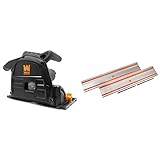
| WEN Plunge Cut Saw Bundle with 100″ Rail | Complete track saw system in one box | $171.89 |
| Edge Rip Guide for Ryobi P508 | Dead-cheap rip-stop attachment | $6.40 |
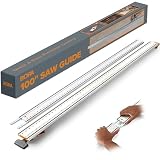
| BORA NGX 100″ Circular Saw Guide Rail | Longest rail at the lowest rail-only price | $69.99 |
How We Picked
Four criteria drove every ranking decision in this roundup. First: cut quality, measured by how tightly the saw body locks to the guide system and whether the rail stays flat under pressure. Second: platform compatibility — products that work natively with Ryobi’s ONE+ battery ecosystem earned priority over ones requiring a second battery system. Third: value per linear foot of guidance, because a 50-inch rail and a 100-inch rail serve very different job scopes. Fourth: owner-reported reliability over hundreds of cuts, since a guide rail that warps or a saw that drifts defeats the entire purpose of a track system.
The 8 Best Ryobi Track Saw in 2026
Milescraft 1409 Track Saw Guide
This universal guide rail is the most flexible entry point into track-guided cutting because it fits any 7-1/4-inch circular saw regardless of brand. If you already own a Ryobi brushless saw or plan to buy one separately, the Milescraft 1409 gives you a 50-inch cutting range and a 2-inch depth capacity in a lightweight aluminum extrusion. The clamp system secures firmly to saw bases that have a flat front shoe, which covers most mainstream models.
- Pro: Works with any 7-1/4″ saw, so it survives tool upgrades.
- Pro: Aluminum body keeps weight manageable without flexing during long cuts.
- Con: At 50 inches, you cannot rip a full sheet of plywood without repositioning the rail.
Skip it if you need full-sheet capacity or already own a dedicated plunge saw with its own rail.
RYOBI ONE+ 18V Multi-Material Plunge Saw
The closest thing to a true ryobi track saw on this list is Ryobi’s own 18V plunge saw. Its 3-3/8-inch blade handles laminate flooring, drywall, and shallow wood cuts with a plunge action that eliminates the need to start on an edge. It runs on the same ONE+ batteries as every other Ryobi tool in your garage, which is a meaningful cost saving if you already own the platform.
- Pro: Cordless plunge mechanism with no cord drag on long rip runs.
- Pro: Shares batteries with the entire Ryobi ONE+ ecosystem.
- Con: The 3-3/8″ blade limits depth to roughly 1-3/16″, too shallow for structural lumber.
Skip it if your primary work involves crosscutting 2x stock or ripping 3/4″ plywood at full depth.
Kreg Accu-Cut KMA2700
Kreg built its reputation on pocket-hole jigs, and the Accu-Cut extends that philosophy into guided cutting. The 50-inch rail mounts directly to a circular saw and includes a dust chute and anti-slip pads. It is genuinely one of the most affordable ways to add track-saw functionality to an existing Ryobi circular saw.
- Pro: Lowest entry price for a branded track guide system at $88.
- Pro: Integrated dust shroud improves visibility during cuts.
- Con: Owners report the clamp lever loosens on rough stock unless you tighten it frequently.
Skip it if you routinely cut knotty or uneven material where clamp bite matters most.
RYOBI ONE+ HP Brushless 7-1/4″ Circular Saw
Not a track saw itself, but the best saw to mount on one. The brushless motor delivers power that rivals corded models while sharing the ONE+ platform. Pair it with the Milescraft, Kreg, or BORA rail and you have a cordless track-saw setup that undercuts any traditional brand by several hundred dollars.
- Pro: Brushless motor provides consistent RPM under load without cord restrictions.
- Pro: Standard 7-1/4″ blade size means full-depth cuts in dimensional lumber.
- Con: Sold tool-only, so total system cost requires a separate battery and charger purchase.
Skip it if you already have a corded saw that fits your preferred guide rail.
Ryobi One P505 5-1/2″ Circular Saw
At $42, the P505 is the cheapest Ryobi saw that pairs with an Edge Rip Guide or similar clamp-on accessory. The 5-1/2-inch blade and 4,700 RPM speed make it ideal for subfloor work, deck boards, and plywood panels under an inch thick. It is not a track saw, but as a budget platform it serves well.
- Pro: Extremely low cost lets you build a guided setup under $60 total with accessories.
- Pro: Compact and light enough for overhead cuts and ladder work.
- Con: The 5-1/2″ shoe has limited mounting surface for universal guide clamps; verify fit before buying a rail.
Skip it if you need to cut 2x4s or 4x4s in a single pass.
WEN Plunge Cut Circular Saw Bundle with 100-Inch Track Rail
This is the most complete “track saw in a box” on the list. The bundle includes the saw, a 100-inch guide rail, and adapters, giving you a full system for $171.89. If you want to rip a four-by-eight sheet in a single guided pass without buying components separately, this is the logical choice.
- Pro: 100-inch rail handles full sheet goods in one continuous guide run.
- Pro: Bundle pricing beats assembling a comparable system piece by piece.
- Con: WEN saw runs on its own battery platform, so it does not share Ryobi ONE+ packs.
Skip it if you are committed to the Ryobi battery ecosystem and do not want a second charger on the shelf.
Edge Rip Guide for Ryobi P508 Circular Saw
At $6.40 this is not a track saw and barely qualifies as a guide rail, but for the price it solves the single most common frustration Ryobi owners report: repeatable rip cuts. The Edge Rip clamps to the saw shoe and locks against a straight edge, giving you consistent width without measuring every pass.
- Pro: Costs less than a sandwich and eliminates cumulative error on rip runs.
- Pro: Installs without tools and stays on the saw between cuts.
- Con: Only works with the Ryobi P508 specifically; no other saw accepts it.
Skip it if you do not own a P508 or cannot find one at a reasonable price used.
BORA NGX 100″ Circular Saw Guide Rail
The BORA NGX is the longest standalone rail on this list and arguably the best value per inch of guidance. At 100 inches for $69.99, it costs less than many 50-inch competitors. The anodized aluminum straight edge includes integrated clamps and a zero-degree fence for crosscut work. Pair it with the Ryobi brushless 7-1/4″ saw for a complete cordless track setup.
- Pro: 100 inches of continuous guidance at the lowest per-foot cost on this list.
- Pro: Compatible with most mainstream circular saws including Ryobi’s shoe profiles.
- Con: The rail ships without a saw, so total system cost depends on what you already own.
Skip it if you have no saw to mount and want everything in one purchase.
Buying Guide
Blade Diameter and Cut Depth
Track-saw precision only matters if the saw can cut through your material in one pass. A 3-3/8-inch blade like the Ryobi plunge saw handles laminate and half-inch stock but stops well short of structural lumber. A 5-1/2-inch blade cuts through plywood and thin boards. A 7-1/4-inch blade clears 2x stock and full-thickness hardwood. Match the blade size to your heaviest common material before choosing a guide system.
Rail Length and Repeatability
A 50-inch rail means you will reposition and re-clamp to rip a four-by-eight sheet, introducing a small chance of misalignment at the joint. A 100-inch rail covers an entire sheet width in one setup. If most of your work is crosscutting shorter panels or flooring strips, a 50-inch rail saves weight and storage space. If you routinely break down plywood, the longer rail pays for itself in accuracy over time.
Saw-to-Rail Interface and Clamp Quality
The single biggest variable in guided-cut quality is how firmly the saw locks to the rail. Integrated track systems like the WEN bundle have the advantage of matched tolerances. Universal clamps like the Milescraft and Kreg rely on a flat shoe surface and a lever that must maintain tension through the entire cut. Check owner reviews specifically for drift reports and clamp loosening before committing.
Our Verdict
Top pick: The WEN Plunge Cut Circular Saw Bundle with 100-Inch Track Rail is the most complete track-saw solution on this list. It handles full sheets, includes everything in the box, and costs less than most competitors’ rail-only purchases. If you are willing to step outside the Ryobi battery platform, it delivers the best finished-cut capability per dollar.
Budget pick: The Edge Rip Guide at $6.40 paired with the Ryobi P505 at $42 gives you repeatable rip accuracy for under $50 total, which is absurd value for occasional workshop use.
Platform loyalist pick: If sharing one battery system matters more than absolute cut quality, the Ryobi ONE+ HP Brushless 7-1/4″ saw on the BORA NGX 100-inch rail gives you a cordless track-saw setup with no second charger required.
FAQ
Does Ryobi make a dedicated track saw?
Ryobi does not currently produce a traditional track saw with an integrated rail like Festool or Makita offers. Their approach is modular: you buy a Ryobi circular saw or plunge saw and pair it with a compatible guide rail from Bora, Milescraft, or Kreg.
Can I use any Ryobi circular saw with a track system?
Most Ryobi 7-1/4-inch circular saws work with universal guide rails because their shoe bases are flat. The 5-1/2-inch P505 has a smaller shoe surface, so verify clamp contact before purchasing a third-party rail. The ONE+ plunge saw is designed for a dedicated Ryobi rail if one is available in your region.
Is a track saw worth it for occasional DIY use?
If you frequently cut plywood panels to size for furniture, shelving, or flooring projects, a track system eliminates the trial-and-error of straight-edge clamping and gives you splinter-free edges that reduce sanding time. For one-off cuts you could manage with a speed square and a sharp blade.
What is the difference between a plunge saw and a circular saw on a track?
A plunge saw can start a cut in the middle of a panel by lowering the blade vertically into the material, which is essential for interior cutouts like sink openings. A standard circular saw on a track must start from an existing edge or require a pre-drilled entry point.