What's inside
- Best Kids Electric Trucks: Top Picks by Age, Terrain, and Family Use
- Quick comparison of the best kids electric trucks
- Best overall for younger children: Peg Perego John Deere Gator XUV
- Best simple first truck: Power Wheels Ford F-150
- Best for rougher outdoor terrain: Peg Perego Polaris Ranger RZR 24V
- How the important specifications affect your decision
- Decision matrix: which truck fits your situation?
- Assembly, maintenance, and ownership realities
- Final recommendation
- Best Kids Electric Trucks: Top Picks by Age, Terrain, and Family Use
- Quick comparison of the best kids electric trucks
- Best overall for younger children: Peg Perego John Deere Gator XUV
- Best simple first truck: Power Wheels Ford F-150
- Best for rougher outdoor terrain: Peg Perego Polaris Ranger RZR 24V
- How the important specifications affect your decision
- Decision matrix: which truck fits your situation?
- Assembly, maintenance, and ownership realities
- Final recommendation
As an Amazon Associate I earn from qualifying purchases. This post may contain affiliate links at no extra cost to you.
Sections
- Best Kids Electric Trucks: Top Picks by Age, Terrain, and Family Use
- Quick comparison of the best kids electric trucks
- Best overall for younger children: Peg Perego John Deere Gator XUV
- Best simple first truck: Power Wheels Ford F-150
- Best for rougher outdoor terrain: Peg Perego Polaris Ranger RZR 24V
- How the important specifications affect your decision
- Decision matrix: which truck fits your situation?
- Assembly, maintenance, and ownership realities
- Final recommendation
Best Kids Electric Trucks: Top Picks by Age, Terrain, and Family Use
The best kids electric trucks for most families are the Peg Perego John Deere Gator XUV for younger children and light outdoor driving, the Power Wheels Ford F-150 for a simple first ride-on, and the Peg Perego Polaris Ranger RZR 24V for older children who need more ground clearance and longer outdoor capability.
A good choice depends less on the truck’s appearance than on six practical questions: will your child fit the age and weight limits, how long will the battery last, where can the truck drive, how controllable is its speed, how much assembly is involved, and whether the safety equipment suits your supervision level?
As an Amazon Associate we earn from qualifying purchases at no extra cost to you.

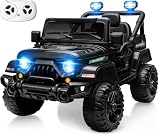


Quick comparison of the best kids electric trucks
| Model | Recommended age | Rider capacity | Speed | Typical runtime | Charging time | Best use |
|---|---|---|---|---|---|---|
| Peg Perego John Deere Gator XUV 12V | 3–7 years | Up to about 130 lb total | Approximately 2.5 and 4.5 mph | 30–60 minutes | 12–18 hours initially; overnight charging is common | Grass, pavement, compact dirt, and supervised farm-style play |
| Power Wheels Ford F-150 | 3–7 years | Up to about 65 lb, depending on version | Approximately 2.5 and 5 mph | 30–60 minutes | 12–18 hours | Driveways, sidewalks, and level lawns |
| Peg Perego Polaris Ranger RZR 24V | 6 years and up | Up to about 130 lb total | Approximately 3.5–7.5 mph | 30–60 minutes | 12–18 hours | Grass, packed trails, and uneven outdoor terrain |
| Kid Trax Dodge Ram 12V | 3–7 years | Up to about 130 lb, depending on version | Approximately 2.5 and 5 mph | 30–60 minutes | 8–12 hours | Level lawns and paved surfaces with truck styling |
Specifications vary by production year, battery revision, and retailer package. Treat the numbers above as a buying comparison rather than a substitute for the manual supplied with the particular truck.
Best overall for younger children: Peg Perego John Deere Gator XUV
The John Deere Gator XUV is the most balanced choice when two children may ride together or when you want a stable, utility-style body rather than a fast sports vehicle. Its two forward speeds, reverse, wide stance, and working-style cargo bed make it useful for controlled play on lawns and compact ground.
The low-speed setting matters more than its top speed. A three- or four-year-old can learn steering and pedal control without immediately having access to the truck’s fastest setting. Parents should still use the higher setting only after the child can stop, turn, and release the accelerator reliably.
Choose it when your child is near the beginning of the recommended age range, your property has grass or firm dirt, and carrying capacity is more useful than maximum speed. Its main disadvantages are the long charging period and limited performance on wet grass, steep slopes, mud, or loose gravel.
Best simple first truck: Power Wheels Ford F-150
The Power Wheels Ford F-150 is a sensible first ride-on for a child who will mostly drive on a driveway, patio, sidewalk, or relatively flat lawn. The two-speed selector and parental high-speed lockout make it easier to introduce driving gradually.
Its truck shape provides familiar styling, but the important buying detail is the version’s rider limit. Some F-150 packages are intended for one smaller child rather than two riders. Check the exact label before buying if your child is tall, heavy for their age, or likely to carry a sibling.
This is the better choice than a larger 24V truck when storage space is limited and outdoor routes are smooth. A higher-voltage model is not automatically better: extra speed can make a small yard feel cramped and increases the distance needed to stop.
Best for rougher outdoor terrain: Peg Perego Polaris Ranger RZR 24V
The Polaris Ranger RZR 24V is the strongest choice in this group for older children who regularly drive across grass, packed dirt, and mildly uneven trails. Larger tires, greater ground clearance, and a 24V electrical system provide more useful hill and surface performance than a basic 6V or 12V truck.
That capability comes with a responsibility: this truck can reach approximately 7.5 mph, so it needs a larger, clearly bounded driving area. It is not appropriate for public roads, steep embankments, deep mud, or terrain where an adult cannot quickly reach the vehicle.
Use the slower setting while teaching throttle control. The higher setting is most appropriate for a competent older child, a level route, and direct adult supervision. Two-seat capacity also makes total rider weight important; two children near the upper limit can reduce acceleration and battery runtime.
How the important specifications affect your decision
Age and weight limits
Age guidance is only a starting point. Compare the child’s height, weight, leg reach, and ability to operate the foot pedal. A child who cannot comfortably reach the pedal or see over the dashboard should not use a truck simply because they meet the printed minimum age.
For two-seat vehicles, add both children’s weights and any cargo. Staying below the maximum does not guarantee full performance: a truck carrying 120 lb will generally climb and accelerate less effectively than the same truck carrying 60 lb.
Battery runtime and charging
Most ride-on trucks use sealed lead-acid batteries. A quoted runtime of 30–60 minutes is usually an intermittent-driving estimate, not an hour of continuous hill climbing. Cold weather, underinflated tires, extra weight, rough ground, and repeated starts all reduce runtime.
Charging commonly takes 8–18 hours. Never return the truck to service after only a short charge unless the manufacturer specifically permits it. Use the supplied charger, charge in a dry ventilated area, and disconnect it after the recommended charging period.
For example, if a child drives for 25 minutes on Saturday and 25 minutes on Sunday, a 50-minute rated runtime appears adequate. In practice, keeping a second compatible battery is not always the best solution: replacement batteries vary by connector, capacity, and charger requirements. Confirm the exact battery specification before purchasing a spare.
Speed controls and stopping
Look for a mechanical high-speed lockout, two forward speeds, reverse, and an accelerator that returns to neutral when released. A remote parent controller can provide an additional layer of control, but many children’s trucks rely on the child’s pedal and a manual speed selector instead.
Test the controls on flat ground before allowing outdoor driving. Explain that releasing the pedal is the normal first stopping action, then teach the child to steer away from people, pets, stairs, ponds, and parked vehicles.
Terrain capability
6V trucks are generally suited to indoor floors and very smooth pavement. 12V trucks are the practical middle ground for level lawns, driveways, and compact dirt. 24V trucks are more capable on uneven grass and gentle inclines, but they still are not off-road vehicles.
Traction does not eliminate rollover risk. Avoid steep side slopes, wet leaves, loose sand, deep puddles, and sudden transitions from pavement to grass. Check the manufacturer’s manual for slope restrictions rather than estimating what the truck can climb from its motor rating.
Decision matrix: which truck fits your situation?
| Your situation | Best match | Why |
|---|---|---|
| First ride-on, small driveway, child aged 3–5 | Power Wheels Ford F-150 | Simple two-speed operation and manageable size |
| Two young riders or frequent cargo play | Peg Perego John Deere Gator XUV | Utility layout and higher combined capacity |
| Older child, large yard, uneven grass | Peg Perego Polaris Ranger RZR 24V | More clearance, traction, and outdoor capability |
| Infrequent use and limited storage | Smaller 6V or 12V truck | Lower weight and simpler storage than a 24V model |
Assembly, maintenance, and ownership realities
Expect approximately 45–120 minutes of assembly depending on the model and your familiarity with basic hand tools. The work usually includes installing wheels, steering components, seats, roll bars, decals, and battery connections. Do not use an impact driver on plastic panels; overtightening can crack mounting points or distort steering parts.
Before the first drive, verify that wheel retainers are fully seated, the steering linkage moves freely, the pedal springs back, the battery connector is secure, and all screws are tight. Charge the battery fully before judging runtime.
The parts that usually wear first are tires, wheel bushings, steering links, pedal switches, and batteries. Brush off grass and dirt after each use, keep the truck covered but dry, and avoid pressure-washing the motor, switches, charger socket, or battery compartment. Check tire condition and fasteners monthly during frequent use.
The most common battery mistake is storing the truck for months with a depleted battery. Follow the manual’s storage-charging instructions and inspect the battery before the next season. If runtime suddenly falls, check tire pressure, total load, corrosion at connectors, and charger operation before buying a replacement battery.
Final recommendation
Choose the Power Wheels Ford F-150 for a straightforward first truck on smooth ground, the Peg Perego John Deere Gator XUV for versatile family play and younger drivers, and the Peg Perego Polaris Ranger RZR 24V for older children with enough open space to use its additional speed safely. Whichever model you choose, prioritize the child’s fit, a suitable driving surface, reliable speed control, and correct charging over styling or peak motor voltage.