What's inside
- Best Wood Cutting Table Saws for Accurate Shop Projects
- Three dependable choices by shop situation
- Side-by-side specifications
- Choose by material, space, and workload
- Features that make a difference in real cuts
- Setup and ownership: accuracy comes from alignment
- When a table saw is not the right saw
- Related Guides
- Best Wood Cutting Table Saws for Accurate Shop Projects
- Three dependable choices by shop situation
- Side-by-side specifications
- Choose by material, space, and workload
- Features that make a difference in real cuts
- Setup and ownership: accuracy comes from alignment
- When a table saw is not the right saw
- Related Guides
As an Amazon Associate I earn from qualifying purchases. This post may contain affiliate links at no extra cost to you.
Sections
- Best Wood Cutting Table Saws for Accurate Shop Projects
- Three dependable choices by shop situation
- Side-by-side specifications
- Choose by material, space, and workload
- Features that make a difference in real cuts
- Setup and ownership: accuracy comes from alignment
- When a table saw is not the right saw
- Related Guides
Best Wood Cutting Table Saws for Accurate Shop Projects
For most woodworkers, the best wood cutting table saw is a 10-inch jobsite saw with a stable rolling stand, at least 24 inches of rip capacity, and an effective dust port; choose a contractor or cabinet saw instead if it will stay in a permanent shop or regularly cut thick hardwood.
The right choice depends less on a long feature list than on what you cut and where the saw must fit. Sheet goods need generous rip capacity, solid support, and a safe plan for handling large panels. Furniture parts demand repeatable fence alignment and low vibration. Before comparing models, check whether the saw’s published rip capacity means cutting to the right of the blade, the left, or both.
As an Amazon Associate we earn from qualifying purchases at no extra cost to you.
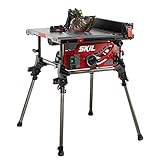


Three dependable choices by shop situation
DeWalt DWE7491RS: for a mobile shop that cuts sheet goods
This 10-inch jobsite saw is a practical fit for remodelers and small-shop woodworkers who need a folding stand and substantial capacity. Its listed rip capacity is 32½ inches to the right of the blade, enough to rip a standard 48-inch-wide plywood sheet in half-length strips when the panel is properly supported. The rolling stand saves setup time, but the saw is still a compact machine: use outfeed support and a second person for unwieldy full sheets.
Bosch 4100XC-10: for frequent moves and quick setup
The Bosch 4100XC-10 pairs a 10-inch blade with a gravity-rise wheeled stand and a 30-inch rip capacity. It suits users who regularly take a saw out of storage or move it between jobs. Its capacity is a little less than the DeWalt’s, so check your most common panel cuts before buying. A portable stand is useful only if its legs lock firmly and the saw sits level on the floor.
SawStop CNS175-TGP36: for a stationary small shop
The SawStop Contractor Saw is a heavier, more permanent option, commonly sold with a 36-inch T-Glide fence. It is designed for a shop where accuracy, fence support, and a sturdy base matter more than easy transport. SawStop’s blade-brake system is a distinctive safety feature, but it adds purchase and ongoing cartridge considerations. Confirm the exact configuration: fence, wings, and base can vary by package.
Side-by-side specifications
| Model | Blade | Rip capacity | Stand and footprint | Dust connection |
|---|---|---|---|---|
| DeWalt DWE7491RS | 10 in. | 32½ in. right | Folding rolling stand; moderate storage footprint | 2½-in. port; adapter may be needed for larger hoses |
| Bosch 4100XC-10 | 10 in. | 30 in. right | Gravity-rise wheeled stand; folds for storage | 2½-in. port |
| SawStop CNS175-TGP36 | 10 in. | 36 in. right with this fence configuration | Heavy contractor-style base; plan for a fixed shop location | 4-in. cabinet port |
Specifications can change with model revisions and bundles; verify the current manual and included fence before purchase. Rip capacity describes fence travel, not a promise that a full sheet can be safely managed alone. For 4-by-8-foot panels, plan a helper, panel-handling cart, or track-saw breakdown before bringing the piece to the table saw.
Choose by material, space, and workload
| Your situation | What to prioritize | Best fit |
|---|---|---|
| Occasional DIY, limited storage | Folding stand, easy transport, adequate 24-in. or greater capacity | Jobsite saw; compare DeWalt and Bosch by required panel width |
| Regular plywood and cabinet parts | At least 30-in. right rip capacity, outfeed support, stable fence | DeWalt DWE7491RS or another jobsite saw with similar capacity |
| Frequent precision work in a dedicated shop | Rigid base, long fence rails, larger dust port | Contractor saw such as the SawStop CNS configuration |
| Very little floor space | Fold-away storage and a separate panel-breakdown method | Compact jobsite saw; avoid buying excess capacity you cannot support |
Features that make a difference in real cuts
Rip capacity and sheet support
A 24-inch capacity can handle many common cabinet and furniture rips, while 30 inches or more gives greater flexibility for sheet goods. But a wide fence setting increases the need for support. An unsupported panel can tip or twist, pushing the cut out of line. Use a level outfeed table or roller support, and keep the offcut from binding against the blade.
Blade height and cut depth
Most 10-inch saws offer roughly 3⅛ inches of maximum cut depth at 90 degrees, enough for typical 3-inch lumber and standard sheet stock. Capacity drops at a bevel; check the manual if you plan to cut thick stock at 45 degrees. Set blade height so the gullets clear the workpiece, then make multiple passes for stock thicker than the saw’s rating rather than forcing a cut.
Dust collection and footprint
A 2½-inch port works with many shop vacuums, but fine dust can still escape around the blade and throat plate. A 4-inch cabinet port generally suits a larger dust collector better. Whichever wood working table saw you choose, keep the throat plate and cabinet clear of packed sawdust; buildup can interfere with blade elevation and heat the motor. Account for the infeed and outfeed space needed to handle long boards, not just the machine’s base dimensions.
Setup and ownership: accuracy comes from alignment
- Level and stabilize the stand. Lock wheels or feet before cutting. A rocking base can spoil a repeatable fence setting and make long boards harder to control.
- Check blade-to-miter-slot alignment. Follow the manual’s procedure with a reliable measuring tool. A blade that is not parallel to the slot can cause poor cuts and increase binding risk.
- Verify the fence at both ends. Lock it and measure its relationship to the blade or slot. Recheck after transport, impacts, or stand adjustments.
- Keep the blade sharp and appropriate. A general-purpose carbide blade is versatile; a dedicated rip blade can cut solid lumber more efficiently, while a higher-tooth-count blade often leaves cleaner crosscuts in sheet goods. Dull or pitch-coated teeth increase strain and tearout.
- Maintain moving parts and collection. Unplug the saw before cleaning. Remove dust from elevation and tilt mechanisms, inspect the cord and guards, and replace damaged throat plates or worn accessories. Do not lubricate parts unless the manual specifies a suitable product.
Blade height, fence alignment, and dust-port size matter more than small differences in advertised motor power for many everyday cuts. Wear eye and hearing protection, use the blade guard and riving knife where the cut allows, and never reach over a moving blade to retrieve an offcut.
When a table saw is not the right saw
A table top band saw for wood serves a different job: it is useful for curves, resawing within its capacity, and narrow irregular pieces, but it does not replace a table saw’s fence-guided ripping of sheet goods. For breaking down a full plywood sheet in a cramped shop, a circular saw with a guide rail may be safer and easier to control; you can then make final sizing cuts on the table saw.
When looking for deals on wood table saws, compare the complete setup rather than the bare-saw price. A stand, fence rails, blade, outfeed support, dust adapter, and delivery can change the total substantially. General market prices range from a few hundred dollars for basic portable saws to well over a thousand for heavier shop machines, with premium safety systems and accessories adding more. Check that a discounted package includes the fence and stand you need, and confirm replacement parts remain available.
Bottom line: Pick a jobsite saw for mobility and occasional sheet work, choosing capacity based on your widest routine rip. Choose a heavier contractor saw for a dedicated shop and repeated precision cuts. In either case, stable support, accurate alignment, and a safe panel-handling plan will do more for results than buying the largest saw that fits the budget.