How to Measure a Timber Opening from Inside Corner to Inside Corner
Measuring a timber opening from inside corner to inside corner sounds simple, but small errors can leave a door, window, […]
Measuring a timber opening from inside corner to inside corner sounds simple, but small errors can leave a door, window, […]
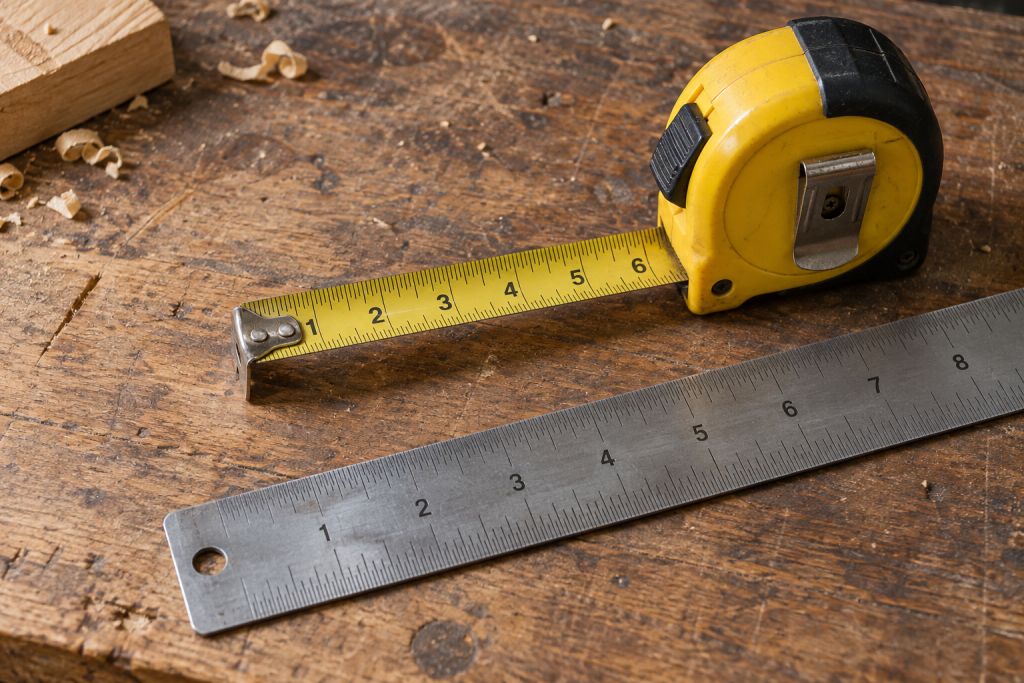
Measuring timber alone is where a tape measure’s small design choices become important. You need to hook the end over
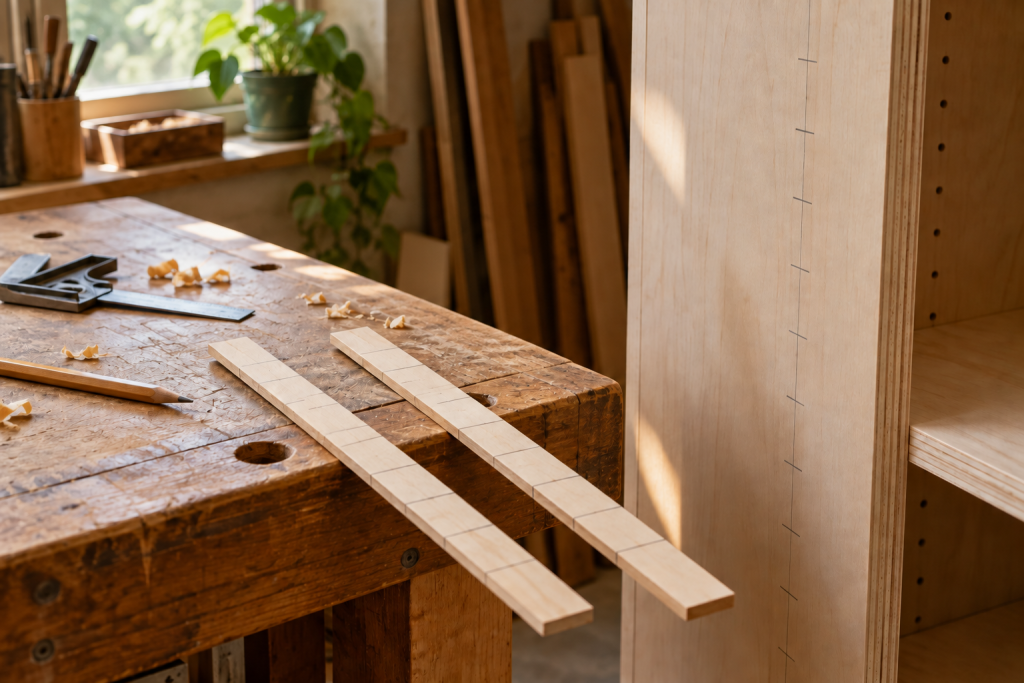
A story stick is a simple shop-made gauge for transferring repeated dimensions without measuring each part from a tape or
What the reveal means A door jamb reveal is the visible gap between the edge of the door and the
Dividers and a rule solve related but different setting-out problems. A rule gives you a measured distance; dividers help you
A pocket square is useful when a full-size framing square is too awkward to put against a timber, post, stair
Mortise layout depends less on buying an elaborate marking kit than on making a few consistent references: a square shoulder
Choosing the Right Square for Timber Steps For laying out timber steps, a framing square is usually the better primary
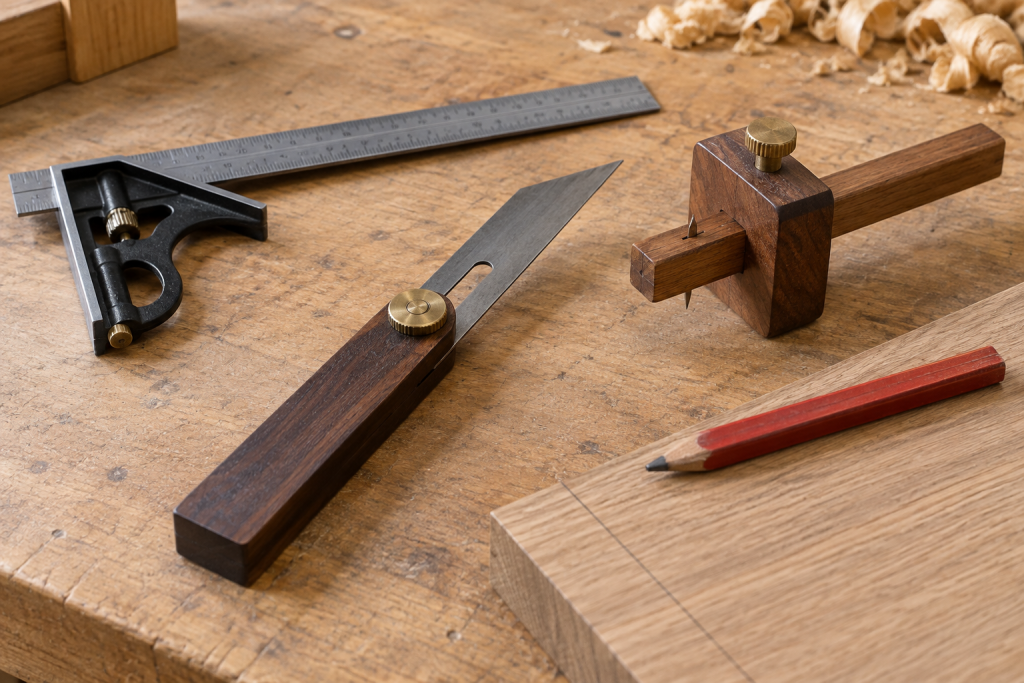
A marking gauge draws a line at a fixed distance from a board’s edge. It is useful for laying out
Measuring a timber opening on site is not just a matter of finding the width and writing it down. Openings