Our Top Picks


What's inside
As an Amazon Associate I earn from qualifying purchases. This post may contain affiliate links at no extra cost to you.
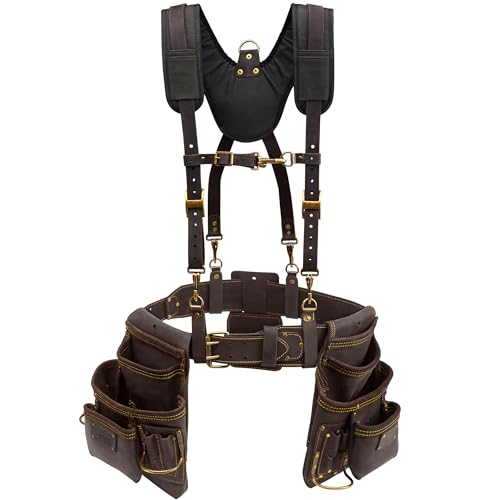
The OX Framing Leather Tool Belt with Suspenders is the best overall pick for carpenters who frame all day: it pairs an oil-tanned leather belt with suspenders so the weight of hammers, tape and fasteners rides on your shoulders as well as your hips. A carpenter’s tool belt, or rig, is simply a belt, pouches and loops that keep the tools you reach for most within arm’s length. Leather suits crews who want a classic, shaped rig, while lighter fabric rigs with many pockets suit electricians and general trades. The DEWALT leather belt is the traditional choice for those who prefer a belt-and-apron setup without suspenders.
Sections
Quick List
- OX Framing Leather Tool Belt + Suspenders (Size L) – best for all-day framing with a leather rig
- 27-Pocket Tool Belt with Suspenders and Magnetic Pouch – best for carrying lots of small items
- AWP Carpenter Tool Rig (up to 50 in.) – best for a padded, adjustable rig across body sizes
- MELOTOUGH Camo Tool Belt with Suspenders – best for framers who want a suspender rig with a different look
- DEWALT Leather Tool Belt (DWST550112) – best for a classic 11-pocket leather apron
- MELOTOUGH Tool Belt with Suspenders (Framers Comb Apron) – best for a standard heavy-duty suspender rig
Which One Is Right for You?
| If you… | Choose |
|---|---|
| Frame or build decks and want a leather rig that molds to you | OX Framing Leather Tool Belt |
| Carry fasteners, bits and pencils and want many small pockets | 27-Pocket Tool Belt with Magnetic Pouch |
| Need a belt that fits larger waists and has padding | AWP Carpenter Tool Rig |
| Want a suspender rig in camouflage | MELOTOUGH Camo Tool Belt |
| Prefer a leather belt with fewer pockets and hammer holders | DEWALT Leather Tool Belt |
| Want a plain heavy-duty rig without a patterned finish | MELOTOUGH Tool Belt with Suspenders |
Choose first between leather and fabric, then decide whether you want suspenders. Leather costs more in break-in time but molds to your hips and tends to hold shape, while fabric rigs are lighter and often carry more small items. Suspenders spread weight to your shoulders and are worth considering if you carry a hammer, a framing nailer’s worth of fasteners and a speed square all day.
All 6 Picks in Detail
1. OX Framing Leather Tool Belt + Suspenders (Size L) – Best for All-Day Framing
As an Amazon Associate we earn from qualifying purchases at no extra cost to you.
This listing describes an oil-tanned leather framer’s tool belt with suspenders, sold in size L. Leather rigs are the traditional framing choice because the material stiffens enough to hold pouches in a predictable spot, then softens with wear so it molds around your hips. The suspenders matter here: they transfer weight to your shoulders, which makes a loaded rig more comfortable over a full shift. Because the name does not state pocket counts or exact waist range, check the sizing chart on the listing before you buy.
Who it suits: production framers, deck builders and carpenters who want a durable, shaped rig and do not mind a break-in period.
- Oil-tanned leather construction
- Suspenders included
- Size L (waist range: confirm on listing)
- Framer-style layout for hammer, nails and tape
- Pocket count and loops: confirm on listing
In use: expect a short break-in period while the leather softens, and plan to adjust the suspender length once the rig is loaded. Set the hammer loop on your dominant side, keep nails in the pouch just ahead of it, and put the tape on the opposite hip so your hands stay balanced during long runs of wall layout. Leather benefits from occasional conditioning, especially if it gets wet on a rainy site.
Pros:
- Leather shapes to the body and holds its form
- Suspenders reduce hip load
Cons:
- Heavier and warmer than fabric rigs
- Sizing must match your waist
Compared with the DEWALT leather belt, this one adds suspenders and a framer layout.
2. 27-Pocket Tool Belt with Suspenders and Magnetic Pouch – Best for Many Small Items
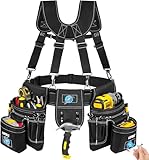
This heavy-duty rig lists 27 pockets, suspenders, a magnetic pouch and a detachable, adjustable design. It is marketed for electricians, carpenters and construction workers. The big pocket count is the selling point: if you carry screwdrivers, drill bits, pencils, a tape measure and wire nuts, you can give each item a home. A detachable pouch also means you can wear a lighter setup on easy jobs.
Who it suits: remodelers, handymen and electricians who organize lots of small items and prefer a fabric rig. A leather-loving framer may find it more utility than specialist.
- 27 pockets, per the listing
- Suspenders included
- Magnetic tool pouch for screws and nails
- Detachable and adjustable work belt bag
- Material and waist range: confirm on listing
In use: a rig with this many pockets rewards a plan. Assign each pocket a tool and stick to the plan for a week, otherwise you will waste time hunting for the right screwdriver. The detachable pouch is handy when you move from rough work to finish work, because you can leave the heavy parts in the truck and carry only what you need.
Pros:
- Lots of organized storage
- Magnetic pouch speeds access to fasteners
Cons:
- A full load can get heavy and bulky
- Material quality is not stated in the name
It offers far more pockets than the AWP rig, at the cost of a bulkier build.
3. AWP Carpenter Tool Rig (up to 50 in.) – Best for a Padded, Adjustable Fit

The AWP rig fits waists up to 50 inches, according to the listing, and offers 18 pockets and tool loops with a padded belt. It is marketed for men and women, and the padded belt helps spread pressure when loaded. This is a practical choice for people at the larger end of the size range, or those who share a rig between crew members, because the size range is clearly stated. Confirm whether suspenders are included before you buy.
Who it suits: carpenters who want comfort and a stated size range, and apprentices who need a rig that adjusts as their tool collection grows.
- Fits up to a 50-inch waist, per the listing
- 18 pockets and tool loops
- Padded belt
- Black finish
- Suspenders: confirm on listing
In use: padding helps most when the rig is fully loaded, so try it with your usual hammer and tape before you decide how many tools to carry. If suspenders are not included, a separate pair is easy to add later, and many carpenters do so after a few long days. The stated 50-inch maximum is a helpful guide for choosing between sizes in the family.
Pros:
- Clear sizing and padding
- Balanced number of pockets
Cons:
- Fewer pockets than the 27-pocket rig
- Material is not named in the title
Next to the OX leather rig, it is the better pick if padding and a stated size range matter more than leather.
4. MELOTOUGH Camo Tool Belt with Suspenders – Best for a Different Look

This MELOTOUGH listing is a camouflage-finished tool belt with suspenders in a framers comb apron style. The name highlights tool pouches and a heavy-duty build for construction tradespeople. The camo print is the main difference from the other MELOTOUGH listing, so the choice is mostly about appearance. As with any fabric rig, check the stitching and the pocket layout before you load it with heavy hand tools.
Who it suits: framers and general contractors who prefer an apron-and-suspender layout and like a distinct pattern that is easy to spot on a crowded site.
- Camouflage finish
- Suspenders included
- Framers comb apron layout
- Marketed for framers, electricians and construction trades
- Pocket count and materials: confirm on listing
In use: a framers comb apron is built around the idea that your hands live in the front pouches, so organize your most-used items there and push rarely used tools to the sides. Check the stitching on the first week of use and re-stitch any loose seams early, before a pouch fails while you are on a ladder.
Pros:
- Suspenders spread the load
- Distinctive pattern
Cons:
- Specifications are limited in the name
- Pattern may not suit every worksite
It is nearly the same design family as the plain MELOTOUGH rig, so pick based on color.
5. DEWALT Leather Tool Belt (DWST550112) – Best for a Classic Leather Apron

The listing describes an 11-pocket professional leather tool belt, and DEWALT’s product information adds nubuck top-grain leather, double stitching, reinforced rivets, two metal hammer holders and a double-tongue roller buckle. A lifetime warranty against manufacturer defects is also mentioned by the brand. There are no suspenders in the product name, so you wear it on the hips, which suits shorter shifts or people who like a lighter feel. Retailer pocket counts vary, so rely on the stated 11 and confirm on the listing.
Who it suits: carpenters who prefer a classic leather apron, handymen and homeowners who want a well-known brand at a modest pocket count.
- 11 pockets, per the listing name
- Leather construction, with nubuck top-grain per manufacturer information
- Two hammer holders
- Double stitching and reinforced rivets
- Belt length: confirm on listing; suspenders not included in the name
In use: pair it with a separate pair of suspenders if you carry more than a hammer, a tape and a handful of nails. Retailer descriptions disagree on some specifications such as pocket count, so rely on the 11-pocket figure from the product name and confirm the belt length on the listing for your waist.
Pros:
- Strong brand reputation and warranty claims
- Simple, uncluttered layout
Cons:
- Loads the hips without suspenders
- Fewer pockets than the fabric rigs
Next to the OX leather belt, it is simpler and lacks suspenders, but it has a familiar layout.
6. MELOTOUGH Tool Belt with Suspenders (Framers Comb Apron) – Best for a Standard Heavy-Duty Rig

This listing is a heavy-duty suspender rig described as a carpenter suspension rig, marketed to electricians, roofers, contractors, framers and carpenters. It shares its product family with the camo version above, so the main difference is the finish. Check the listing for color and any dimensions, because the name does not state them. If you want a familiar, utility-style rig without leather, this is a straightforward option.
Who it suits: general contractors, roofers and carpenters who want a simple suspender setup and are comfortable with fabric rigs.
- Suspenders included
- Framers comb apron style
- Heavy-duty carpenter suspension rig
- Color and pocket count: confirm on listing
- Suited to roofing, framing and electrical work
In use: start with a modest load and add tools as you learn what you reach for most. The listing is generic about pocket layout, so look at the photos to see how many pockets sit on each side and whether there is a hammer loop on the side you prefer.
Pros:
- Suspender design for weight distribution
- Broad trade use
Cons:
- Limited detail in the title
- Fabric rigs wear differently than leather
Choose it over the camo version when you want a plainer look.
Specs Compared
| Product | Material | Pockets | Suspenders | Size or fit |
|---|---|---|---|---|
| OX Framing Leather Tool Belt | Oil-tanned leather | Confirm on listing | Yes | Size L |
| 27-Pocket Tool Belt | Confirm on listing | 27 | Yes | Adjustable |
| AWP Carpenter Tool Rig | Confirm on listing | 18 pockets and loops | Confirm on listing | Up to 50 in. |
| MELOTOUGH Camo Tool Belt | Confirm on listing | Confirm on listing | Yes | Confirm on listing |
| DEWALT Leather Tool Belt | Leather | 11 | Not in name | Confirm on listing |
| MELOTOUGH Tool Belt with Suspenders | Confirm on listing | Confirm on listing | Yes | Confirm on listing |
How We Chose These
We compared product names, listing specifications and manufacturer information, and we did not wear or use any of these rigs ourselves. The criteria were construction material, suspender support, pocket and loop layout, stated size range, and whether the listing makes clear claims. We considered what working carpenters need most: hammer support, nail and screw access, tape and pencil storage, and weight distribution. We flagged details the listing does not confirm, such as pocket counts or fabric type, and we noted when two listings appear to belong to the same product family so you can decide by color or layout rather than guess.
What to Look For
Leather or fabric
Leather holds its shape, resists snags and breaks in to your body, but it is heavier and takes time to soften. Fabric rigs are lighter and cooler and tend to cost less, yet they can sag when loaded and may wear faster at the seams. Many framers choose leather because pouches stay open and upright, which makes it easier to grab a nail one-handed. If you work in hot weather or climb ladders a lot, a lighter fabric rig may feel better.
Suspenders and weight
A full carpenter’s rig can weigh well over 10 pounds once you add a hammer, a tape, a speed square, a pouch of nails and a few bits. A belt alone puts all of that on your hips, while suspenders move some of it to your shoulders. As a rule of thumb, if your loaded rig reaches 8 to 10 pounds or more, suspenders are worth having. Padded belts help, but they do not change the total weight, so also edit what you carry to the tools you really use each hour.
Pocket layout and reach
Think about the order you reach for tools. A right-handed carpenter often keeps the hammer on the right hip, nails in front of the hammer, a tape measure on the left and a pencil and square near the back. Pockets that are too deep make small items hard to reach, and pockets that are too shallow let tools fall out when you bend. Count the pockets you will use, not the pockets on the label. A rig with 11 well-placed pockets can beat one with 27 that you never fill.
Sizing and fit
Measure your waist at the height where you wear the belt, which is usually near the hips rather than the beltline of your pants. If a listing gives a maximum size, such as up to 50 inches, make sure your waist plus your thick work clothes fits within it. Adjustable belts and detachable pouches let you tune the layout. Try to wear the rig with your usual tools before you commit to a layout, and plan to adjust pouches after the first week as you learn where things belong.
Framing rig versus finish rig
Framers carry a heavy hammer, a nail pouch and a tape measure, and they want everything in reach without bending. Finish carpenters carry smaller hand tools, a nail set, pencils, a utility knife and trim fasteners. If you do both, consider two layouts: a full suspender rig for rough work and a lighter apron or detachable pouch for finish work. A detachable design, like the one on the 27-pocket rig, makes the switch easy. Avoid hanging a heavy framing hammer on a light finish pouch, because the pouch will sag and tilt.
Setting up your rig the first week
Load the rig with the tools you reach for, work a full day, and then rearrange. Most carpenters discover that they carry more than they use. Move anything you reach for once an hour to the front, anything you use once a day to a side pocket, and leave the rest in the truck. Adjust the belt so the weight rides on your hip bones, tighten the suspenders until the belt no longer drags, and check that the hammer loop does not bang your leg when you climb. Small adjustments in the first week save a lot of discomfort later.
Safety and care
Do not carry unsheathed chisels or razor knives in open pockets, since they can cut you or the pouch. Keep sharp bits in a pouch or case, and remove heavy items at the end of the day to avoid a sagging belt. Treat leather occasionally with a leather conditioner, and let it dry naturally if it gets wet. Wipe fabric rigs with a damp cloth and let them air dry. Retire any rig with torn stitching, since a failed pouch can spill tools from a ladder or roof.
Questions
Are suspenders necessary for a tool belt?
They are not required, but they are strongly recommended once the rig is heavy. Suspenders move part of the load to your shoulders, which many carpenters find more comfortable over a long shift.
Is a leather or nylon tool belt better for carpenters?
Leather is more durable and holds its shape, so many framers prefer it. Nylon or polyester rigs are lighter and cooler, and they can carry many pockets, which suits electricians and general trades.
How many pockets do I need?
Most carpenters work well with 10 to 20 pockets, because more pockets rarely get used. Choose a layout that gives you quick access to a hammer, nails, tape, pencil and a few frequently used hand tools.
How should a tool belt fit?
The belt should sit on your hips without sliding, and the buckle should close with a little adjustment room. Make sure you can bend and squat without the pouches digging in, and check the fit while wearing your work clothes and a typical load.
Can I wear a tool belt on a ladder or roof?
Yes, but keep it balanced and avoid loading the front pouches with heavy items that can pull you forward. Secure small items and keep sharp tools sheathed so they cannot fall or cut you if you slip.
How do I take care of a leather tool belt?
Wipe off dirt and dry it naturally if it gets wet. Apply a leather conditioner every few months, and check stitching and rivets for wear so small problems do not become failures on the job.
Update History
- October 20, 2026 – Initial publication; product set drawn from current catalog listings.
- Check the product page for current specifications and availability before buying.
Sources
- Manufacturer product and specification pages for DEWALT
- Retailer listing titles and specification fields for each product named above