
What's inside
- Check the chisel before buying a handle
- Choose a compatible handle
- Tools and materials
- Fit the tang to the handle
- Drill a Stepped Hole for a Tapered Tang
- Ream the Hole With the Tang Itself
- Seating the Handle Without Splitting It
- Should You Heat the Tang to Burn the Hole?
- Common Mistakes When Fitting a Chisel Handle
- Choose the fitting approach
- Check the fit and finish
- Useful Extras for Fitting a Chisel Handle
- Tang Chisel Handle FAQ
As an Amazon Associate I earn from qualifying purchases. This post may contain affiliate links at no extra cost to you.
A tang chisel has a narrow steel tang that fits into its handle. Unlike a socket chisel, it relies on a snug wooden fit and, on many chisels, a ferrule near the handle end to resist splitting. A loose, cracked or badly mushroomed handle can make the chisel unsafe to strike. Replacing it is a straightforward job if you match the handle to the tang and fit it without forcing the steel through the wood.
Updated October 2026 – steps cross-checked against published woodworking guides.
Quick answer: to fit a new handle to a tang chisel, measure the tang, bore a stepped hole in the handle that is slightly smaller than the tang, ream it to shape with a file or the tang itself, then seat the handle with firm taps until it stops near the shoulder. Never force an undersized hole; a split handle is the usual failure.
Sections
- Check the chisel before buying a handle
- Choose a compatible handle
- Tools and materials
- Fit the tang to the handle
- Drill a Stepped Hole for a Tapered Tang
- Ream the Hole With the Tang Itself
- Seating the Handle Without Splitting It
- Should You Heat the Tang to Burn the Hole?
- Common Mistakes When Fitting a Chisel Handle
- Choose the fitting approach
- Check the fit and finish
- Useful Extras for Fitting a Chisel Handle
- Tang Chisel Handle FAQ
Our Top Picks
 Wooden File Handle Replacement 3pcs with Metal Ferrule11X2.5X2.5CM4.33 x 0.98 x 0.98 inches0.19 poundsCheck on Amazon


Check the chisel before buying a handle
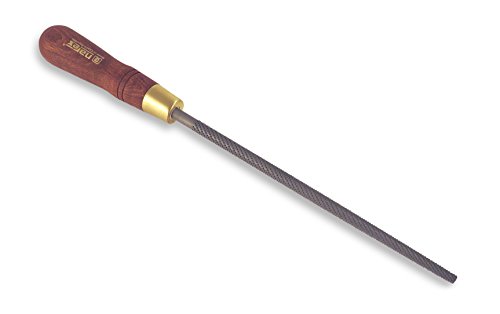
Remove any loose handle pieces and clean rust or dirt from the tang. Check that the tang is straight and not cracked, badly bent or so corroded that its shape is hard to identify. A new handle will not fix a damaged tang. Also inspect the blade shoulder and ferrule: if the ferrule is split, or the handle wood around it has opened up, replace the handle rather than trying to glue the crack shut.
Measure the tang’s length, maximum width and thickness, and note whether it is square, rectangular or tapered. A ruler is useful for length; calipers give a better reading for width and thickness. Do not choose by blade width alone. Two chisels with 12 mm blades can have quite different tangs and handle sizes.
Decide how you use the chisel. A bench chisel used with a wooden mallet needs a handle made for striking. A light paring chisel may have a slimmer handle and should not be treated like a heavy-duty framing tool. If the original handle is intact enough to measure, record its overall length and diameter as well.
Choose a compatible handle
Look for a replacement sold for a tang chisel, with a ferrule and dimensions that suit the tang. Ferrules help stop the handle from splitting as the tang wedges into the wood. A handle with no ferrule may be acceptable for careful paring, but it is a poor choice for regular mallet work unless its design specifically supports that use.
Replacement handles are commonly hardwood, such as beech or ash. Either can work; fit, grain and condition matter more than the name of the wood. Avoid handles with checks, loose knots or grain that runs out sharply near the ferrule or striking end. If you want to compare sizes and styles, browse tang-chisel replacement handles with ferrules. Check the stated tang range and dimensions rather than assuming a listing marked “universal” will fit.
A pre-bored handle saves time, but its hole may not match your tang. A solid or undersized handle gives you more control over the fit, at the cost of careful drilling and shaping. For a one-off repair, a correctly sized ready-made handle is usually the sensible buy. For an unusual tang, a blank can be easier to fit than trying to adapt an oversized hole.
Tools and materials
You will need a bench vise or another secure way to hold the handle, a drill and bits, a small round or rat-tail file, a rasp or coarse sandpaper, and a soft-faced mallet. A pair of calipers helps, but careful marking with a ruler and pencil is enough for many handles. Have eye protection ready; drilling or filing can send chips toward your face.
For drilling, use a bit slightly smaller than the narrowest dimension of the tang, then widen and shape the hole gradually. A drill press makes it easier to keep the hole straight, but a hand drill is fine if you clamp the handle securely and check alignment from two directions. Avoid relying on glue to make a loose tang fit. The mechanical fit does the work.
Fit the tang to the handle
Start with the handle’s ferrule end. Mark the tang’s outline on the end of the handle, centring it so the wood walls are even. Drill a pilot hole along the handle’s axis, slightly deeper than the tang is long so the tang never bottoms out. To set the depth, measure the tang, add about 1/8 inch (3 mm) and mark that distance on the drill bit with tape. Drill in small increments and clear the chips often; a blind hole packed with chips can stop the tang before it reaches its shoulder.
Make the hole slightly smaller than the tang at first. Use a file or a narrow rasp to shape it to the tang’s profile, removing a little material at a time. Test the fit frequently. The tang should enter straight and stop firmly at the shoulder, with no sideways rocking. If the chisel goes in only partway, do not drive it home with a heavy hammer: that can split the handle or buckle the ferrule. Remove a little more wood where the tang binds and test again.
When the fit is close, support the handle securely and tap the handle onto the tang with a soft-faced mallet, or tap the handle end while holding the chisel safely. Keep the blade pointing away from you and other people. Use light, controlled blows. The shoulder should seat against the handle without a visible gap. If the ferrule is not already fitted, follow the handle maker’s design; do not assume a loose ring will stay in place without a proper seat.
Drill a Stepped Hole for a Tapered Tang
Most chisel tangs are rectangular in section and taper from the shoulder to a point, so a single drill size rarely matches. The common woodworking method is to drill a stepped hole, with wider steps near the opening and narrower steps deeper in.
- Measure the tang width near the shoulder, at the middle and near the tip. Calipers give the most reliable reading.
- Pick three drill bits that are just under those widths. Very long tangs may need a fourth bit.
- Drill the smallest hole deepest, about 1/8 inch (3 mm) past the length of the tang. Drill each larger hole only as deep as the taper requires.
- Keep the handle centered and straight. Clamp it in a vise and check alignment from the front and the side, or use a drilling guide block.
- Use brad-point bits if you have them; the center point helps the bit start in the middle of the end grain.
For a tang that is tapered on all sides with no obvious steps, a single pilot hole slightly smaller than the tang is enough before you ream.
Ream the Hole With the Tang Itself
A traditional shortcut uses the tang as a reamer. Lightly file the tang edges so they leave a small burr, push the handle onto the tang as far as it goes by hand, then turn the handle one full turn forward and back. Pull the handle off, clear the dust from the hole and the tang, and repeat until the handle sits near the shoulder.
- Stop when the handle sits about 1/8 inch (3 mm) short of the shoulder.
- Do this slowly. Each pass should remove only a little wood.
- Clamp the chisel blade-guarded in a vise or hold it securely so it cannot slip.
Seating the Handle Without Splitting It
Stand the chisel upright with its cutting edge guarded on a block of hardwood resting on a solid floor or bench. Keep the handle aligned with the tang, then give it one or two firm blows on the handle end with a soft-faced or wooden mallet. The final taps lock the tapered tang into the wood by pressure. If the handle will not move, pull it off and ream more rather than hitting harder.
Should You Heat the Tang to Burn the Hole?
Blacksmiths once heated the tang and pressed it into the handle to burn the hole to shape. Many woodworkers now avoid this: charred wood and ash make a weaker grip than a clean, drilled and reamed hole, and heat can damage the temper of a good chisel or the finish of a vintage one. Use cold drilling and reaming unless you have a reason and the experience to do otherwise.
Common Mistakes When Fitting a Chisel Handle
- Hole too deep or too short: too short and the tang stops before the shoulder; too deep and the chisel can slide in during use.
- Hole too large: the handle loosens quickly. If you overshoot, choose a new handle rather than packing the hole with glue or shims.
- Off-center hole: the blade points to one side of the handle, which makes paring awkward.
- Splitting the handle: usually caused by a hole that is too small or by driving with a heavy hammer.
- Using a damaged handle blank: avoid handles with checks, loose knots or short grain.
Choose the fitting approach
| Approach | Best for | Trade-off |
|---|---|---|
| Pre-bored replacement handle | A common tang size and a quick repair | May need careful filing if the hole is close but not exact |
| Undersized or solid handle blank | An unusual tang or a custom grip shape | More fitting work; requires accurate drilling and shaping |
| Reuse an old handle | A handle with sound wood and a damaged or loose fit | Only worthwhile if the ferrule and striking end are still safe |
Check the fit and finish
After seating the handle, check for cracks around the ferrule and make sure the blade is aligned with the handle. Give it a firm hand pull and a few light test taps on scrap wood. Any movement, clicking or fresh split means the fit is not secure. Remove the handle and correct the hole; do not use the chisel until it is sound.
Trim only small amounts from the grip if it feels awkward, keeping the surface smooth and free of sharp corners. A coat of suitable oil can help protect bare wood, but keep finish off the tang hole and ferrule seat. If you need a basic fitting kit, a small rat-tail file and wood rasp are inexpensive options; for one handle, ordinary files and sandpaper you already own may be enough.
Store the chisel dry and avoid leaving it where the handle can soak up water or dry rapidly beside a heater. Wood movement can loosen a previously sound fit. Check the handle before striking, especially after a change in temperature or a hard day’s work.
Useful Extras for Fitting a Chisel Handle
HARDELL Digital Caliper 6 Inch – Best for measuring the tang
As an Amazon Associate we earn from qualifying purchases at no extra cost to you.

A digital caliper reads tang width and thickness to a fraction of a millimeter, which makes choosing drill bit sizes much easier than with a ruler.
- 6 inch range with a large LCD
- Stainless steel body
- Inch and millimeter conversion
Pros: fast, repeatable readings; useful far beyond chisel work. Cons: needs a battery; keep it away from filing dust. Skip it if a ruler and careful marking are enough for a one-off repair.
DEWALT Brad Point Drill Bit Set, 6-Piece (DW1720) – Best for centered holes in the handle

Brad-point bits have a center spur that keeps the bit from wandering on end grain, which helps you start the pilot hole on the handle axis.
- 6-piece brad point set
- Made for wood drilling
- Small steps between sizes suit stepped holes
Pros: clean, centered starts; affordable. Cons: limited number of sizes; you may still need a file to finish the hole. Skip it if you already own a bit set that covers your tang widths.
Tang Chisel Handle FAQ
How do I fit a new handle to a tang chisel?
Measure the tang, drill a stepped hole slightly smaller than it, ream the hole to shape, then seat the handle with firm taps until it sits near the shoulder.
How deep should the hole be for a chisel tang?
Drill the narrowest hole about 1/8 inch (3 mm) deeper than the tang is long, so the tang never hits the bottom.
Do I need a ferrule on a chisel handle?
A ferrule is not essential for light paring, but it helps stop the handle from splitting when the chisel is struck with a mallet. For regular mallet work, use a handle with a ferrule.
What wood is best for a chisel handle?
Dense hardwoods such as ash, hickory, beech or hornbeam are popular. Straight grain without checks matters more than the species.
Why does my chisel handle keep coming loose?
The hole is usually too large, too shallow or cut off-center, or the wood has dried and shrunk. Replace the handle with one drilled to the right size rather than relying on glue.
FAQ
Should You Heat the Tang to Burn the Hole?
How do I fit a new handle to a tang chisel?
How deep should the hole be for a chisel tang?
Do I need a ferrule on a chisel handle?
What wood is best for a chisel handle?
Why does my chisel handle keep coming loose?
Related guides
More from Amazon
Programs that pair well with the guide above. Offers and eligibility are set by Amazon and may change.
A free business account with business pricing and bulk-buying tools for work, shop or home office.
Create a business accountFree shipping on eligible items, Prime Video and more. Eligible new members can start with a free trial.
Start a Prime free trialAudiobooks and podcasts to listen to on the go. Eligible new members can start with a free trial.
Try Audible freeAd-free music streaming. Eligible new subscribers can start with a free trial.
Try Music Unlimited freeAs an Amazon Associate we earn from qualifying purchases.








Write Your Review
No reviews yet. Be the first to share your experience!