What's inside
- Verdict: Who should buy the Oliver 10055?
- Specifications to verify before you compare prices
- Capacity and feed performance: match the machine to your work
- Cutterhead design and ongoing ownership costs
- Footprint, dust collection, and installation
- Is the Oliver 10055 a fit for your shop?
- Practical maintenance that protects the cut
- Buying advice: pay for verified condition, not the model name
- Verdict: Who should buy the Oliver 10055?
- Specifications to verify before you compare prices
- Capacity and feed performance: match the machine to your work
- Cutterhead design and ongoing ownership costs
- Footprint, dust collection, and installation
- Is the Oliver 10055 a fit for your shop?
- Practical maintenance that protects the cut
- Buying advice: pay for verified condition, not the model name
As an Amazon Associate I earn from qualifying purchases. This post may contain affiliate links at no extra cost to you.
Sections
- Verdict: Who should buy the Oliver 10055?
- Specifications to verify before you compare prices
- Capacity and feed performance: match the machine to your work
- Cutterhead design and ongoing ownership costs
- Footprint, dust collection, and installation
- Is the Oliver 10055 a fit for your shop?
- Practical maintenance that protects the cut
- Buying advice: pay for verified condition, not the model name
Verdict: Who should buy the Oliver 10055?
The Oliver 10055 planer is worth considering for a serious shop that needs a wide-capacity, stationary thickness planer and can confirm the machine’s exact configuration, electrical requirements, and parts support before buying. Its appeal is shop-scale capacity and a substantial machine format—not an assumed advantage in finish quality or feed rate, which depend on the cutterhead and setup fitted to the particular unit.
There is an important buying caveat: Oliver has sold machines under model numbers that can be difficult to distinguish across generations and configurations, and reliable published specifications for the 10055 are not consistently available. Do not treat a reseller’s headline width, horsepower, or cutterhead description as definitive. Ask for the machine’s nameplate, manual, serial number, and a measurement of the actual opening before making a decision.
As an Amazon Associate we earn from qualifying purchases at no extra cost to you.
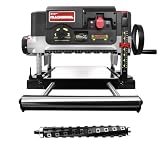


Specifications to verify before you compare prices
The table separates what to measure from what to assume. Because configuration and documentation can vary, the numbers below are checks to perform—not claimed Oliver 10055 specifications. This is more useful than comparing listings that may describe different versions.
| Buying criterion | What to confirm on the specific machine | Why it matters |
|---|---|---|
| Maximum planing width | Measure the usable opening in inches; record the figure from the manual or nameplate if available. | Sets the widest board you can surface in one pass. A board wider than capacity needs another machine or a different workflow. |
| Maximum stock thickness | Check the maximum opening and the minimum thickness with the bed and rollers in their normal operating range. | Determines whether it can handle your stock and whether thin material needs a carrier or another safe method. |
| Cutting depth | Find the maker’s recommended maximum cut per pass for your stock and width. | Wide, hard, or figured stock generally calls for lighter cuts to reduce strain and tear-out. |
| Feed rate | Check the available speed or speeds in feet per minute, if listed. | Feed rate affects throughput and surface finish; a single advertised rate does not tell the whole story. |
| Cutterhead | Identify straight knives, a segmented head, or a helical head; confirm knife dimensions and replacement availability. | Head type changes sharpening costs, noise, finish, and how quickly damaged edges can be serviced. |
| Power and footprint | Read voltage, phase, amperage, machine weight, and overall dimensions from the documentation. | Electrical service, floor loading, delivery access, and outfeed space can be deal-breakers. |
If a seller cannot provide a clear nameplate photo or documentation, price the machine as an unverified used planer, not as a confirmed specification. Oliver’s current support or a qualified industrial machinery technician may be able to help identify an older unit from its serial number.
Capacity and feed performance: match the machine to your work
Capacity matters most when your regular work includes wide panels, furniture components, or batches of boards that would otherwise require repeated setups. For occasional narrow stock, a large planer can consume floor space and electrical capacity without improving the finished work. Measure the widest material you actually process, then leave margin for the way you break down rough lumber and handle panels.
Feed performance should be judged under load, not by a no-load speed claim alone. A planer can slow, leave uneven marks, or overload when asked to remove too much material across a wide board. Plan on taking lighter passes in dense hardwood and figured grain, and use a jointer or another method to establish a flat reference face first. A thickness planer makes the opposite face parallel; it does not reliably correct a twisted board by itself.
When inspecting a used 10055, run a representative board if possible. Listen for changes in motor or gearbox sound, check for consistent feed, and examine the surface for scalloping, snipe, or recurring lines. These symptoms can point to dull knives, dirty or worn rollers, bed issues, or head alignment—not necessarily a single easy adjustment. Ask the seller what stock and cut depth produced the sample.
Cutterhead design and ongoing ownership costs
Do not assume every Oliver 10055 has the same cutterhead. Straight-knife heads can be economical when knives are readily available and a sharpening service is nearby, but they require careful setup and balanced, correctly matched edges. A segmented or helical head uses multiple small inserts; a nick may affect only a limited area, though replacement inserts and compatible screws are an ongoing expense. Confirm the actual head before estimating annual costs.
For any configuration, consumables are only part of ownership. Feed rollers can glaze or wear, belts and bearings eventually need attention, and chip buildup can interfere with feeding and adjustment. Before purchase, check that knives or inserts, drive components, and service information can be sourced. A low purchase price is less attractive if the head is damaged or essential parts are unobtainable.
Footprint, dust collection, and installation
A large stationary planer needs more than its listed machine dimensions. Allow room to feed the longest boards safely, receive them at the outfeed, open access panels, and remove chips. Check doorways and turning space along the delivery route, and verify the floor and electrical supply before arranging transport. If the machine requires three-phase power and your shop has single-phase service, get a qualified electrician’s assessment and a conversion cost before you commit.
Dust extraction is not optional for a production-scale planer. Confirm the dust-port size and the collector capacity recommended for the machine, then check that your ducting does not restrict airflow. Packed chips can affect the cut and create cleanup and safety problems. Keep guards in place, follow the manual, and disconnect power before clearing a jam or working near the cutterhead.
Is the Oliver 10055 a fit for your shop?
| Your situation | Buying direction | Reason |
|---|---|---|
| Regular wide stock and production batches; adequate floor space and power | Shortlist the 10055 if its verified capacity and condition match the work. | A substantial planer can reduce repeated handling when its width and feed setup suit the shop. |
| Mostly narrow boards, occasional use, or a compact garage shop | Compare smaller stationary planers before buying a large industrial machine. | Space, installation, and maintenance can outweigh unused capacity. |
| New to planing and still building core shop skills | Prioritize clear documentation, safe setup, and available service over maximum capacity. | Stock preparation, light cuts, and proper dust collection matter more than sheer size. |
| Used machine with unknown head, no manual, or uncertain power needs | Pause until a technician or Oliver support can identify the configuration and likely repairs. | Unverified parts and electrical requirements can turn a bargain into an expensive project. |
Practical maintenance that protects the cut
- Clean the bed and rollers: Remove pitch and chips with products and methods approved for the machine. Dirty surfaces can cause drag and inconsistent feeding.
- Inspect the cutterhead routinely: Look for dull or damaged edges and verify knife or insert seating using the maker’s procedure. Disconnect and lock out power first.
- Check feed and drive components: Watch for slipping, uneven feed, unusual vibration, or new noise. Address the cause before continuing production.
- Keep a maintenance record: Note knife or insert changes, adjustments, repairs, and the stock that caused problems. This helps distinguish normal wear from a developing fault.
- Use conservative cuts: Reduce depth for wide, hard, or figured boards. Forcing a heavy pass can worsen finish, increase strain, and accelerate wear.
Buying advice: pay for verified condition, not the model name
For a used Oliver 10055, ask for the serial number, manual, clear photos of the nameplate and cutterhead, a demonstration under load, and a written list of included accessories and known defects. Inspect the bed for damage, check adjustment mechanisms across their travel, and look for oil leaks, improvised wiring, and excessive vibration. Get a repair estimate for any unresolved issue before negotiating.
Compare the complete installed cost—not just the asking price. Include rigging and delivery, electrical work, dust collection changes, replacement knives or inserts, and likely repairs. The 10055 makes the most sense when you can verify that its capacity fits recurring work and that it can be installed and maintained without disproportionate expense. If those details remain uncertain, a documented machine with a slightly smaller capacity may be the better purchase.