
Key takeaways
- Keep small fasteners organized by sorting them by type and size before the day starts, giving every type one fixed, closed home.
What's inside
As an Amazon Associate I earn from qualifying purchases. This post may contain affiliate links at no extra cost to you.
Keep small fasteners organized by sorting them by type and size before the day starts, giving every type one fixed, closed home, and carrying only what the next task needs. The rest of this guide shows how to set that up so screws, nails and anchors stop disappearing into sawdust, truck beds and the bottom of every pouch.
Lost fasteners cost more than the fasteners themselves. They cost the minutes spent digging, the wrong screw driven in because it was the only one in reach, and the crew member who walks back to the truck for a box that was open on the tailgate. A short system, repeated every day, removes most of that, and it works the same whether you are a solo remodeler or part of a six-person framing crew heading into 2026 with a full schedule.
Sections
Why Fasteners Get Lost in the First Place
Most losses come from four habits. Loose handfuls go into a pocket and fall out when you kneel. Open boxes tip over in a truck or on a scaffold plank. Mixed leftovers end up in a single can, which makes the next job start with sorting. And small hardware is set down “for a second” on a surface that is out of sight, such as a window sill or a stair tread.
Each habit has the same root: the fastener has no assigned home. A system that gives every type a home, and a rule for where that home lives during the day, solves all four. It also shortens the handoff when someone else picks up your work, since they can read the labels instead of guessing.
Set Up a Three-Tier System
Tier one: the bulk stock
Bulk boxes belong in one place, ideally a lidded bin or a labeled drawer in the truck or the site storage box. Keep them in original packaging when possible, since the box lists size, length and finish. Write the date and job name on the lid if the leftovers are going back to the shop.
Tier two: the working kit
A compartment organizer with a latching lid holds the sizes you use all week. Fill it at the start of the day or week from the bulk stock, and refill the same compartments each time. This tier is where labels pay for themselves, so mark each compartment by type, such as drywall screws, framing nails and finish nails, not by guesswork.
Tier three: the task carry
This is what you hold while working: a small pouch, a magnetic wrist band, a cup on the ladder shelf or a nail apron. Load it with only the fasteners for the next task. When the pouch is empty, return to tier two and refill it, instead of dumping the day’s mixed leftovers back in.
Sort by the Right Criteria
How you sort matters as much as whether you sort. The best split depends on how you work, but four dimensions cover nearly every site.
| Sort by | Why it helps | Watch out for |
|---|---|---|
| Fastener type (screw, nail, bolt) | Matches the tool you reach for | Hybrid fasteners that fit two categories |
| Length and diameter | Prevents split lumber and weak joints | Similar lengths that look alike in a pouch |
| Head and drive style | Keeps the right bit in the tool | Mixing drive types in one compartment |
| Finish or coating | Prevents mixing exterior and interior hardware | Similar color but different corrosion resistance |
| Task or room | Gets a kit ready for the next phase | Leftovers drifting between kits |
Pick one primary sort, then add a second only if needed. Too many categories slow you down and make refilling a chore. Trim carpenters often sort by length first, while framers usually sort by type, because their tools pull from different pouches.
Keep Fasteners Close Without Spilling Them
Magnets for the working hand
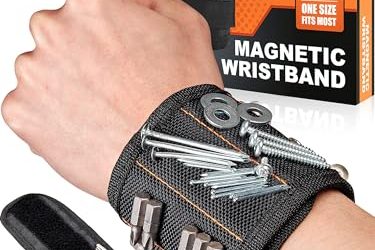
A magnetic wristband or a magnetic tray keeps steel screws and nails in reach and in view. It will not hold aluminum or most stainless hardware, so keep a second method for those.
Closed containers for transport
Anything that rides in a truck should have a lid that latches. Open cups and loose bags are fine on a bench but not on a dashboard or bed liner. For small anchors and washers, a clear lidded organizer helps you see what is left before you drive off.
Aprons and pouches
Fastener pouches work best with two or three pockets, each assigned to one type. A pouch with a zipper or a snap closure keeps contents in when you bend down. Empty the pouch at the end of the day instead of letting the mixed contents carry to the next job.
End-of-day reset
A five-minute reset beats a long search tomorrow, and it prevents the slow build-up of mystery fasteners in the bottom of every container. Return leftovers to the right compartment, sweep the work area with a magnet tool or a shop vacuum and note anything that is running low. Doing this daily takes less time than doing it weekly.
Handling Different Fastener Types
Not all fasteners behave the same, so give them a thought before you toss them in a bin. Fine-thread drywall screws can bend if loaded with heavy bolts. Trim nails are easy to lose and hard to see on a wood floor. Deck screws and structural fasteners often come in different finishes, so a mix-up can cause corrosion problems later. Concrete anchors and specialty fasteners should stay in their original packaging because they carry installation notes and size details on the label.
For anything tied to a structural or code requirement, check the manufacturer’s instructions and your local requirements, and ask a qualified professional when in doubt.
Adapt the System to Your Trade
A finish carpenter works with tiny, expensive hardware and benefits from a clear, lidded organizer that stays on a bench or a rolling cart. A framer moves fast and fastens in bulk, so a belt pouch and a nail apron do most of the work. A deck builder switches between screws, hidden fasteners and structural connectors, which makes a task-based kit sensible. A remodeler handles a bit of everything and often needs a flexible kit that can be reset for each room.
Whatever your trade, test your system against one rule: could a new worker find the right fastener within thirty seconds? If not, simplify the labels or reduce the number of categories.
Before You Start
- List the fastener types you use most on this job.
- Decide on one primary sort: type, size or task.
- Label compartments and bins before you fill them.
- Choose one closed container for transport.
- Assign a location for the working kit and stick to it.
- Plan a five-minute end-of-day reset.
Common Mistakes
The first mistake is overbuilding the system. If it takes longer to put a screw away than to find a new one, you will stop using it. The second is mixing leftovers: one handful of the wrong screw in a compartment can cause an error that surfaces weeks later. The third is skipping labels; a clear label lets any crew member put things back in the right place. The fourth is ignoring the floor: a quick magnet sweep at day’s end catches fasteners that would otherwise end up in a tire or a foot.
Related guides
- How To Read Hearing Protection Nrr Ratings On Job Sites
- Magnetic Wristbands For Holding Nails And Screws
- Cut-Resistant Gloves For Carpenters
Frequently Asked Questions
What is the quickest way to start?
Pick your three most-used fastener types and give each one a labeled compartment. Add more only when a gap shows up.
Should I keep fasteners in their original boxes?
Yes for bulk stock, since the box lists size and finish. For daily use, move what you need into a working kit with labeled compartments.
How do I keep fasteners from rolling away on a roof or ladder?
Use a small closed or shallow container with a rim, a magnetic holder for steel pieces and clip it to a belt or ladder shelf.
How do I deal with leftover mixed fasteners?
Sort them on a tray at the end of the job, put the usable ones in labeled compartments and discard the damaged or rusted pieces.
Related guides
More from Amazon
Programs that pair well with the guide above. Offers and eligibility are set by Amazon and may change.
A free business account with business pricing and bulk-buying tools for work, shop or home office.
Create a business accountFree shipping on eligible items, Prime Video and more. Eligible new members can start with a free trial.
Start a Prime free trialAudiobooks and podcasts to listen to on the go. Eligible new members can start with a free trial.
Try Audible freeAd-free music streaming. Eligible new subscribers can start with a free trial.
Try Music Unlimited freeAs an Amazon Associate we earn from qualifying purchases.
Write Your Review
No reviews yet. Be the first to share your experience!